The Viola Trials
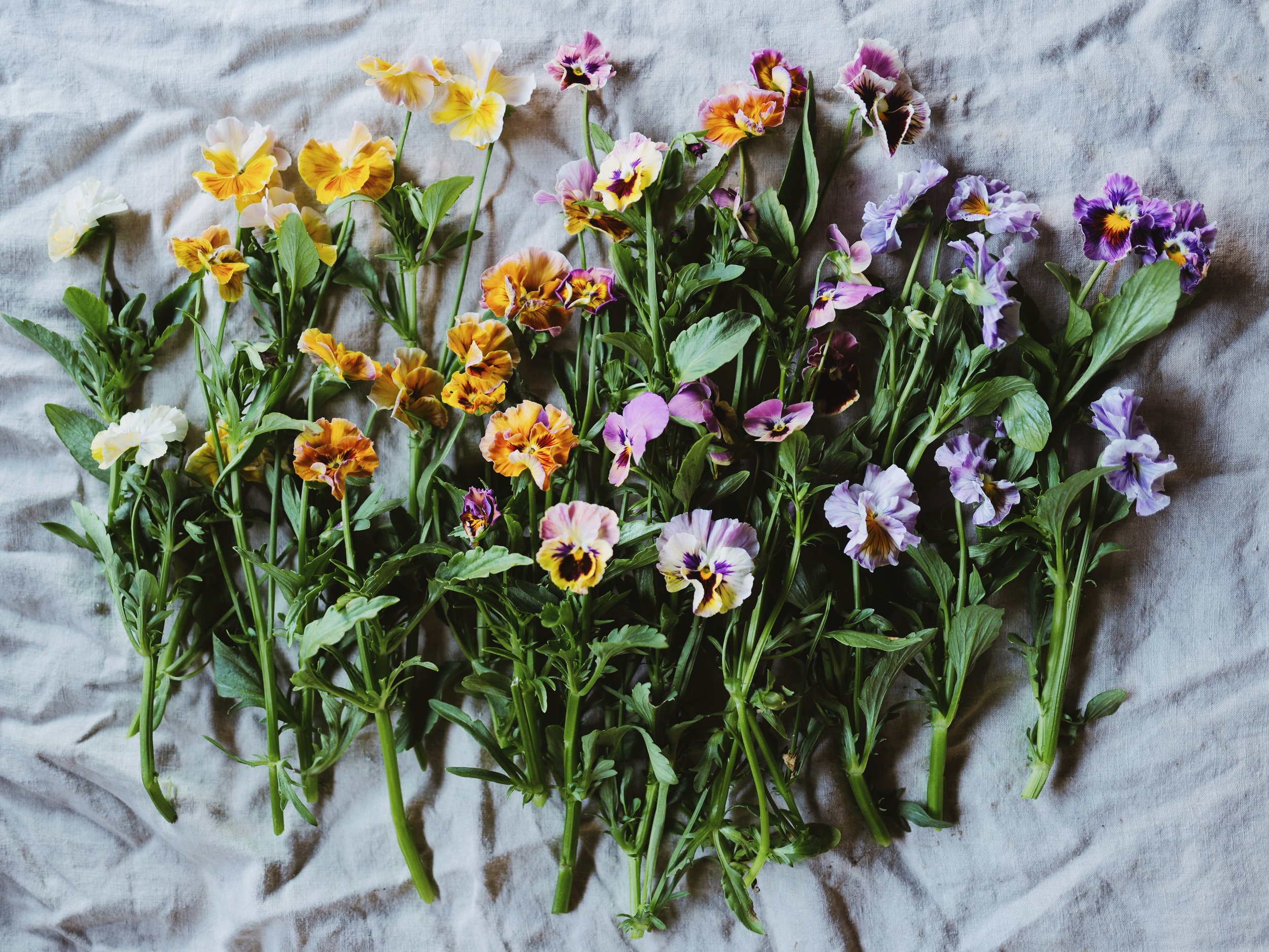
What We Learned from Our Viola Trials
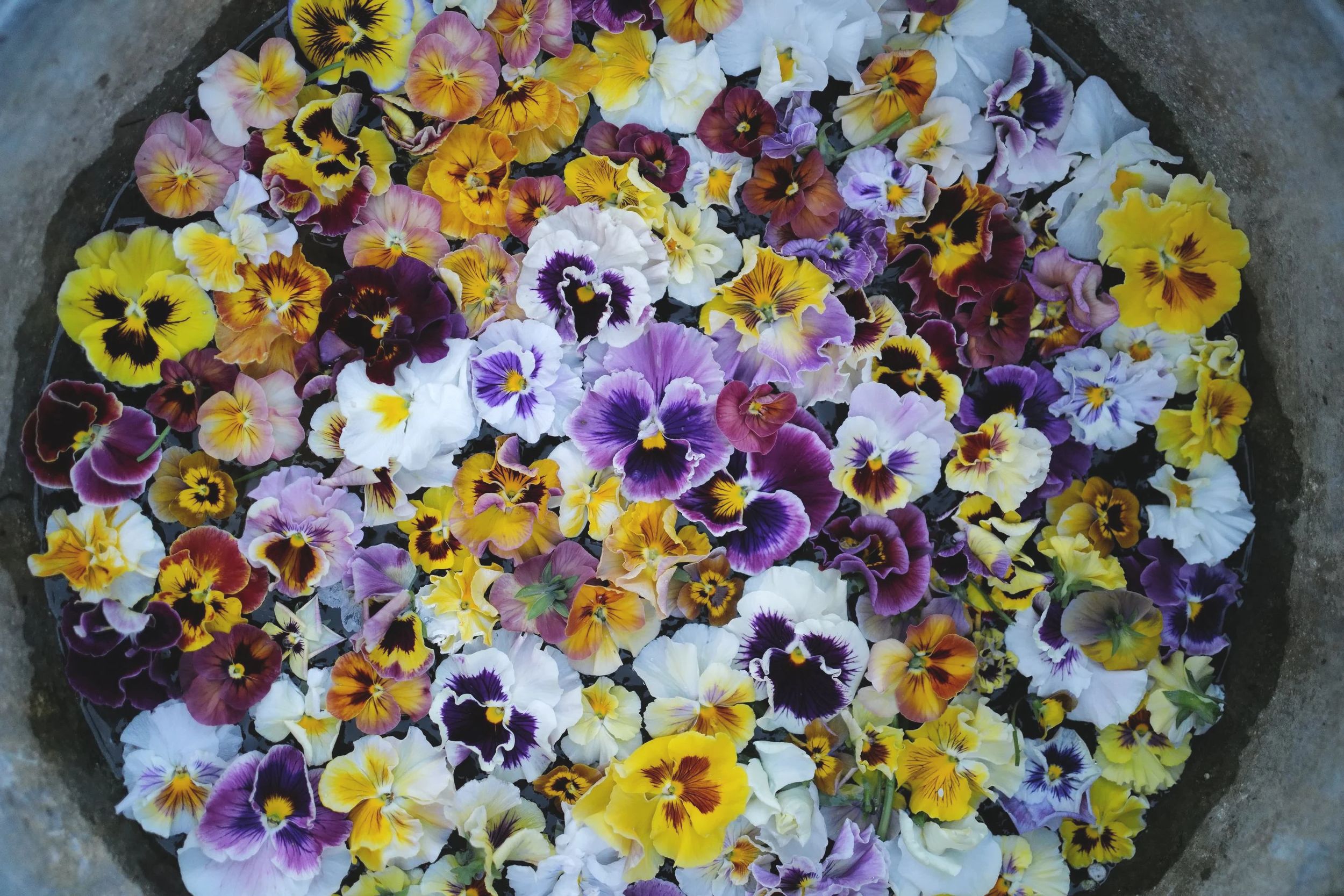
This has to be one of our favourite projects of last year. Violas have a way of bringing SO much joy, something about their little faces, frills, curls and colours, and the fact they seem to throw out endlessly unique and unexpected characters. They are generous plants, exceptionally expressive and we find them to be particularly lovely in both the garden and the vase. One thing about the varieties we trialled, mostly uniquely bred, open pollinated mixes, is that they rarely settle into sameness. That is part of the reason we wanted to do a proper trial of them at all; to get a real sense of what the varieties out there are really like.
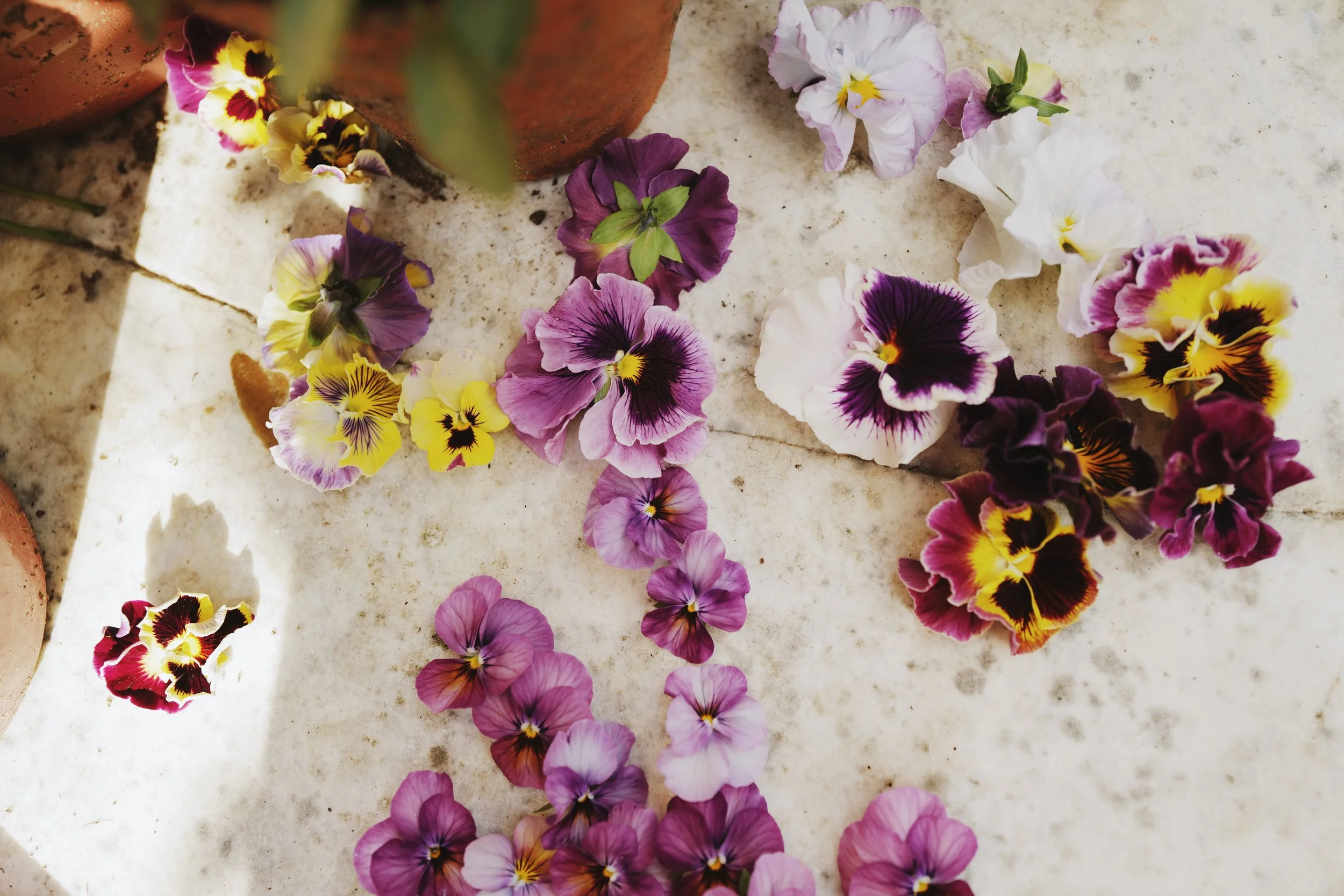
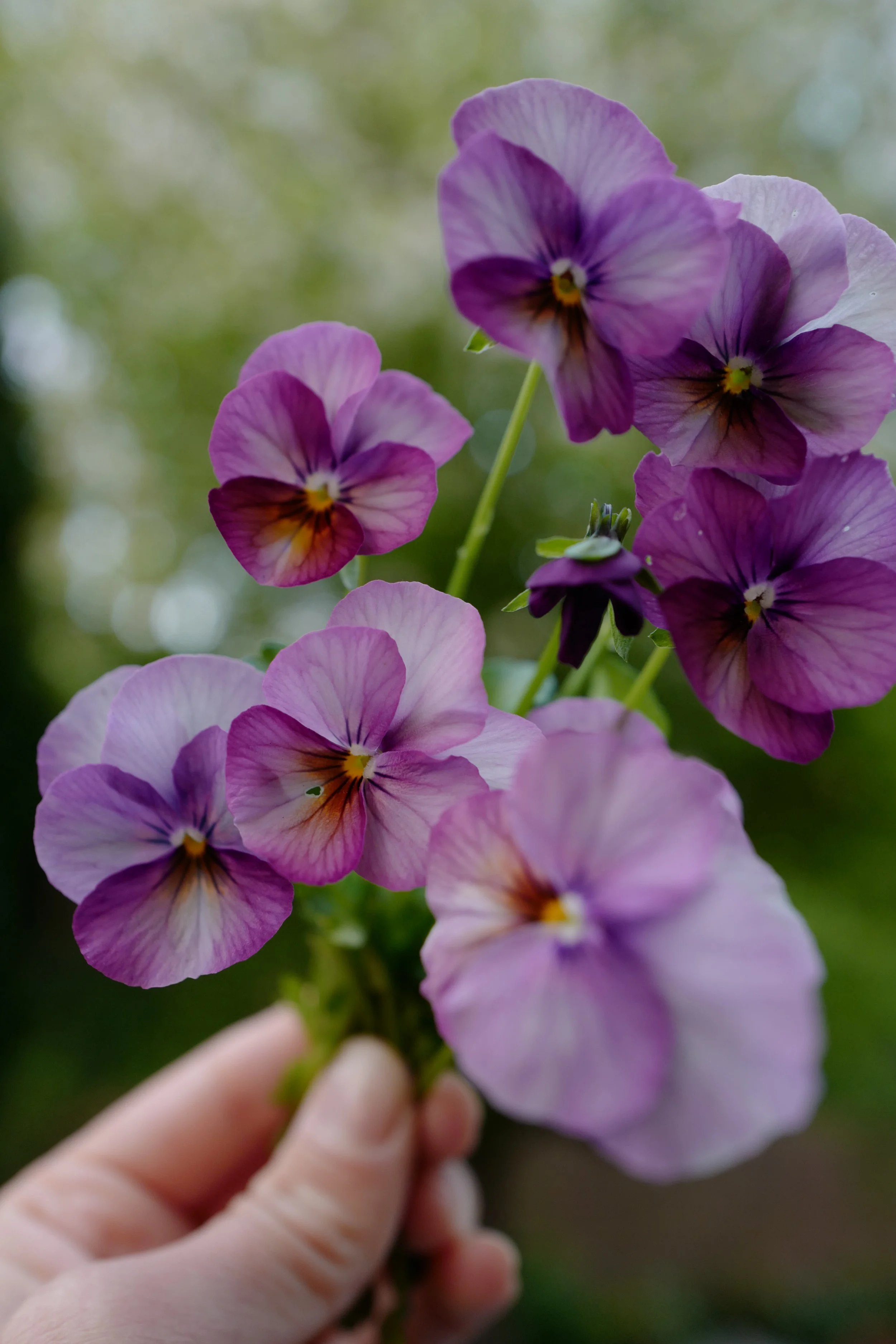
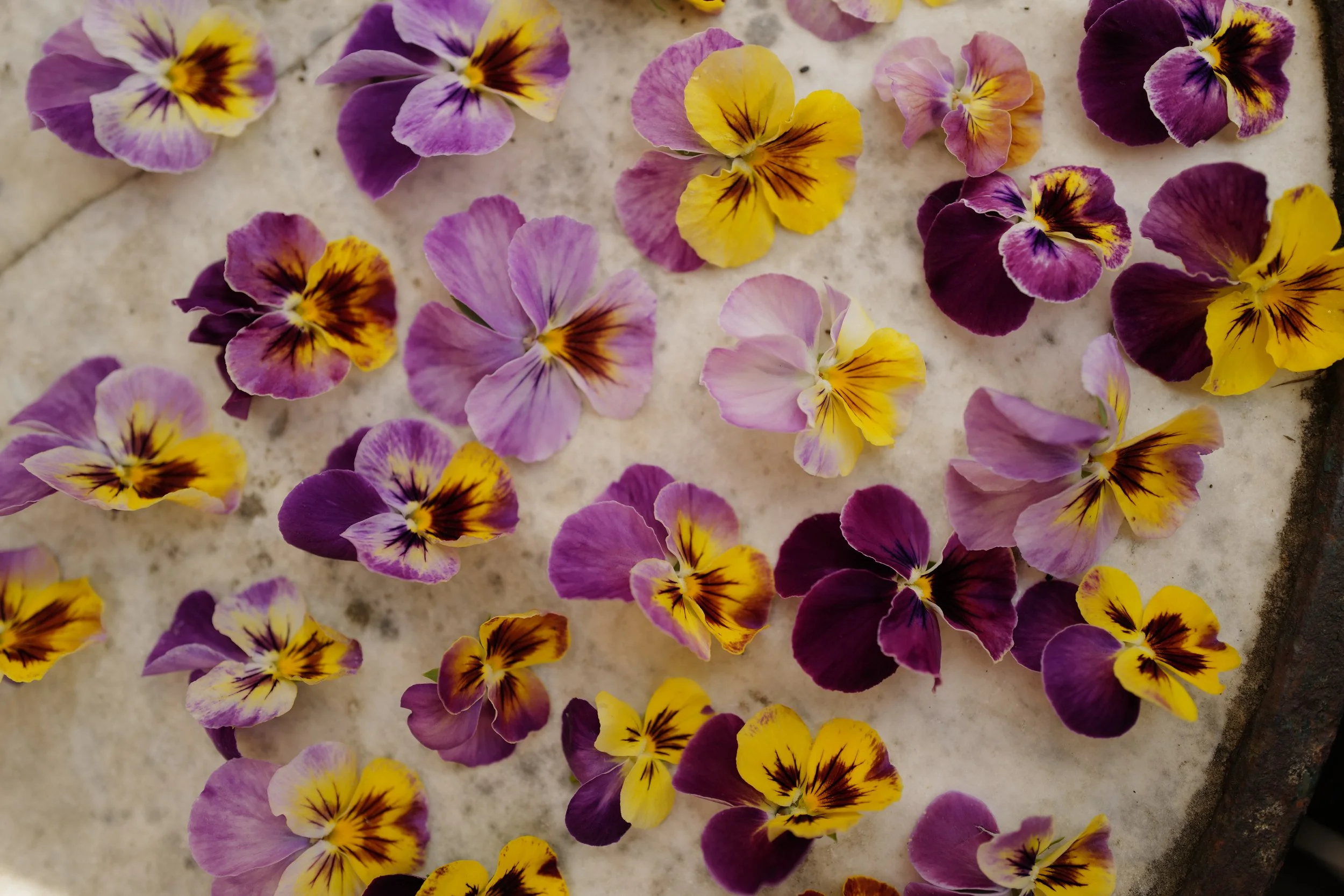
a mix of ‘Moulin Rouge’, and ‘Plum Antique’
We’ve wanted to do a viola trial for a while, mainly because we’ve grown a few varieties en masse for cutting over the last 6 years and have fallen heavily in love. Violas are, sweetly, one of the flowers I’ve grown for longest. Ever since moving into a flat-share, aged 18, with far-off dreams of having a garden one day, I have always grown pansies and violas in pots. 18 years on, and I’ve grown them every year since. I got into violas for cutting after reading a blog post on getting longer stems on violas by Erin Benzakein at Floret in 2019, and Paris and I wanted to continue extend our palette of viola/pansy colours. After having seen so many lovely options we hadn’t tried yet in Brenna Estrada’s book ‘Pansies’ that came out last year, our growing list got long, quick.
We wanted to grow them so we could judge not only how each variety looks at its best, but how it behaves, how it shifts with age, and what kind of grower it might suit. Some violas are steady, easy-growing, and reliable in form and colour. Others are wild cards, throwing streaks, dapples, veining, ruffles, in multiple different ways within one variety. (By the way, both have a place in our hearts and our garden.)
This season we grew a wide range (21 in total) of specialty violas that we were interested in adding to our yearly must-grow crops. We watched them slowly, over weeks, noticing not just colour but shape, scent, vigour, and the small ways each plant responded to where we planted it. What became clear almost immediately was that the variation that came though was in many ways the whole charm of them. We spent many a morning, tea in hand, looking at the new faces that had opened overnight, and filled with glee at the sight of so many different, unique flowers. Many of the varieties we grow are open-pollinated strains. Each seed carries its own interesting traits and genetics and rather than uniformity, what emerged was much more like a family likeness; shared qualities, but plenty of room for individuality.
This showed up in a few different ways, flowers of the same variety differed in size, colours shifted as the season moved on, some petals were smooth, others frilled and ruffled, or streaked, and boldly marked. No two plants felt quite the same, even when they belonged together under the same name. We know lots of growers prefer to know exactly what they’re going to get, but we see the variations as abundance rather than inconsistency, something to pay attention to, and thoroughly enjoy.
What we also found is that where and how a viola is grown makes a real difference. Plants in the ground often held deeper, more saturated tones than those grown in pots. Light, temperature and soil all left their mark, too. Colour shifted a little with the conditions they were grown in.
So, an important thing to take into account, is that if your violas do not perfectly match the photograph on the packet, it is most likely that the picture is just one singled out flower from an enigmatic, changeable mix, and on top of that, you’re seeing a response, the plant answering to the place it is growing in.
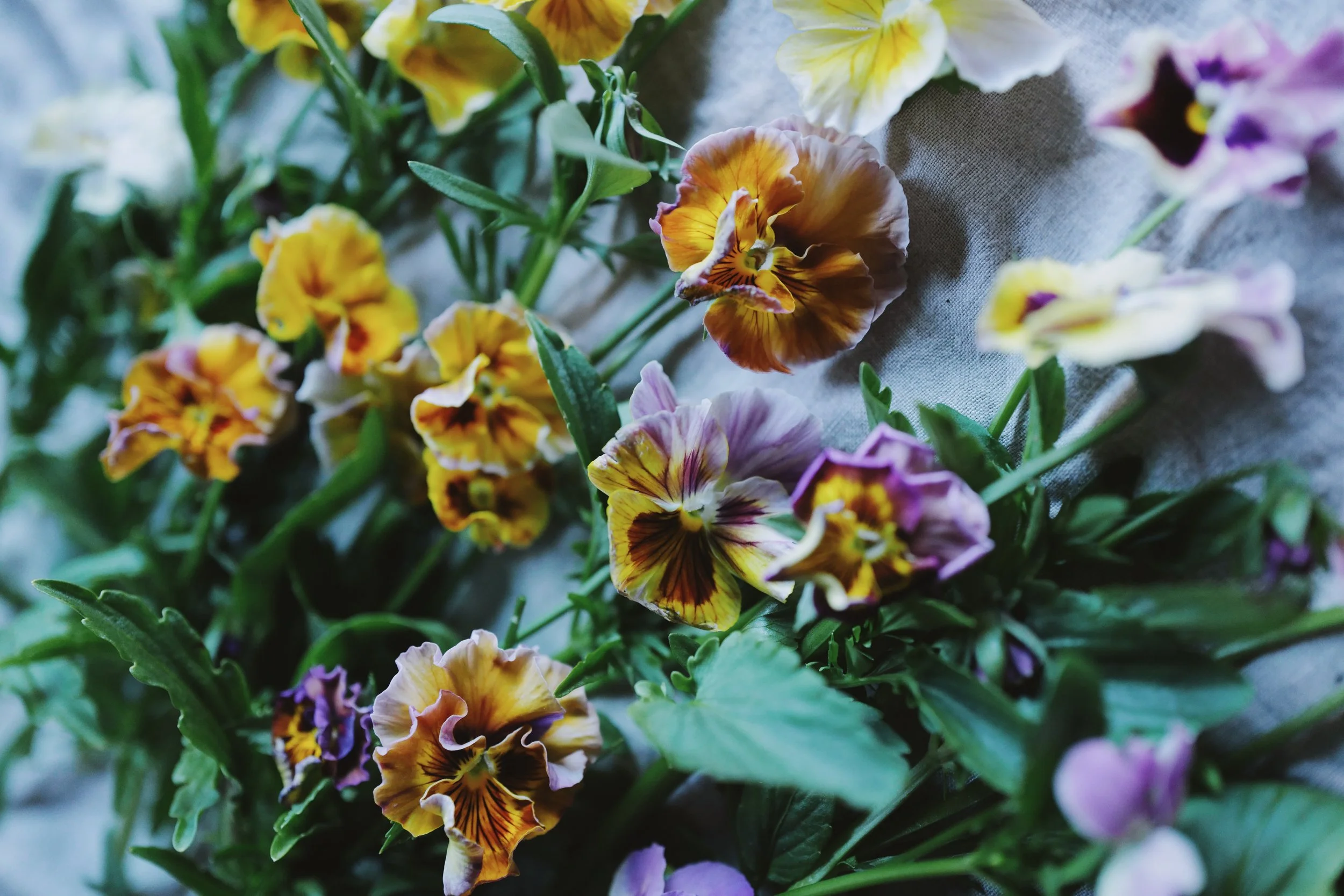
Choosing your varieties to grow
We know. There are so many to choose from. Where do you start? Choosing a viola (or a few), we reckon, is partly about knowing what you are drawn to.
Some people want consistency and subtlety, and there are varieties that hold themselves much more evenly. Caramel Pastel Lilac, Caramel Lilac Bronze and Pandora Rose Box delivered this beautifully for us, flowering non-stop with remarkable uniformity. Always neat, always dependable and in a very reliable colour palette.
Or you might be more drawn to movement and unpredictability. Brushstrokes, Chianti, Sweet Pea Mix and Moulin Rouge will reward you, offering painterly streaks, occasional stand-out blooms, and moments of surprise that feel worth the wait. (Remember though- with these mixes, you get the family likeness of the variety, but not the same markings, colours or forms each time.)
Height and stem length varied too. Many varieties produced taller, more generous stems when planted out, and shorter, tidier growth in containers. This responsiveness became one of the things we loved most about growing them. Some varieties were much more compact on the whole, others, tall, wiry and a lot more suited to larger scale arranging in the vase. (It’s worth either netting them, or letting them be supported by other plants to get the stems to remain upright as the flowers grow, see interplanting information below)
And then there’s scent. Oh, the scent. Such a sweet addition. Some varieties offered it more readily than others, and even then it came and went. It shifted with the time of day, with the weather, with the age of the flower itself. Not every bloom carried it, but when it did, even if it was delicate, it stopped us for a moment, and doubled the joy.
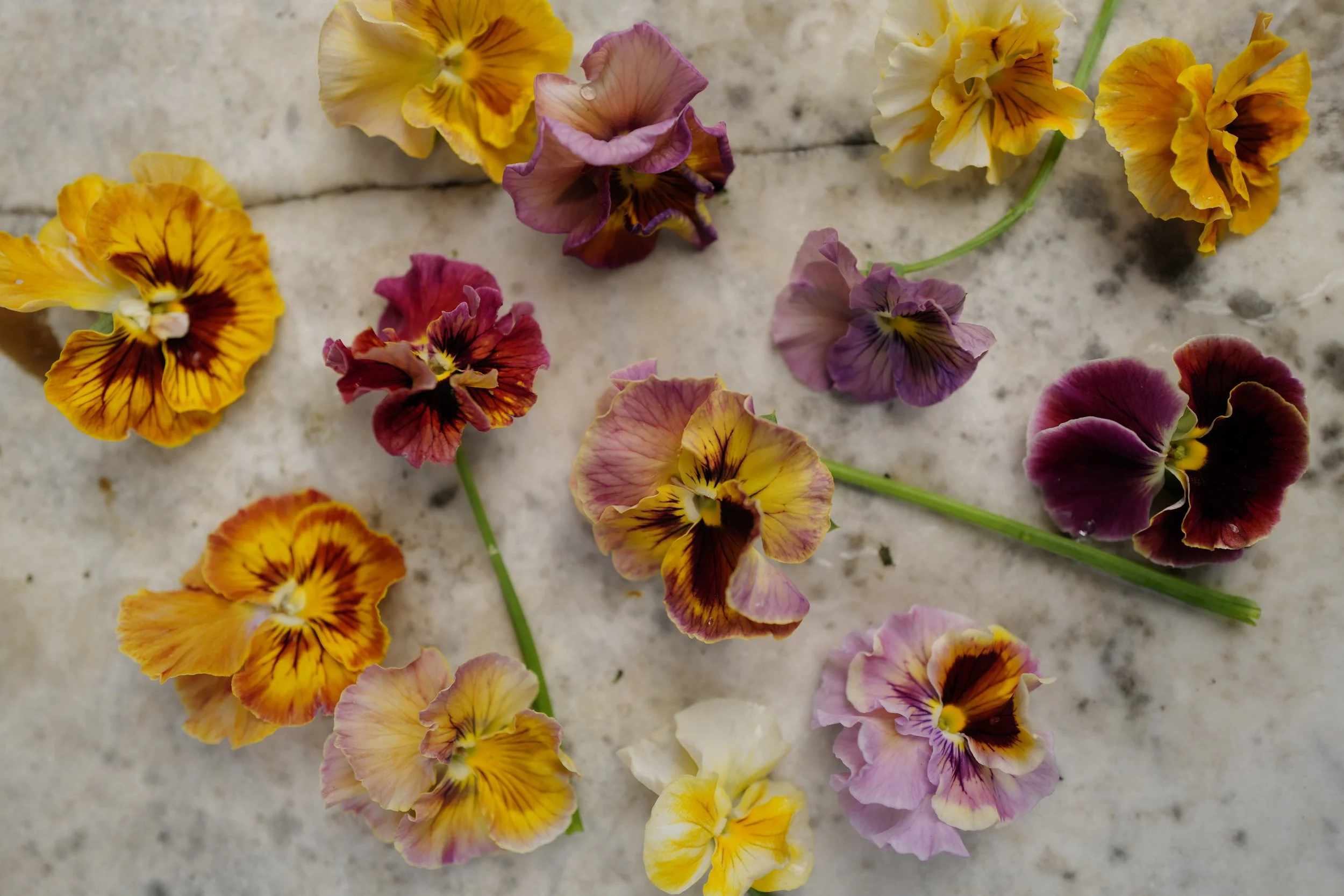
Highlights from the trials
Some varieties stood out immediately to us.
Plum Antique surprised us with its tall stems and strong scent, producing an airy mound of petite smoky purple flowers that worked beautifully in pots as well as in the ground. (image left)
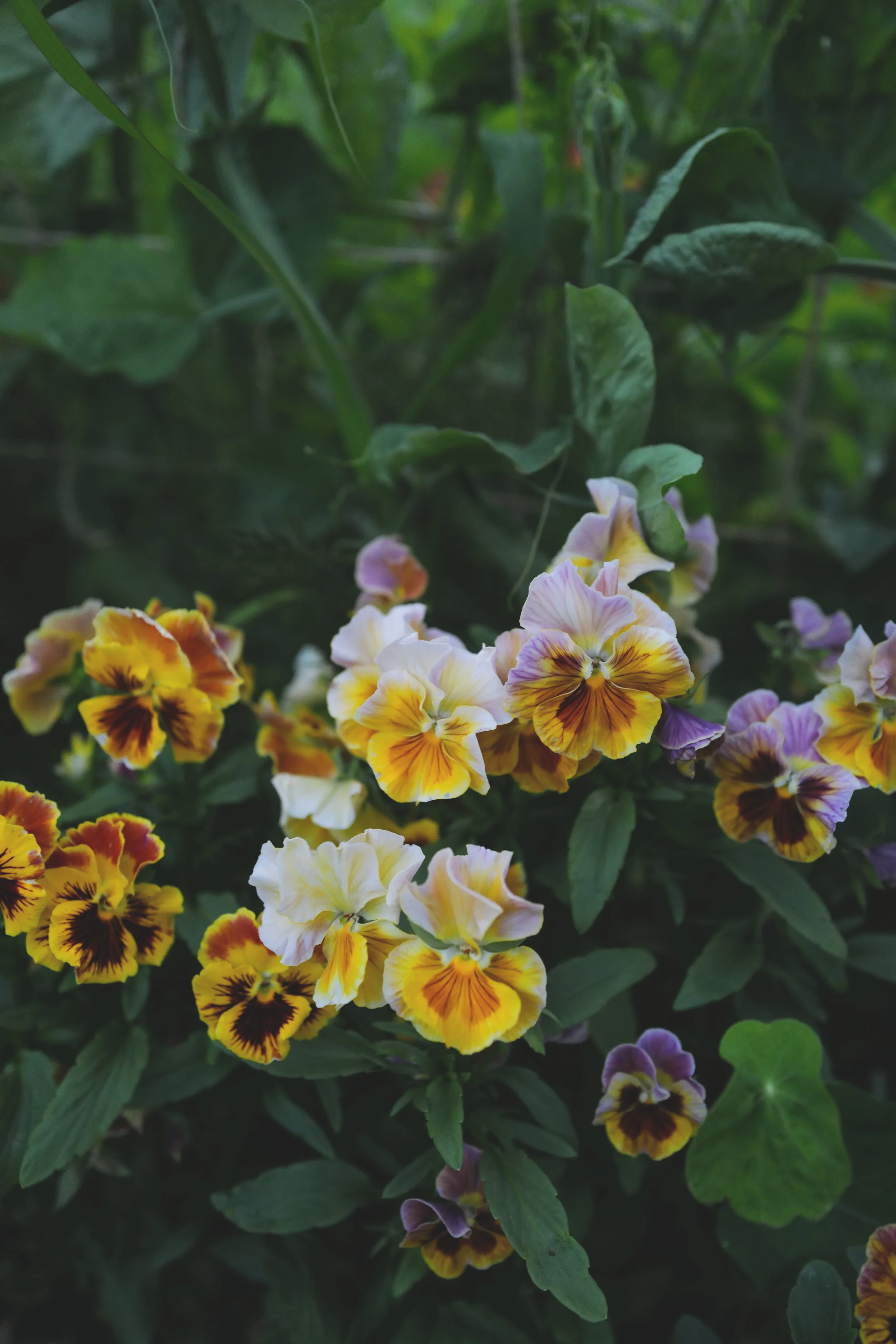
Flamenco Terracotta was one of the earliest and most exuberant to flower, glowing in warm reds, oranges and ochres, all ruffles and remarkable colour. (image middle)
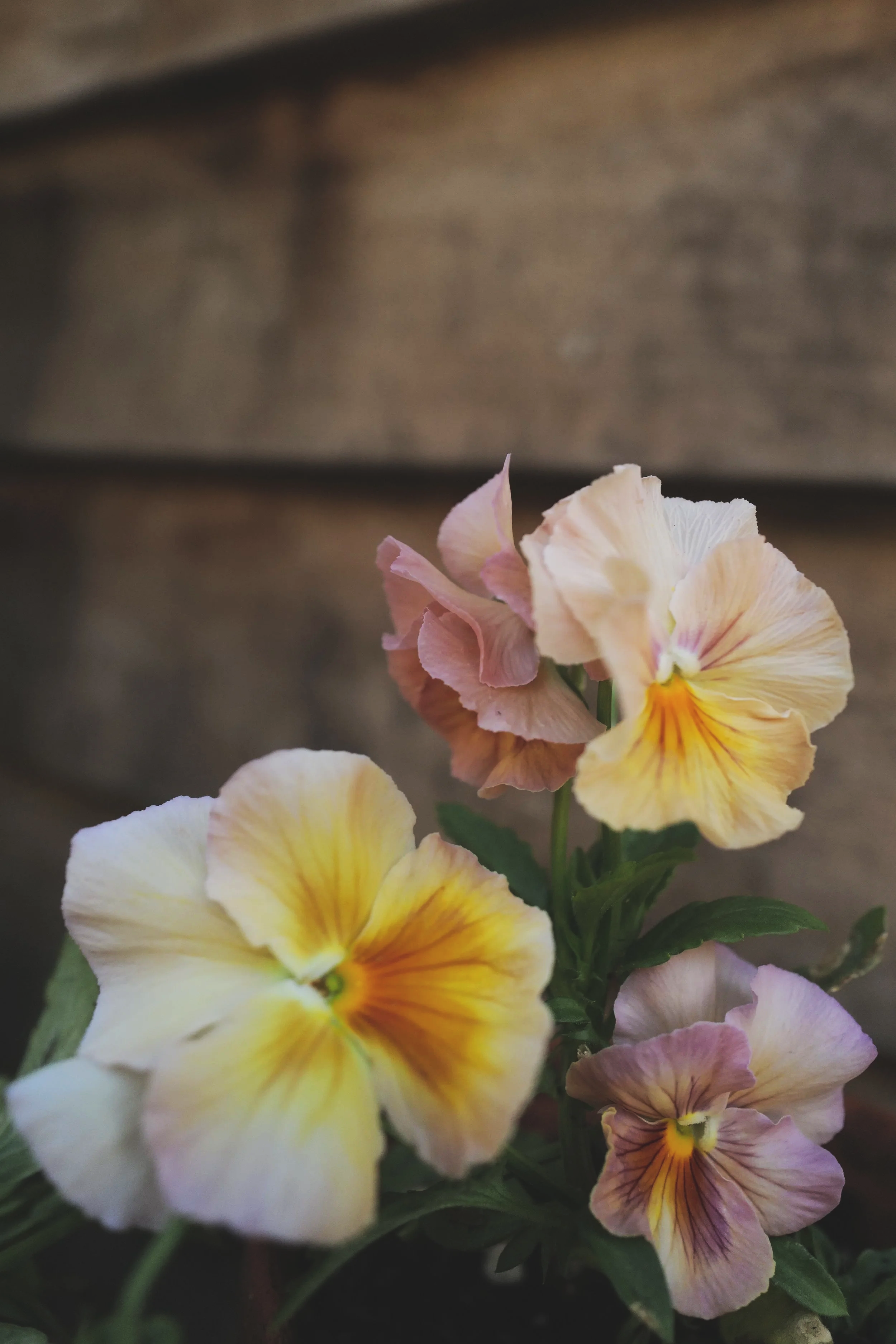
Peach Shades was the romantic of the group, offering large, luminous blooms in peach and apricot tones, while Sunset Matrix proved endlessly useful for design work, pairing classic pansy blotches with a refined sunset palette that worked equally well in pots, borders and even the vase. (image right)
How we’ve learned to grow violas well
Over the last six years of growing violas seriously as cut flowers, a few practices have made a consistent difference.
Seed starting compost
We start with a multi-purpose, peat-free compost. For these trials we used Sylva Grow Melcourt, 100 percent peat-free, mixed at roughly three parts compost to one part perlite. The added air and drainage around the roots makes a huge difference.
(See our resource on starting viola seeds here)
Disease avoidance
Black spot and root rot are things we’ve seen occasionally, but almost always when plants are sitting in wet, stagnant conditions with poor airflow. In those situations, roots can begin to rot, and plants may fail suddenly at the point where root meets stem.
As much as violas tolerate cold (they can cope with light frosts even when tiny), what they struggle with most is stillness and damp. If it’s cold when you start them, don’t let them sit wet. Water infrequently, don’t let them dry out completely, but avoid over-saturating the compost.
Careful with the roots
Violas have particularly delicate roots. We’re extra careful when transplanting and give them plenty of space and air in their growing spot. Plant into prepared ground. Prepared ground on our growing site looks like fairly heavily mulched beds on top of that heavy clay we have, but over the years, the mulch has broken up the clay enough for drainage in them to be much improved. We make a loose planting hole using our favourite tool, the hori hori, you can always mix a little extra perlite to help further, and then gently tuck the plants in.
Drainage and watering
Drainage really matters when it comes to viola health and success. In ground that stays wet, violas are far more prone to disease, so we love growing them in pots and raised beds, or choosing the best-drained spots in the garden. We’re on heavy clay, so we have to be thoughtful about placement.
Where this hasn’t worked, it’s almost always been due to reduced sun, poor airflow, or particularly wet areas of the plot. Violas dislike being overly shaded and really dislike sitting in still dampness. They’re happiest in part shade or full sun.
We also allow the soil around the plants to dry slightly between watering. We never let them reach wilting point, but once the compost has dried a little, we water again. We water from below using an irrigation drip line, which has been a huge help with disease, by avoiding the foliage getting wet, especially as we plant quite closely.
Watering in the morning and allowing the sun and warmth of the day to dry the foliage again has been a game changer for keeping plants healthy and flowering right through summer.
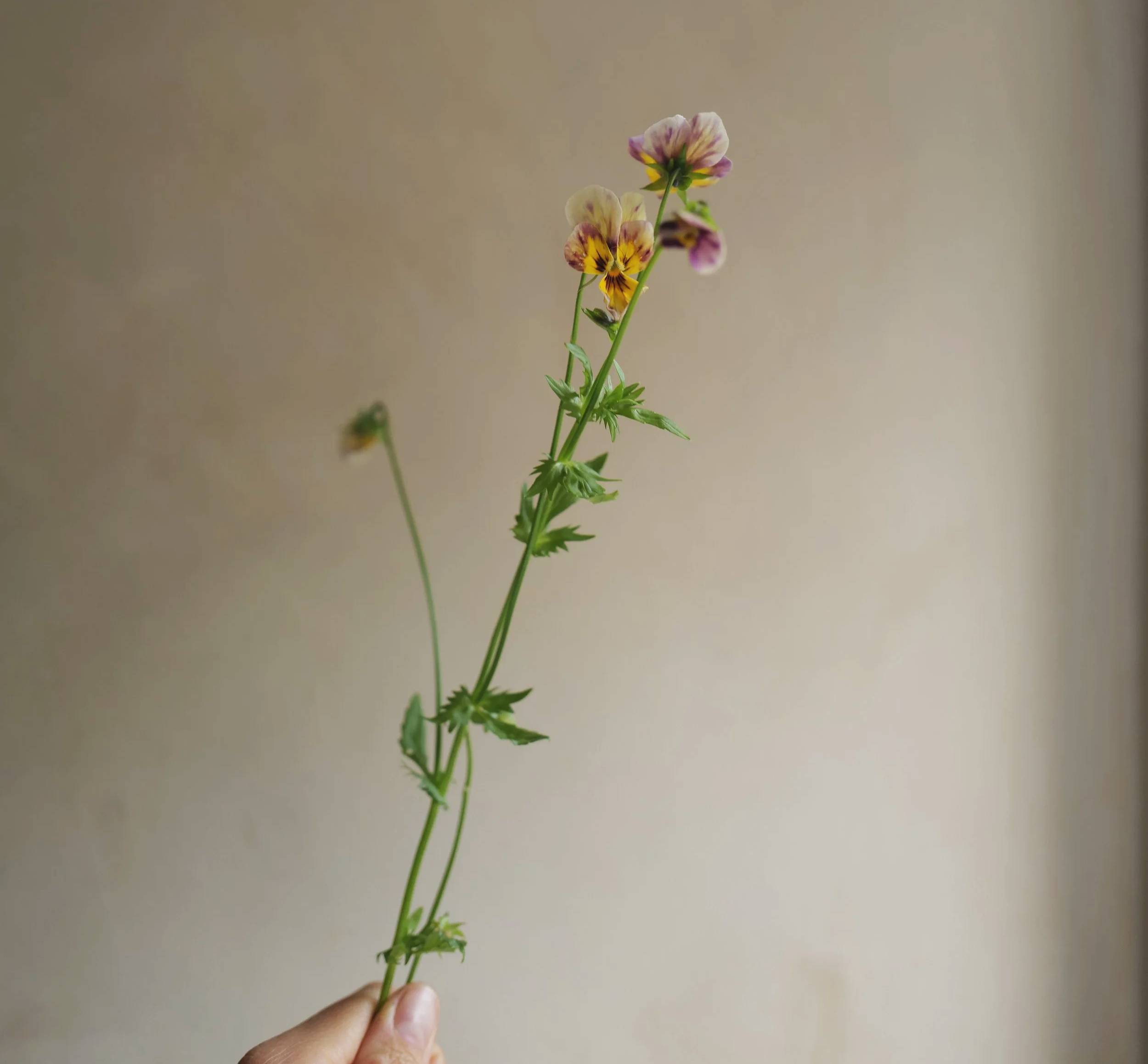
‘Brushstrokes’ picked from amongst a crop of Nigella
Interplanting or Support
Interplanting has been key for strong, long stems. We’ve grown violas very successfully among tulips, snapdragons and nigella. The competition improves airflow and prevents soil from staying wet, as everything is vying for a drink. Nigella in particular creates a beautiful, gauzy framework for viola stems to happily climb through and be well supported. If you want to grow them as a separate crop and not interplant, try netting them for stem support.
Sweet pea companions
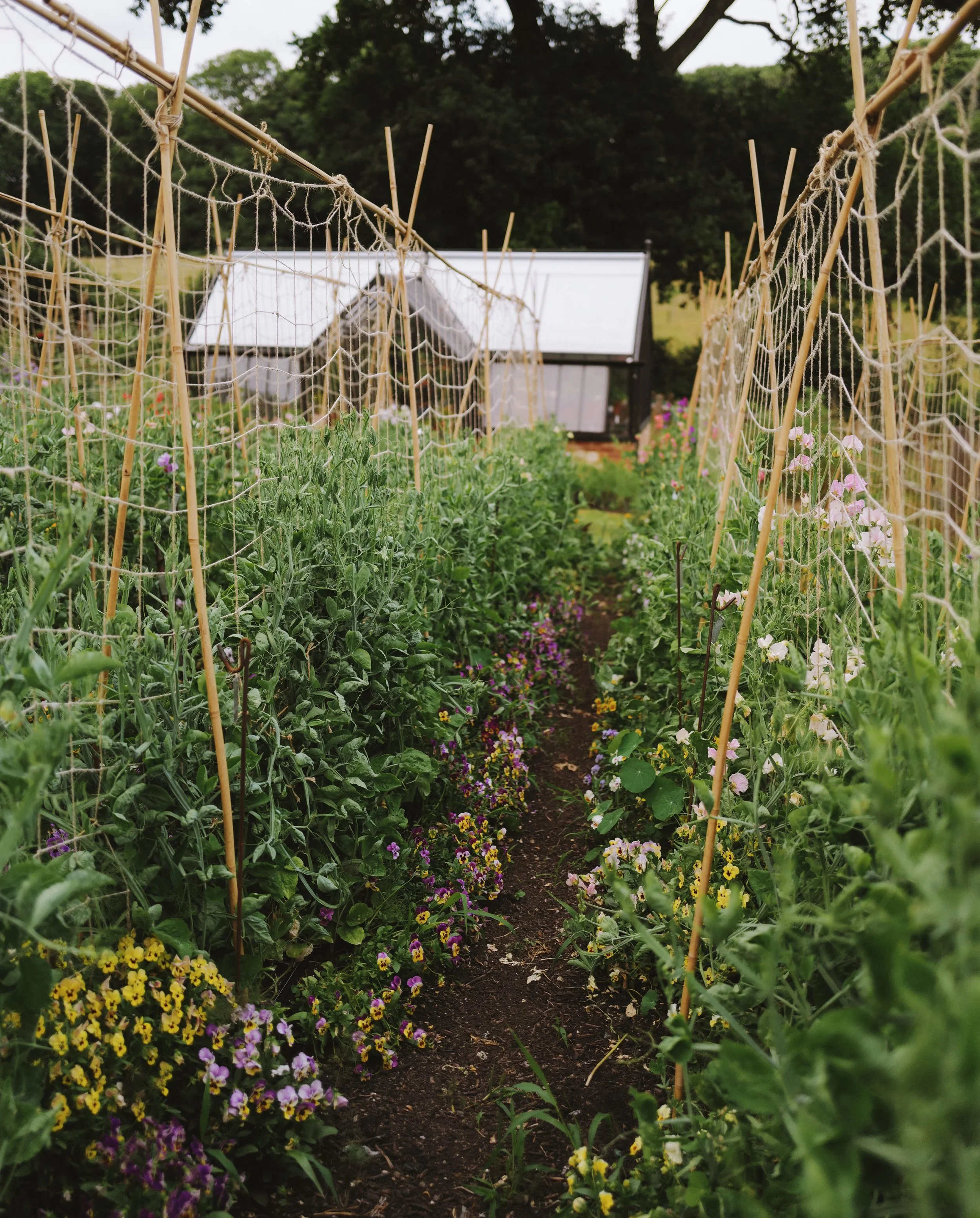
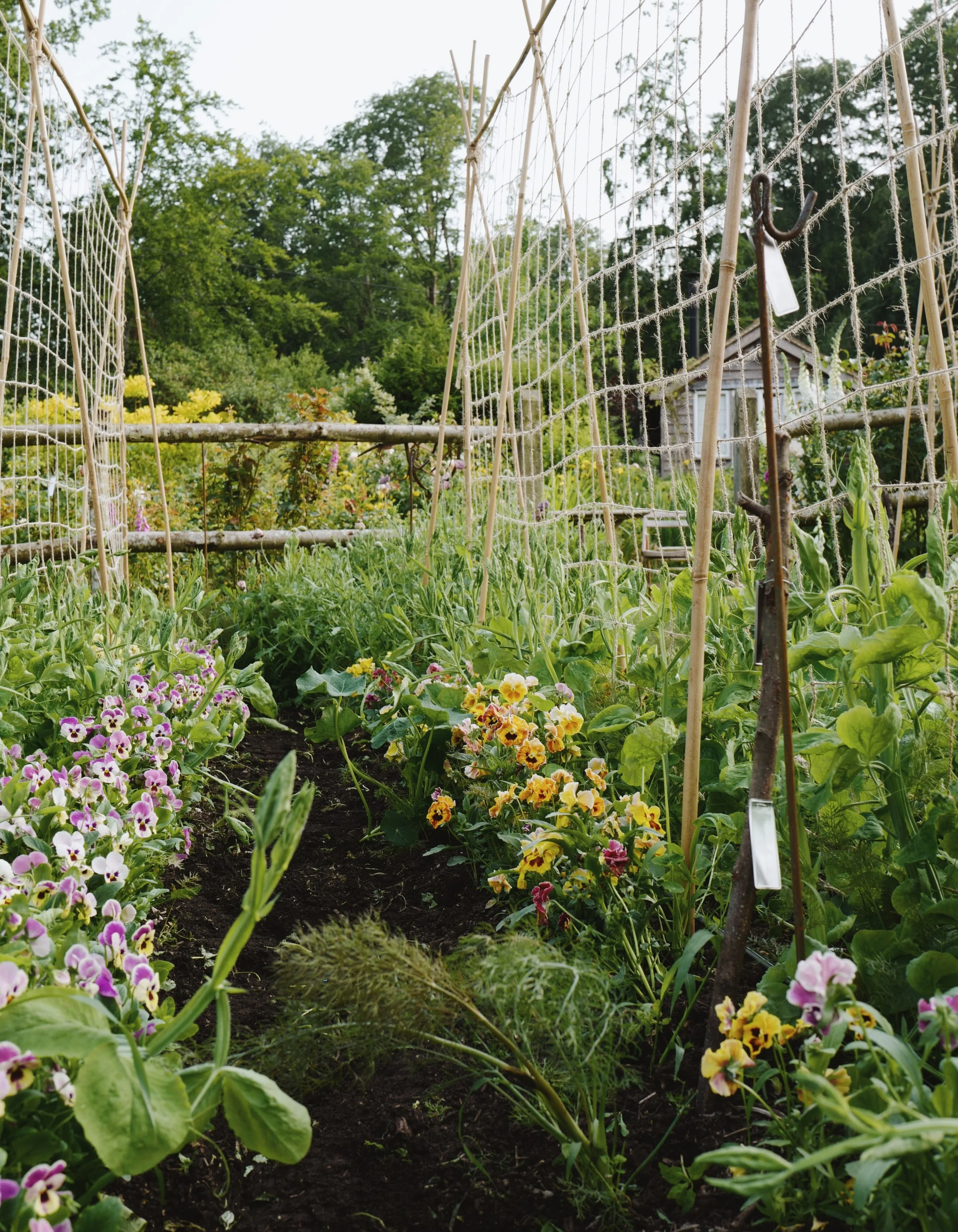
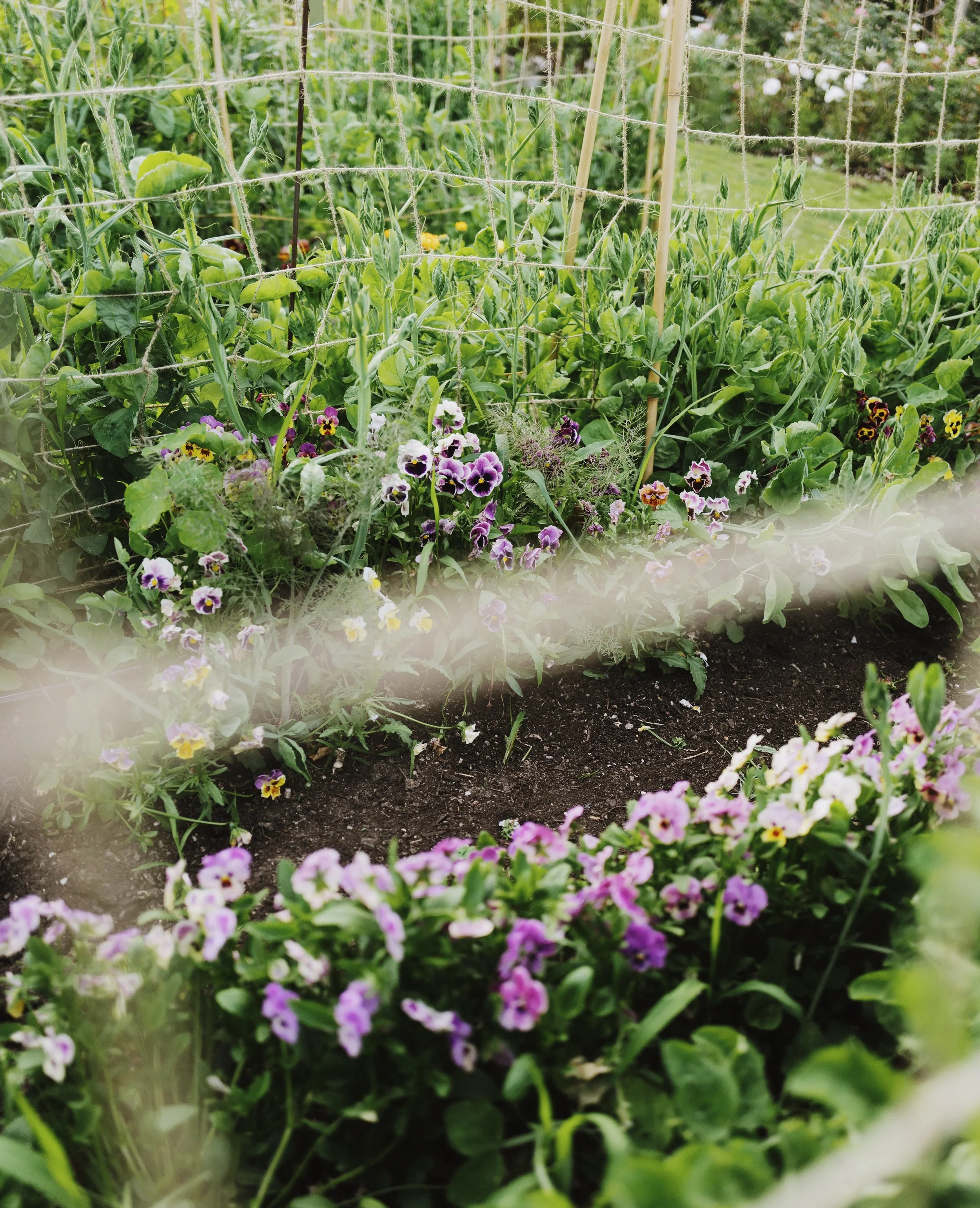
Our most successful method by far has been growing violas at the foot of sweet peas.
We irrigate the sweet peas early in the morning, so the violas receive a good soak but have time to dry throughout the day. The violas act as a living mulch, suppressing weeds and shading the soil, while the sweet peas benefit from cooler roots. At the same time, sweet peas are so thirsty that they absorb excess water, which is especially helpful on our heavy clay.
The sweet peas climbing upwards also acts as a support for th violas, who also begin to climb upwards. By the end of the season, we corralled the violas in with twine to the stakes in the ground, to ensure the stems continued to grow upwards.
Temperature
Temperature surprised us. We knew violas didn’t mind the cold, but when we grew in the tunnels in high summer the year before last, where temperatures were reaching 45 degrees and we weren’t watering much, every 5 days or so, the violas still flowered and thrived.
Over the last six years of our note taking, we have found that Violas seem to like being grown cold when small (albeit not cold and damp), then warmer as they mature. This combination consistently produces longer stems. Once established, they tolerate a wide range of temperatures, coping well with both low and surprisingly high heat.
Final thoughts
The year of the viola trials was completely joyful for us. Paris and I spent a lot of time gasping and sighing, showing each other our favourite faces each week.
The loveliest thing about violas, we found, is that they ask you to look more than once. To notice change over time. To allow for difference. Uniformity has its place, but so does individuality, and we were happily surprised by the sheer number of unique forms, colours and ruffles they showed us.
If you take anything from these trials, we hope it’s permission to enjoy variation. To see it not as inconsistency, but as the loveliest generosity of a plant doing what it does best.
The Violas
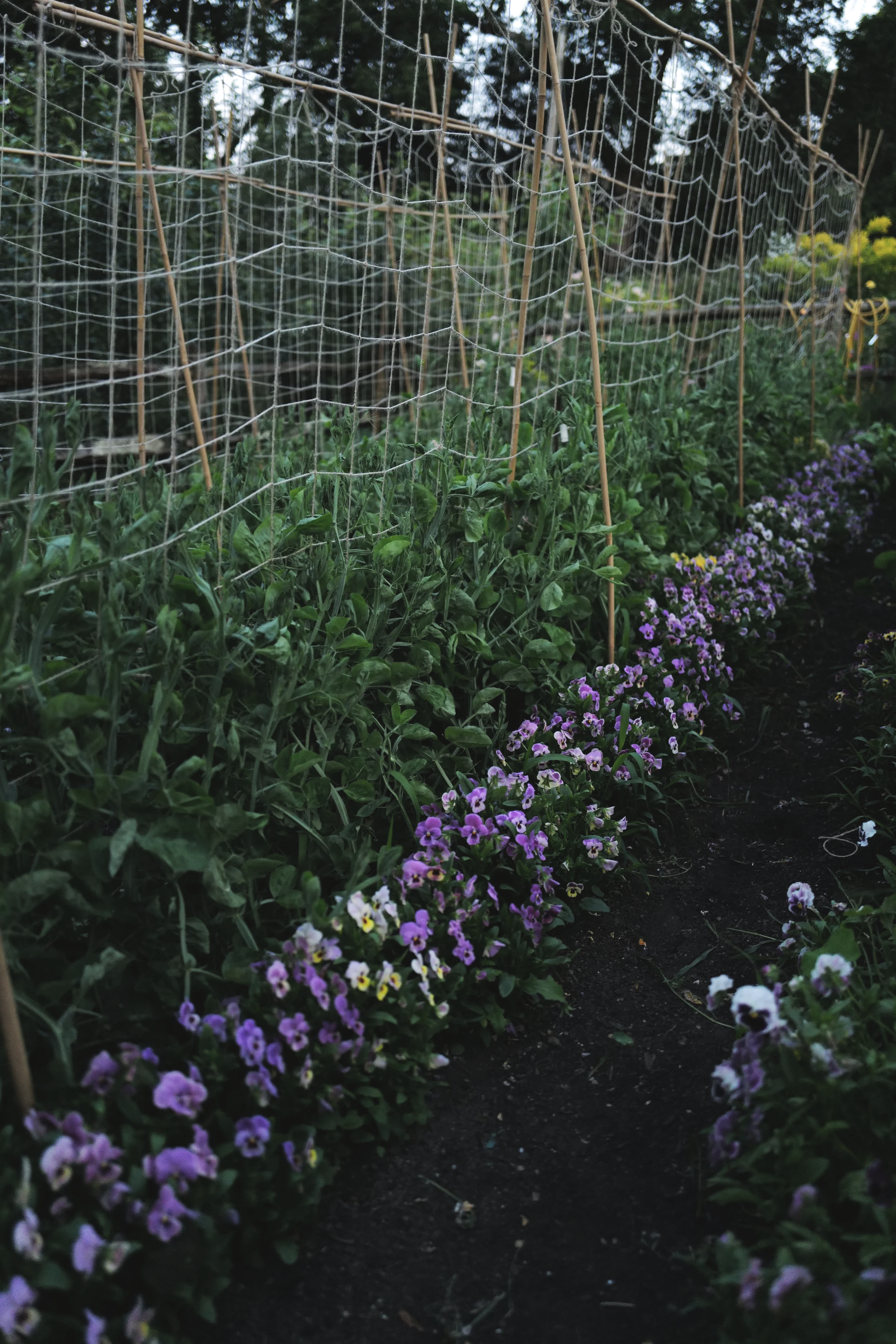
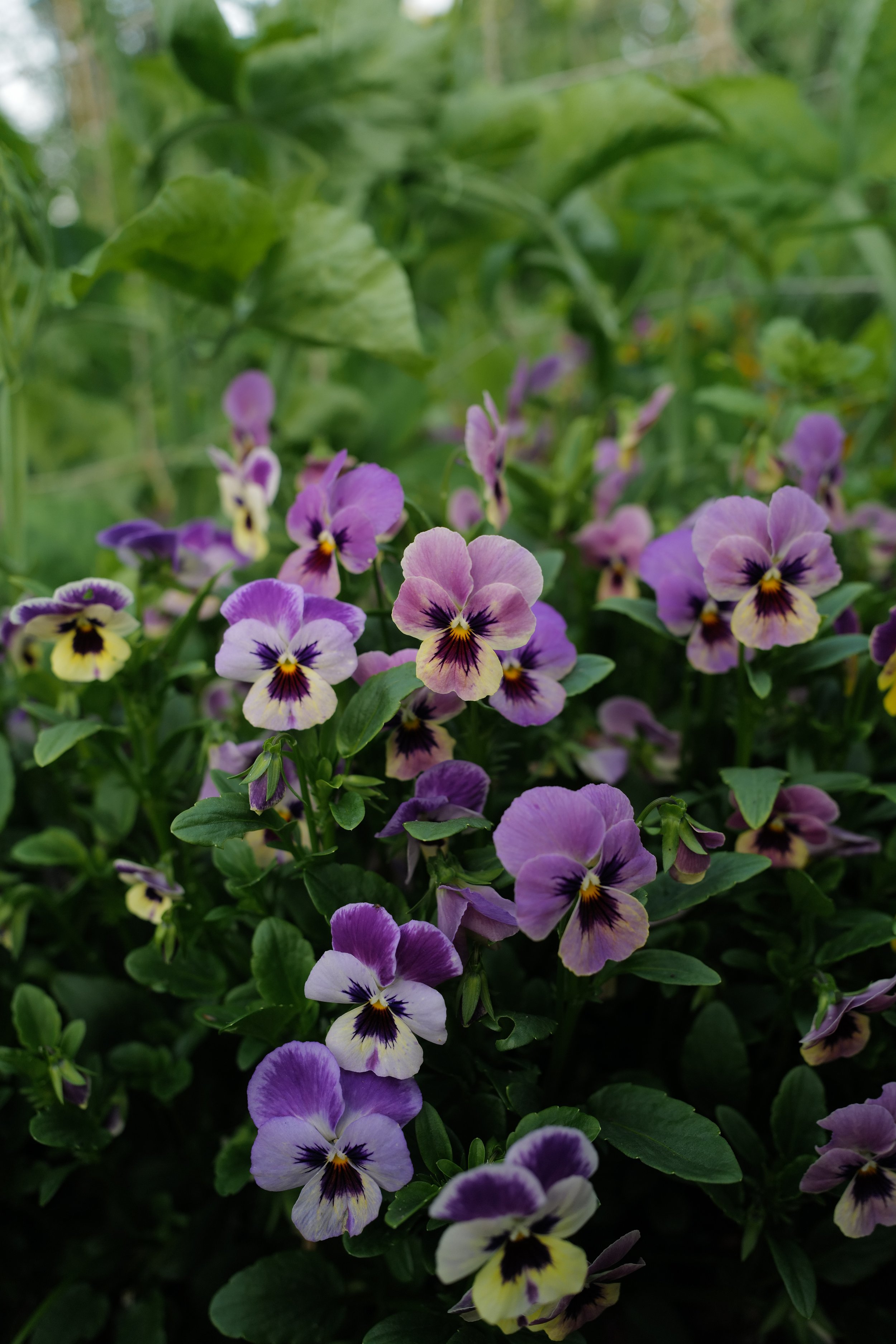
Possibly the most perfect viola we grew. Exceptionally uniform, endlessly flowering, and always covered in neat, upright blooms. While the palette of purples, lilacs and soft yellow is not the most surprising, its consistency and abundance are remarkable.
Plants are vigorous, resilient and hold their shape beautifully, making this an outstanding choice where reliability and long season performance are key.
(Images above)
Flower size: Approx. 3 cm
Scent: Lightly scented
Habit: Neat, upright, vigorous
Height: Around 30 to 35 cm
Variation: Very uniform with subtle tonal variation
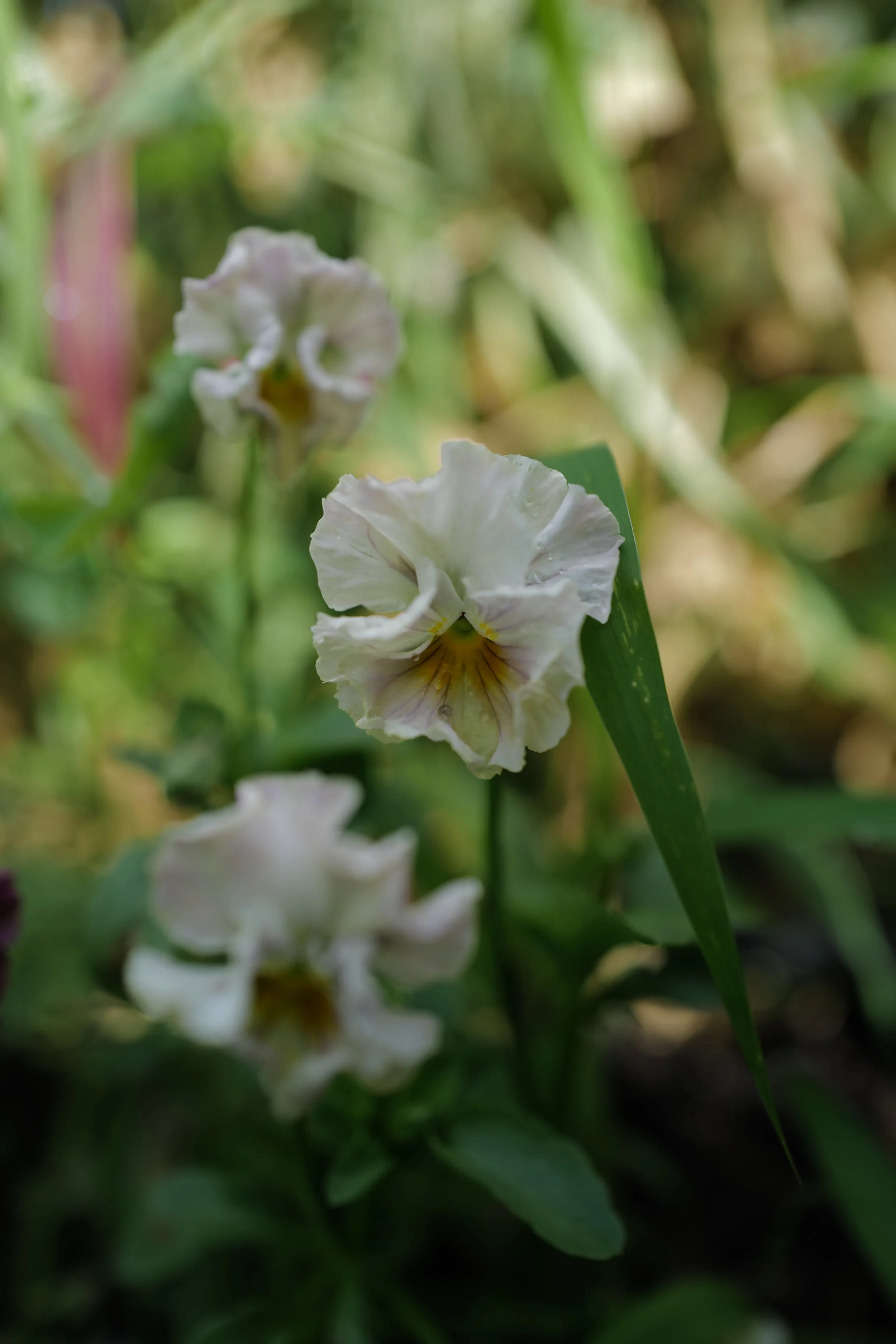
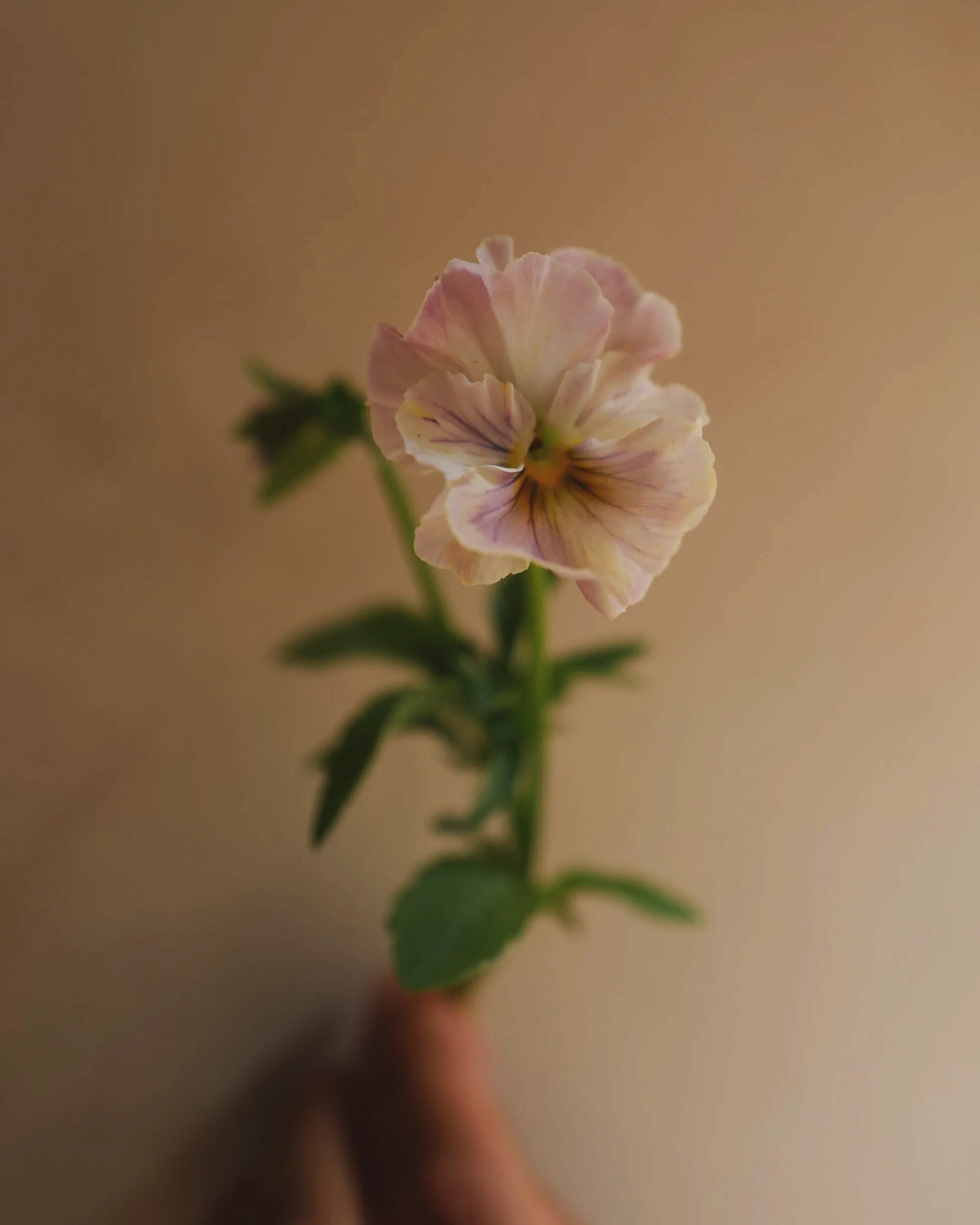
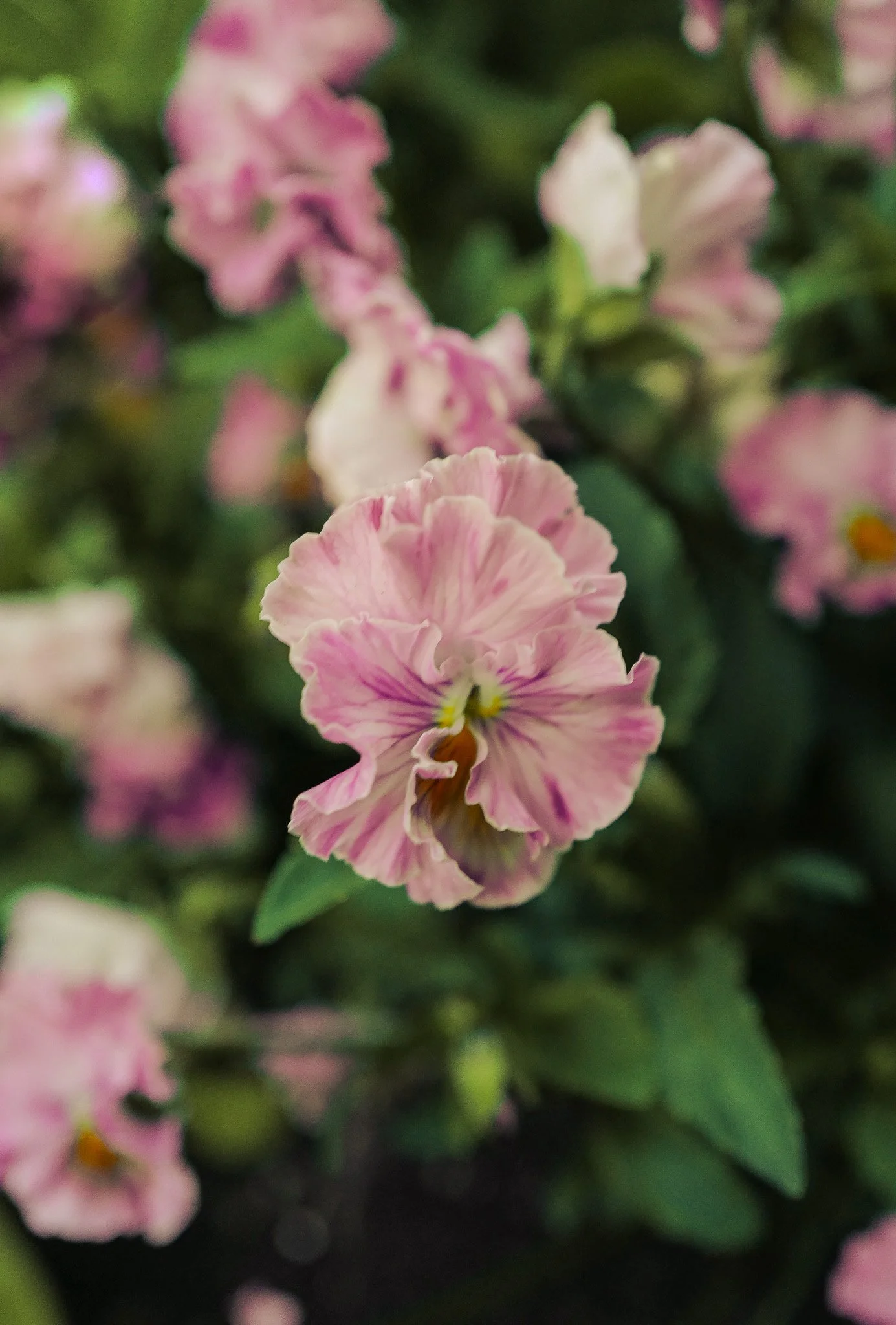
A much sought after mix with the tantalising possibility of extraordinary striped blooms that represent the height of pansy beauty. It is a gamble, and part of its appeal lies there. Only a few of the rare striped and dappled flowers appeared, but the remaining blooms in lilac, cream, blush and rose were all beautiful in their own right.
Flowers are large and expressive, often whiskered, with streaking and dappled effects appearing intermittently. Lightly scented with a delicate, sweet, spring like fragrance. A must grow for those who enjoy variation and the quiet excitement of potential.
(Images above)
Flower size: Approx. 5-6 cm
Scent: Lightly scented
Habit: Medium, upright
Height: Not formally recorded
Variation: A bit of a mix, fairly uniform in form, but colour seems unpredictable, but with occasional striped and dappled standout flowers
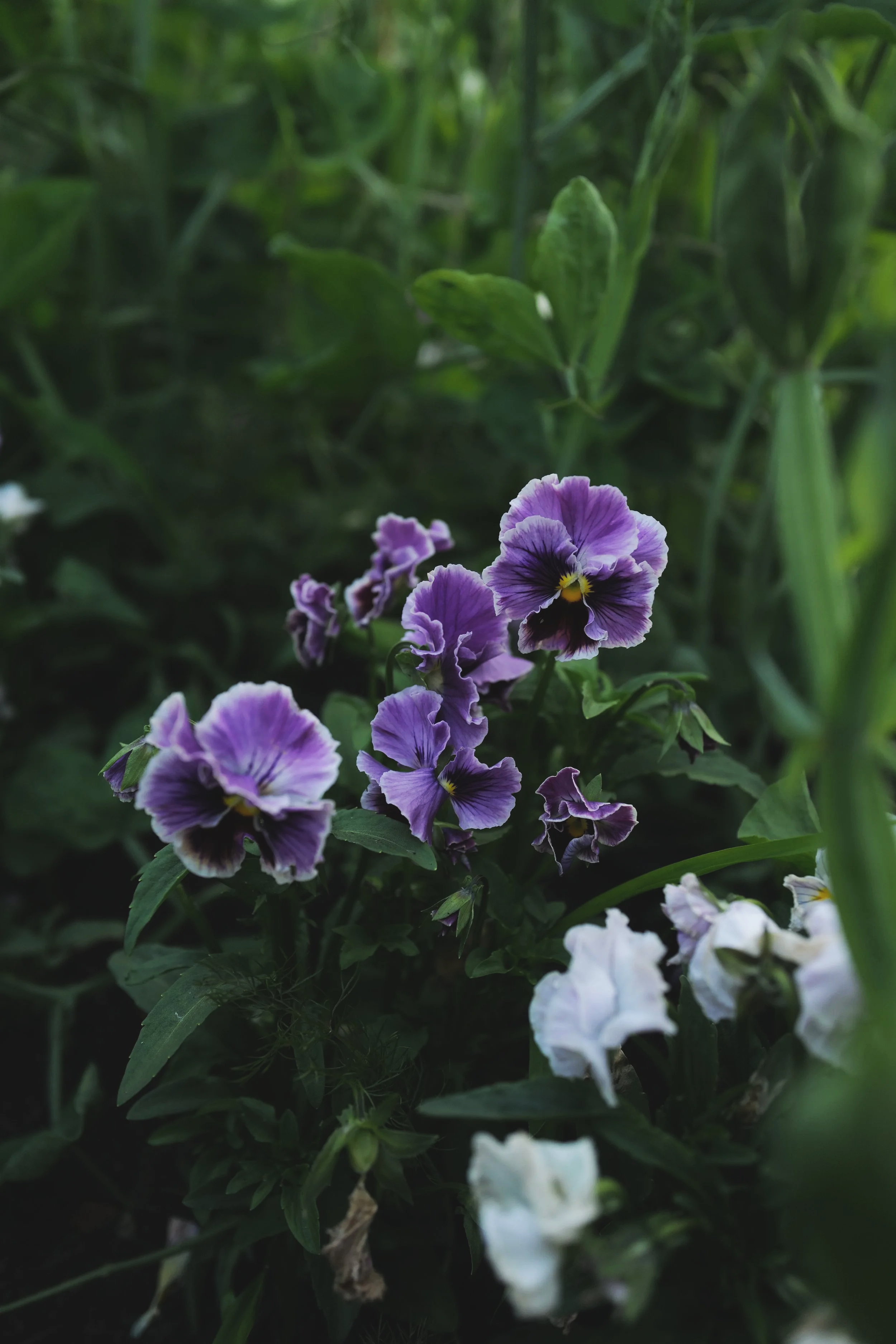
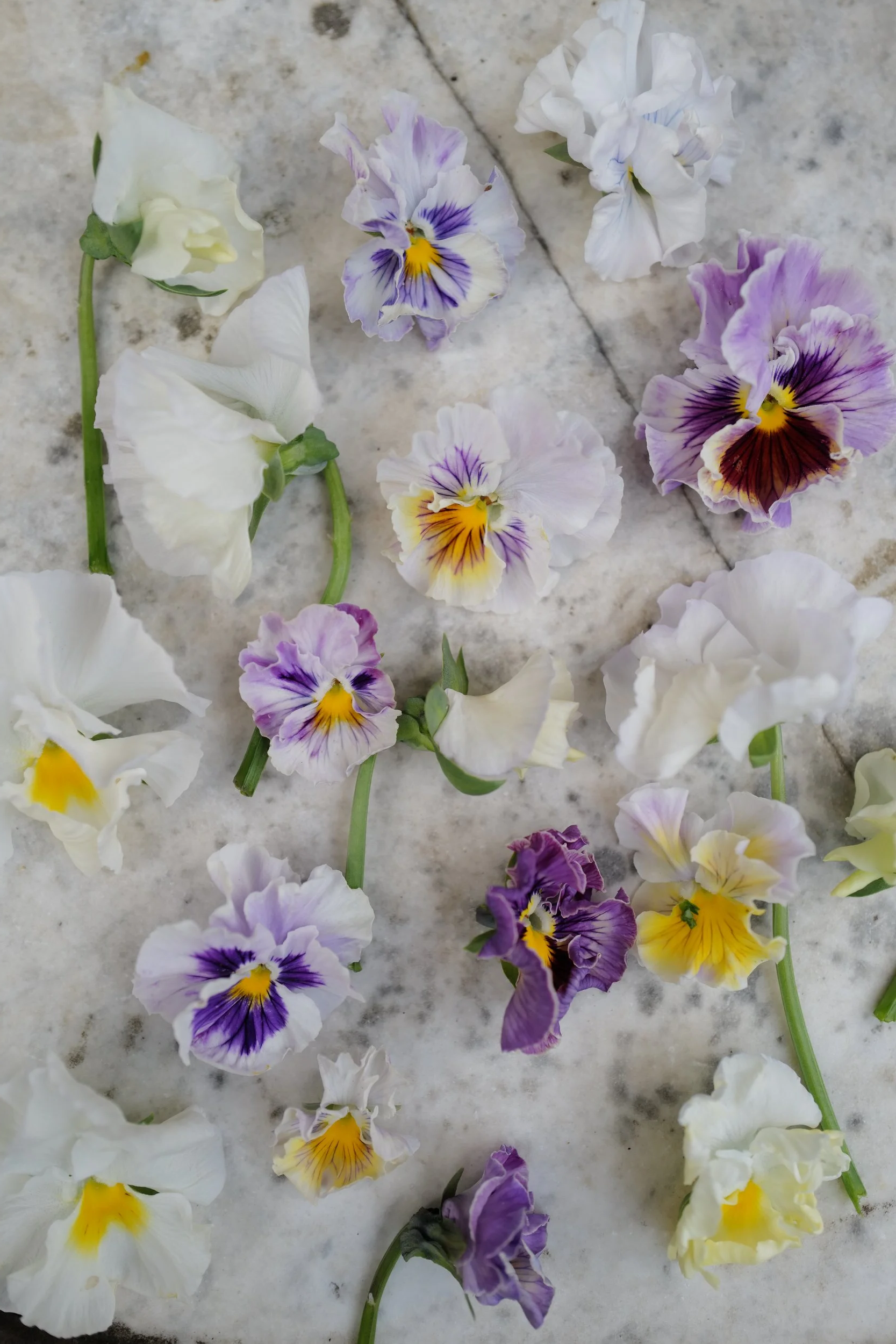
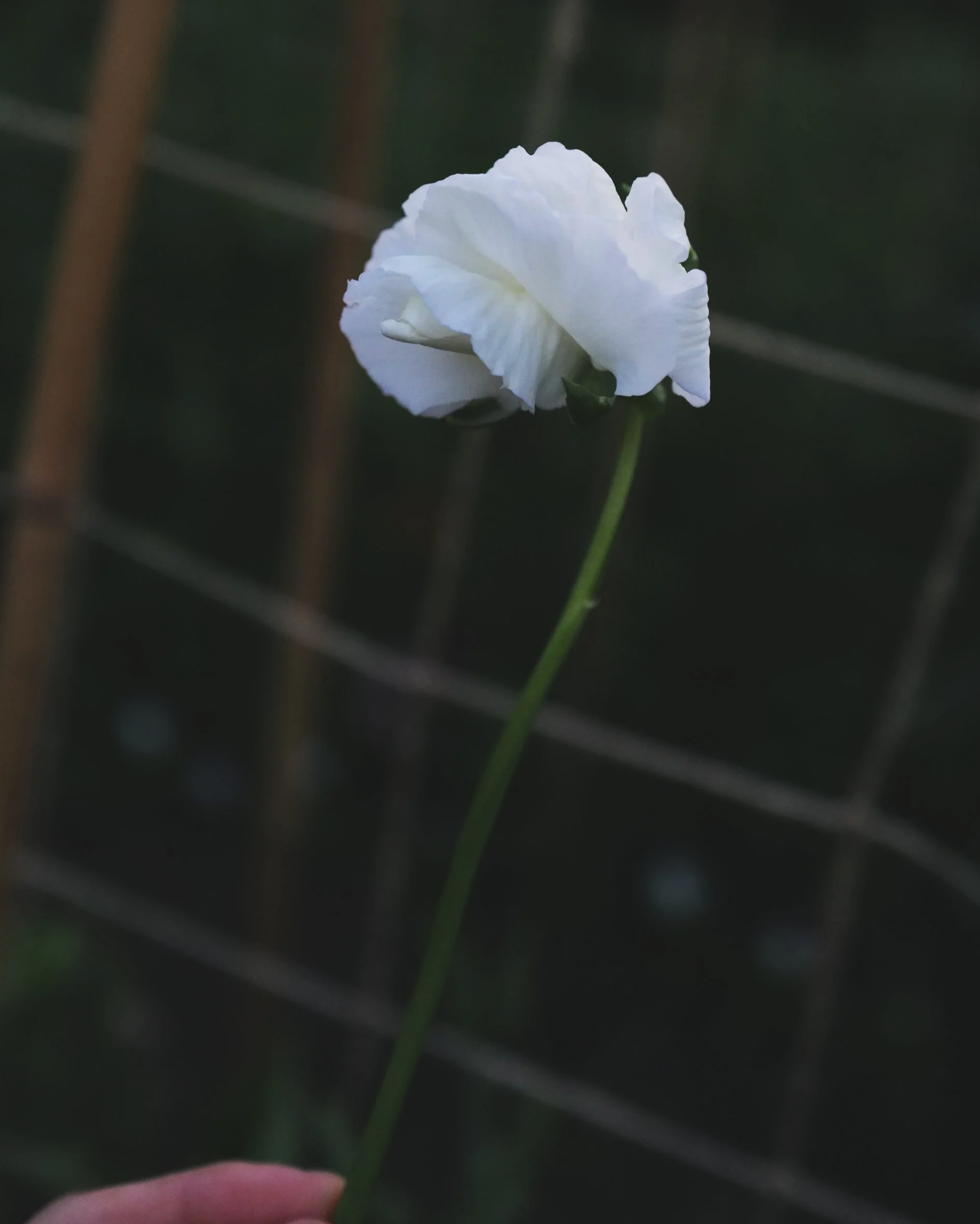
Obviously, Paris and I being deep in a sweet pea obsession, this one was one of our most highly anticipated to grow- and it did not disappoint! A playful and highly variable mix in lavenders, pale blues, lemon and white. Flowers may be streaked, whiskered, ruffled or smooth, with a wide range of forms and sizes.
Amazingly, some plants produce classic “sweet pea” or lathyrus shaped blooms, generally white with a blue tinge, while other plants carry very small or unusually large flowers in pretty pale ruffles. This, was one of my favourite mixes of the year.
(images above)
Flower size: Mixed - 5–8 cm
Scent: Unscented
Habit: Moderate to strong
Variation: High - ideal for those who enjoy surprise and diversity. A range of form and size.
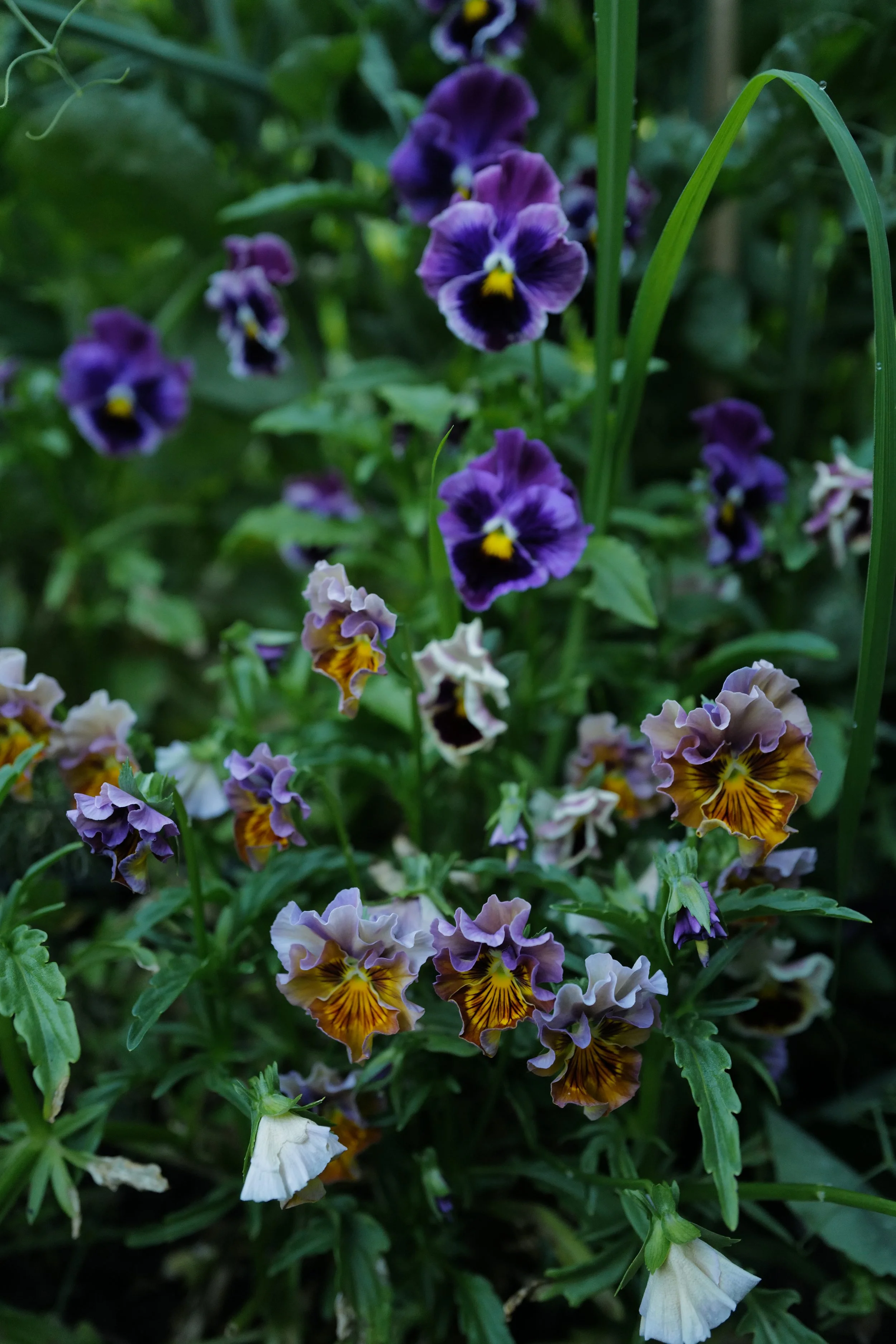
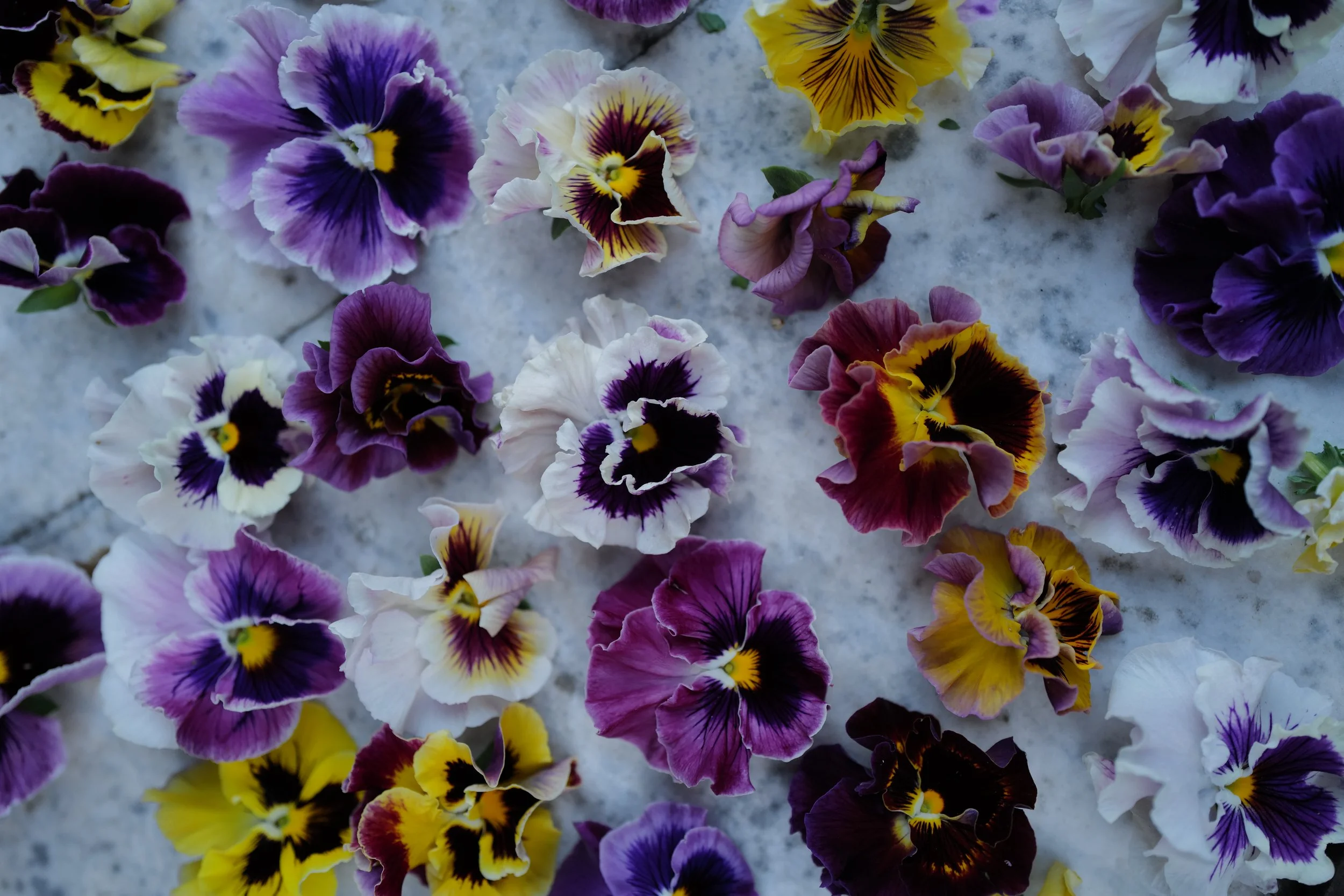
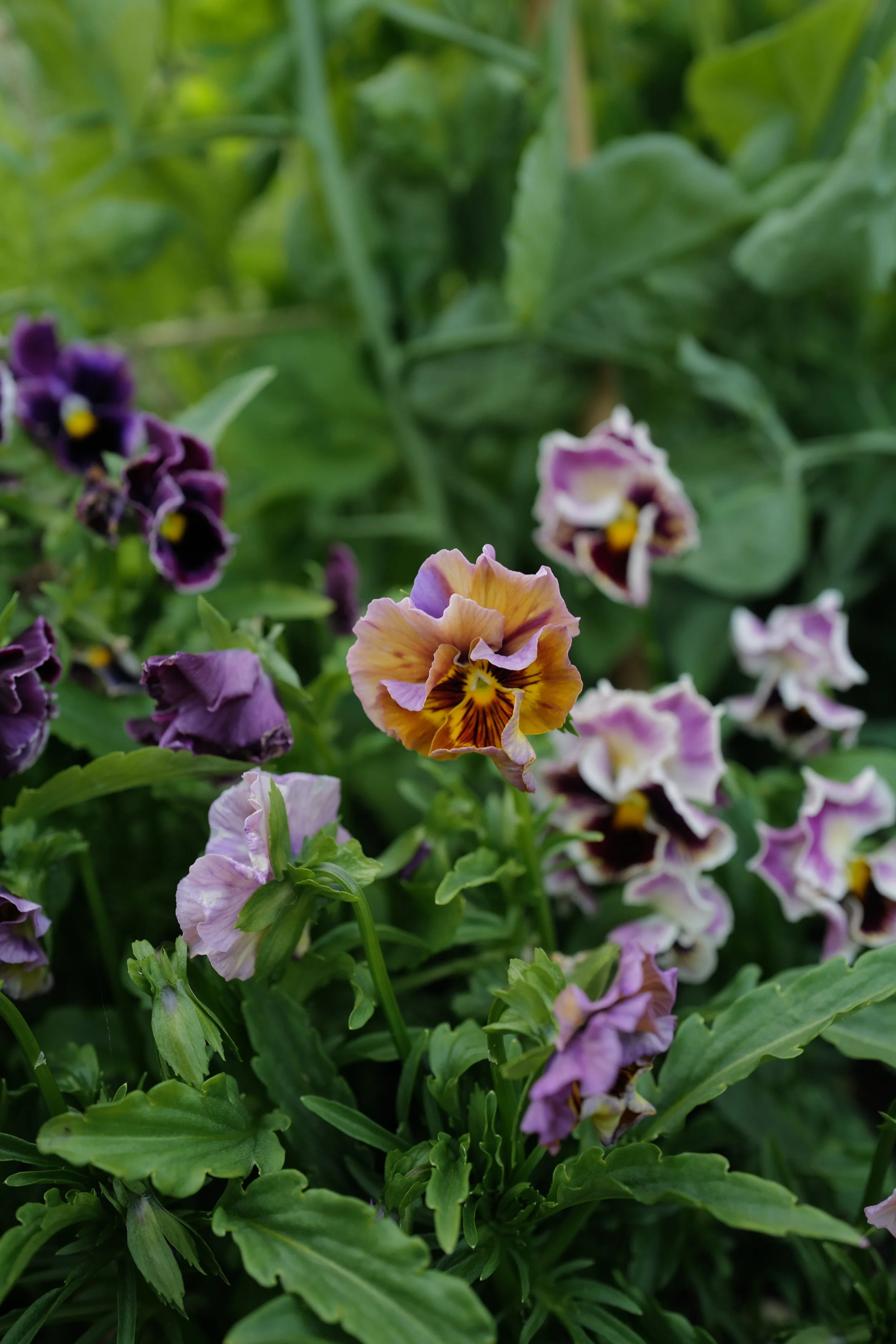
A glorious viola mix with dramatic ruffled flowers and stunning variation. We loved this one. Colours include purple, plum, mauve, rust, yellow, cream, pink and white, often with blotches, whiskers, streaking and bicolour effects. This mix was a stand-out for us across the season, being the most striking with crimped edges and fluttering shapes, and it threw out some incredible shades. They tend to be veined, whiskered and blotched, which only adds to their drama and allure. It was one of the quickest to produce flowers for us.
While size and detail vary, all flowers share a frilled, expressive character. Wide-petalled and often large, this is a variety that celebrated abundance.
(images above)
Flower size: Mostly 6-8 cm
Scent: Unscented
Habit: Vigorous
Variation: Very high - no two plants are quite the same
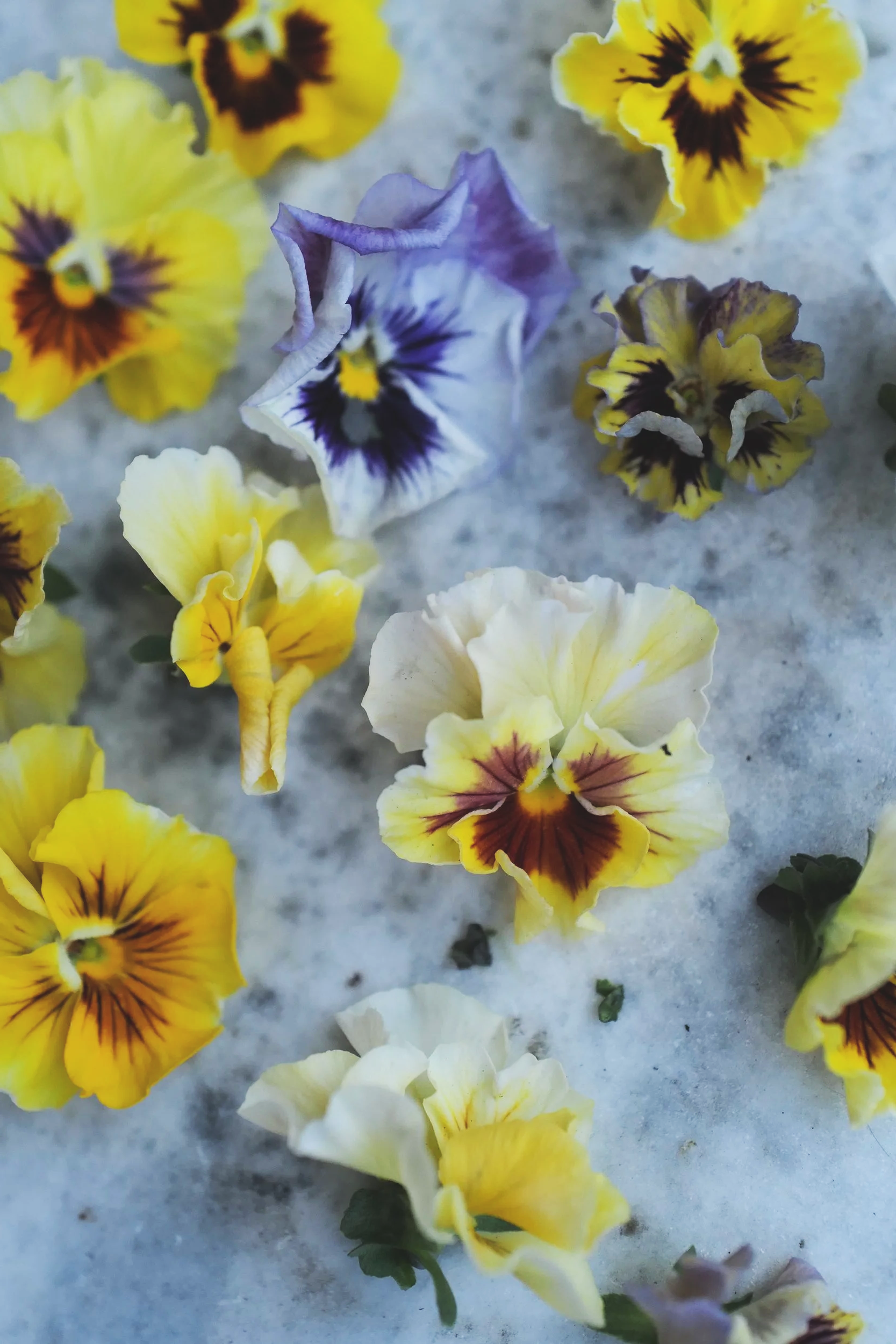
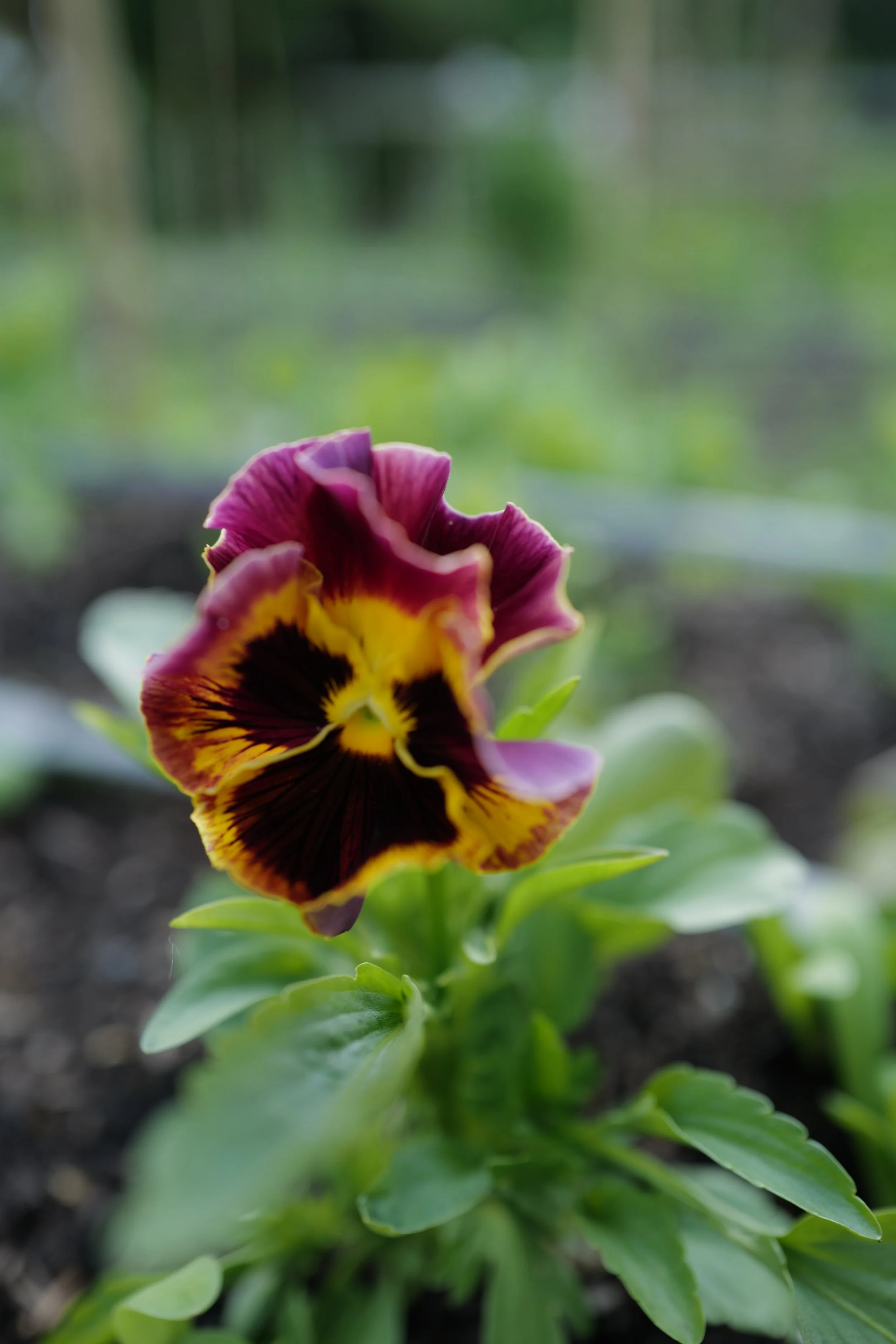
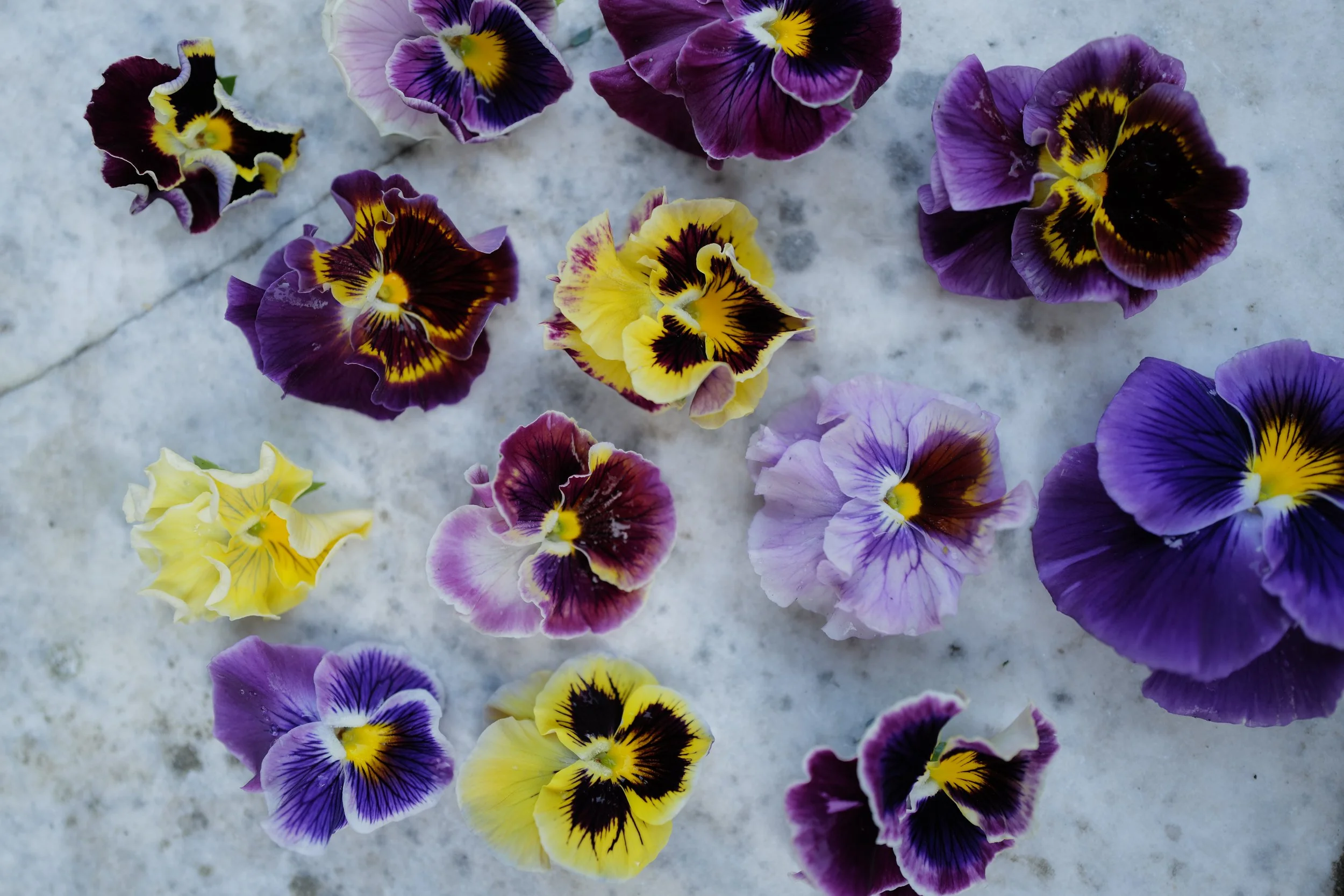
A pretty, ruffled mix with a romantic, traditional feel. While not the most exciting palette of the novelties, it is undeniably charming, with colours spanning burgundy, plum, lilac, cream, yellow and blue.
Flowers are large and wide petalled, commonly whiskered, with some blotching and streaking. Inner petals often curl inward, creating a tutu-like ruffled form, while the outer edges frill softly. Compact, upright plants suit pots and edging well.
(images above)
Flower size: Approx. 5-7 cm
Scent: Lightly scented
Habit: Compact, upright
Height: Around 20 to 25 cm
Variation: Variable in colour and ruffle form, fairly uniform in size
Flamenco Soft Light Azure Limonette
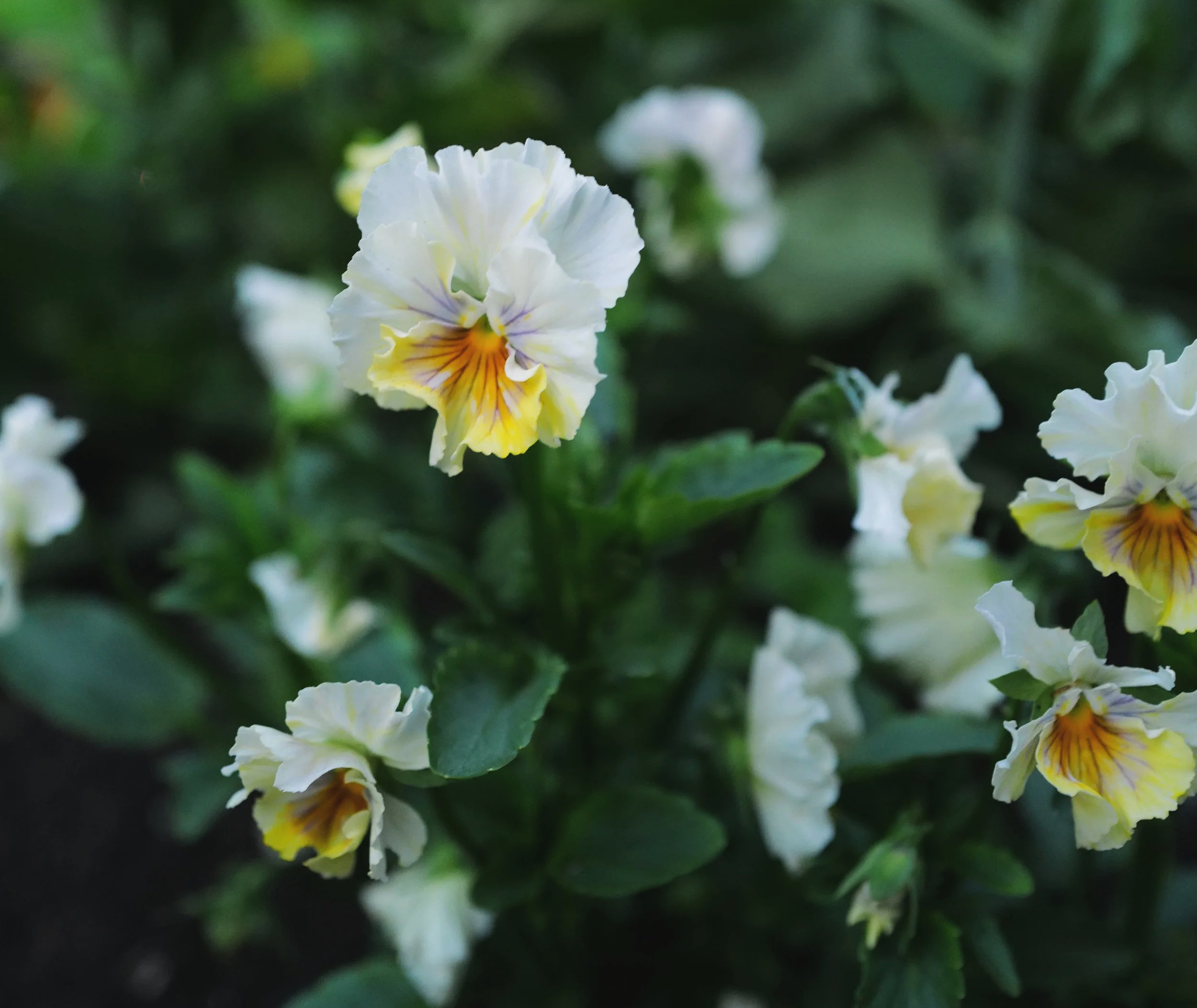
A softly coloured mix that was highly anticipated. Colours appeared as promised in dusky pink, lilac blush, palest blue and soft lemon, with gentle veining and a subtle ombre effect, edges sometimes more saturated.
Flowers are medium sized, wide petalled and frilled, with a light scent.
Flower size: Approx. 4 cm
Scent: Lightly scented
Habit: Compact to medium
Height: Around 20 to 25 cm
Variation: Fairly uniform palette with soft veining and ombre
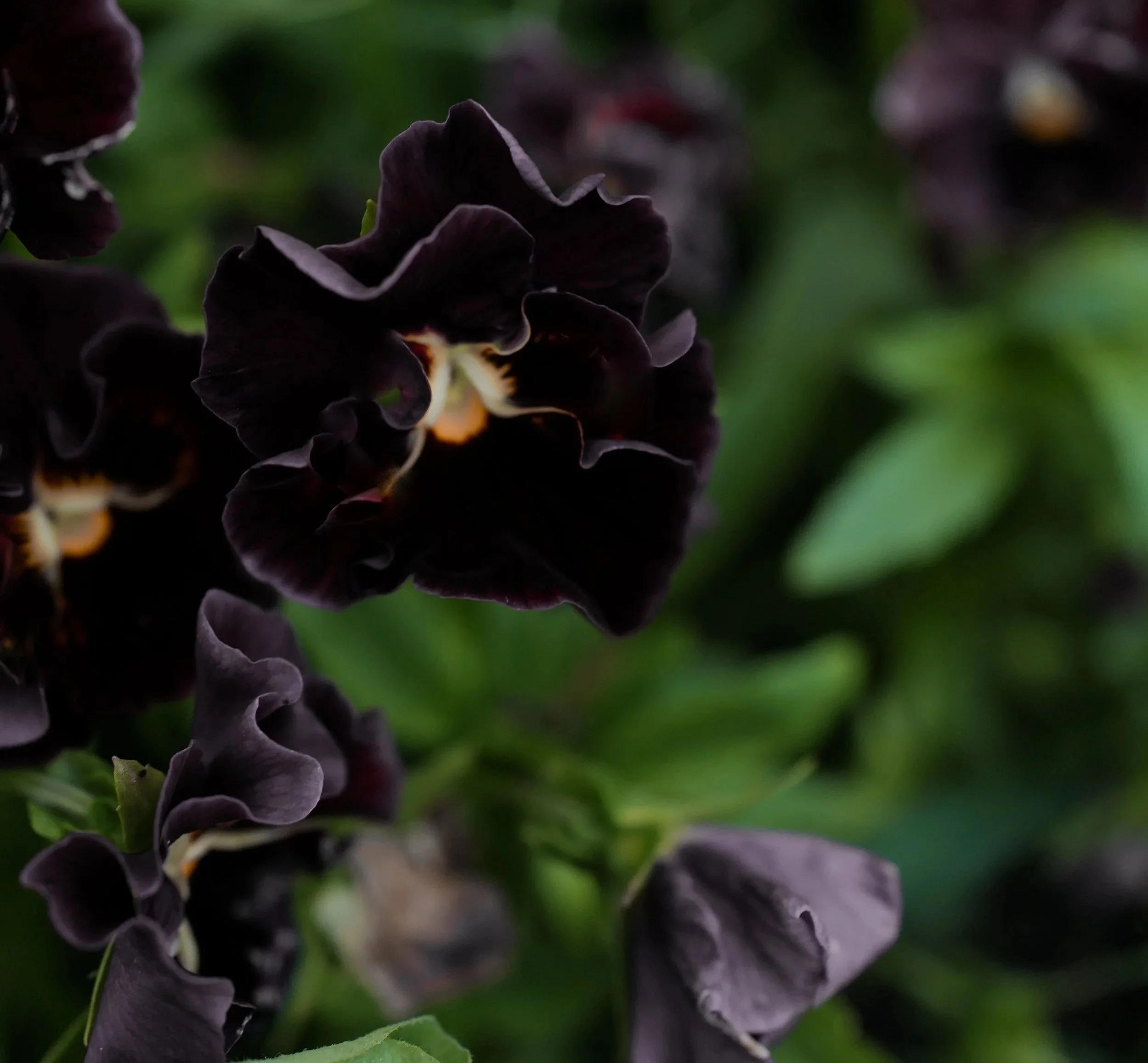
A dramatic member of the Flamenco series, which we trialled a few of, they all produced robust plants and flowers with crinkled petal edges. Flowers are the deepest purple, reading almost black, with a bold, velvety presence.
Large, wide petalled and semi ruffled blooms are produced consistently across plants. Lightly scented and strong growing, this variety works well in both containers and borders where contrast is desired. We loved this for sheer drama, and it’s on our list to grow again.
Flower size: Approx. 5-6 cm
Scent: Lightly scented
Habit: Robust, upright
Height: Around 25 to 35 cm
Variation: Uniform
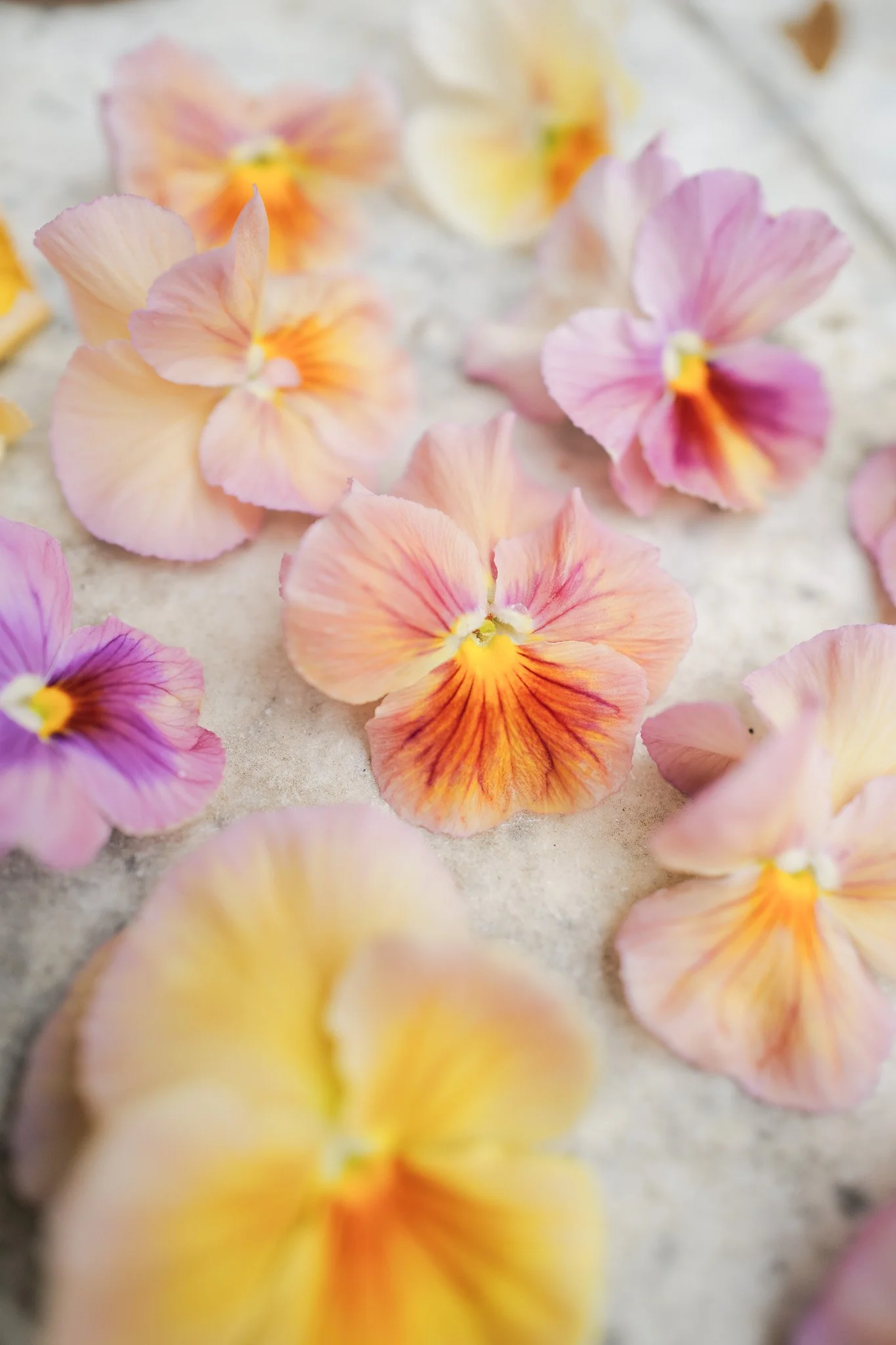
A truly romantic pansy in soft peach, apricot and blush lavender tones. Some flowers carry a deeper tangerine glow at the centre, adding warmth and depth. I don’t think we’d be up for doing a growing season without this one.
Large flowered, fairly uniform and very vigorous, this variety produces an abundance of blooms on a compact plant. A special choice for pots and planting schemes where gentle colour is wanted.
Flower size: Approx. 5 to 6 cm
Scent: Lightly scented
Habit: Compact
Height: Around 25 cm
Variation: Fairly uniform with occasional deeper central tones
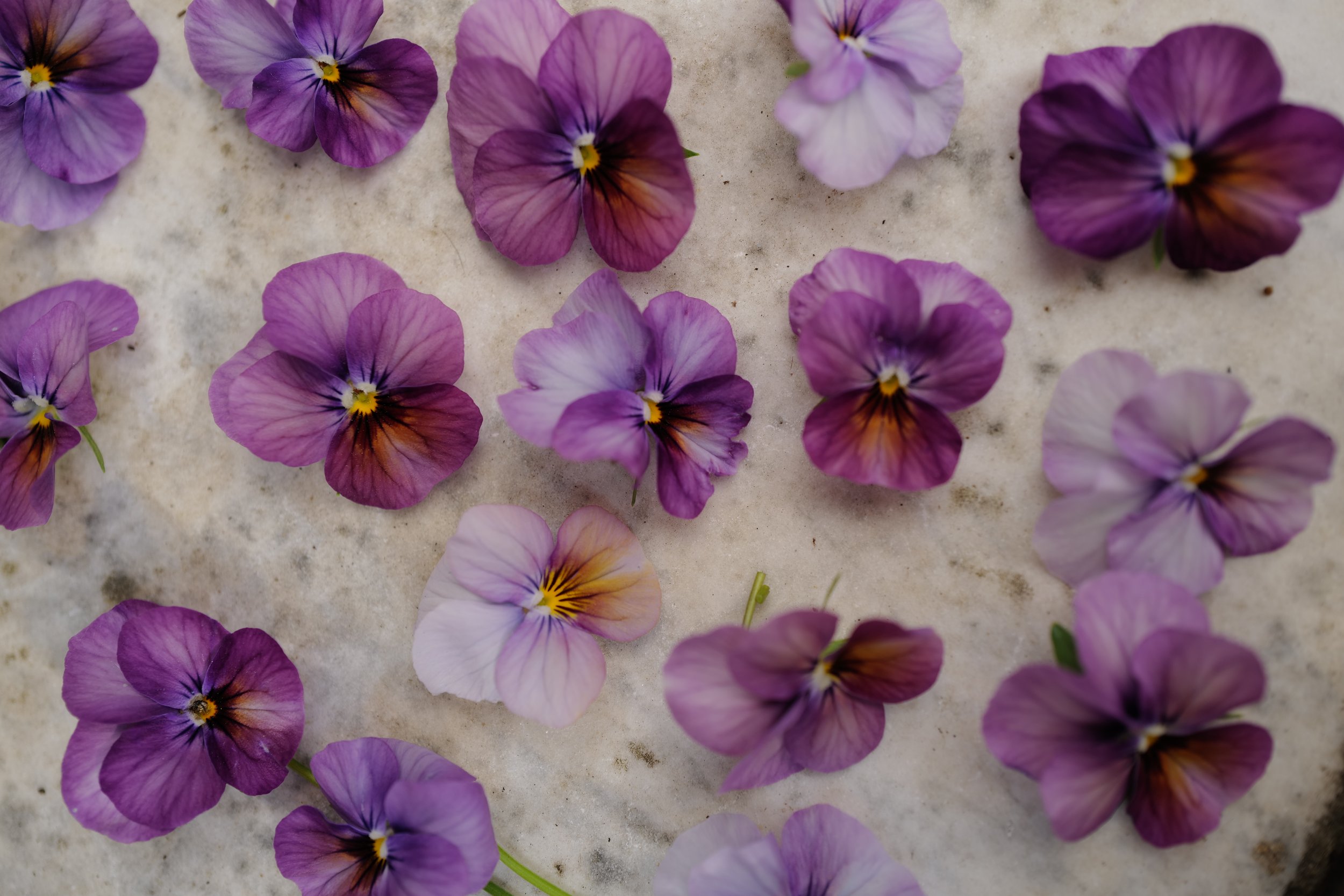
A prolific, airy viola in soft, smoky purples, with a calm, elegant presence that belies how many flowers it produces. Shades are largely consistent, shifting gently between paler lavender smoke and deeper jewel toned plum.
Flowers are petite and neat, with upright petals and fine whiskers and veining that read as delicate rather than bold. Tall stemmed and very vigorous, it makes a generous upright mound and performs brilliantly in pots as well as the ground. Paris grew it in abundance in her container garden at home, and it was an absolute hero, flowering prolifically for months and filling her terrace with beautiful stems of colour.
Flower size: Approx. 3 cm
Scent: Strongly scented
Habit: Upright, bushy, airy mound
Height: Around 40 cm
Variation: Fairly uniform in colour with gentle tonal variation
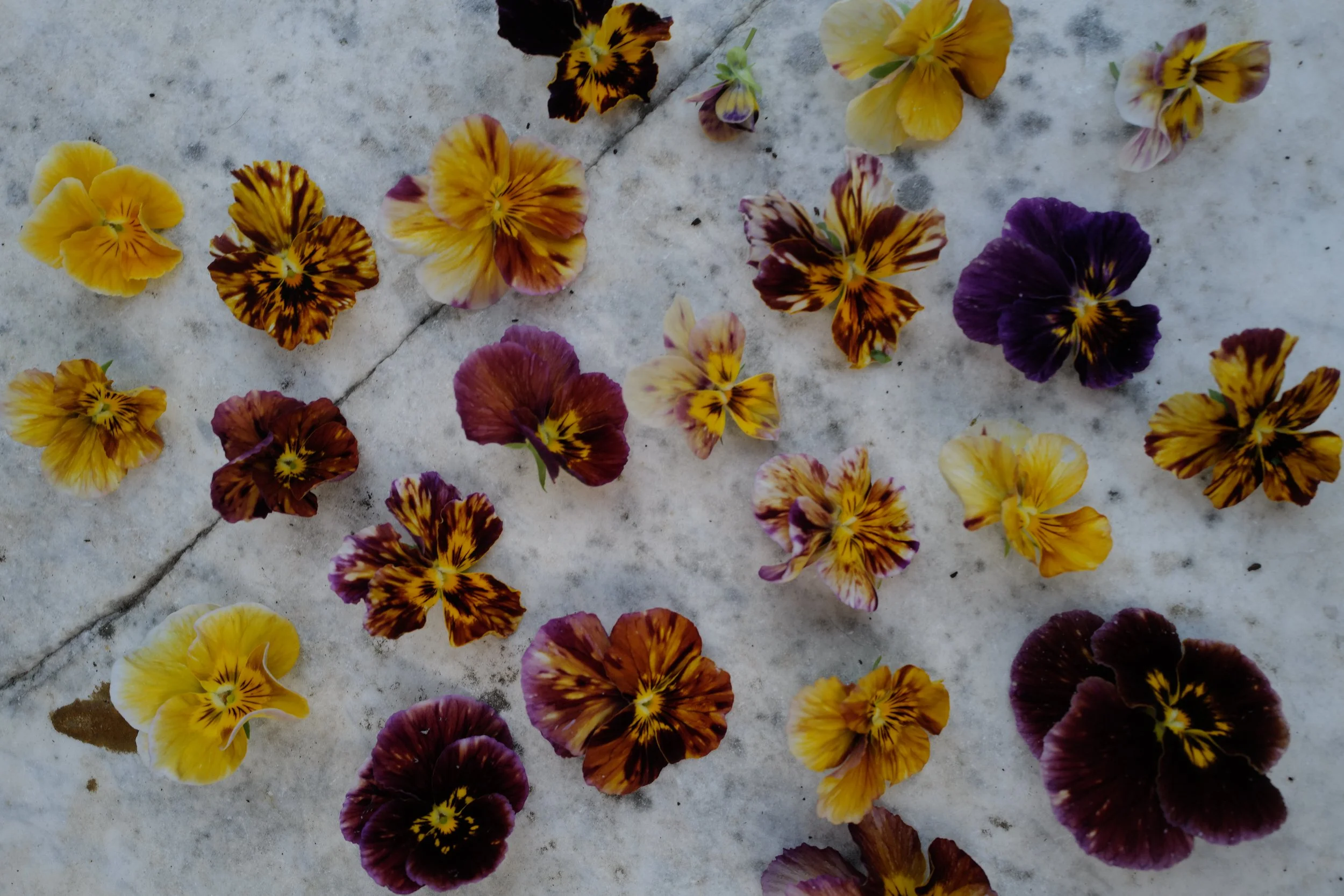
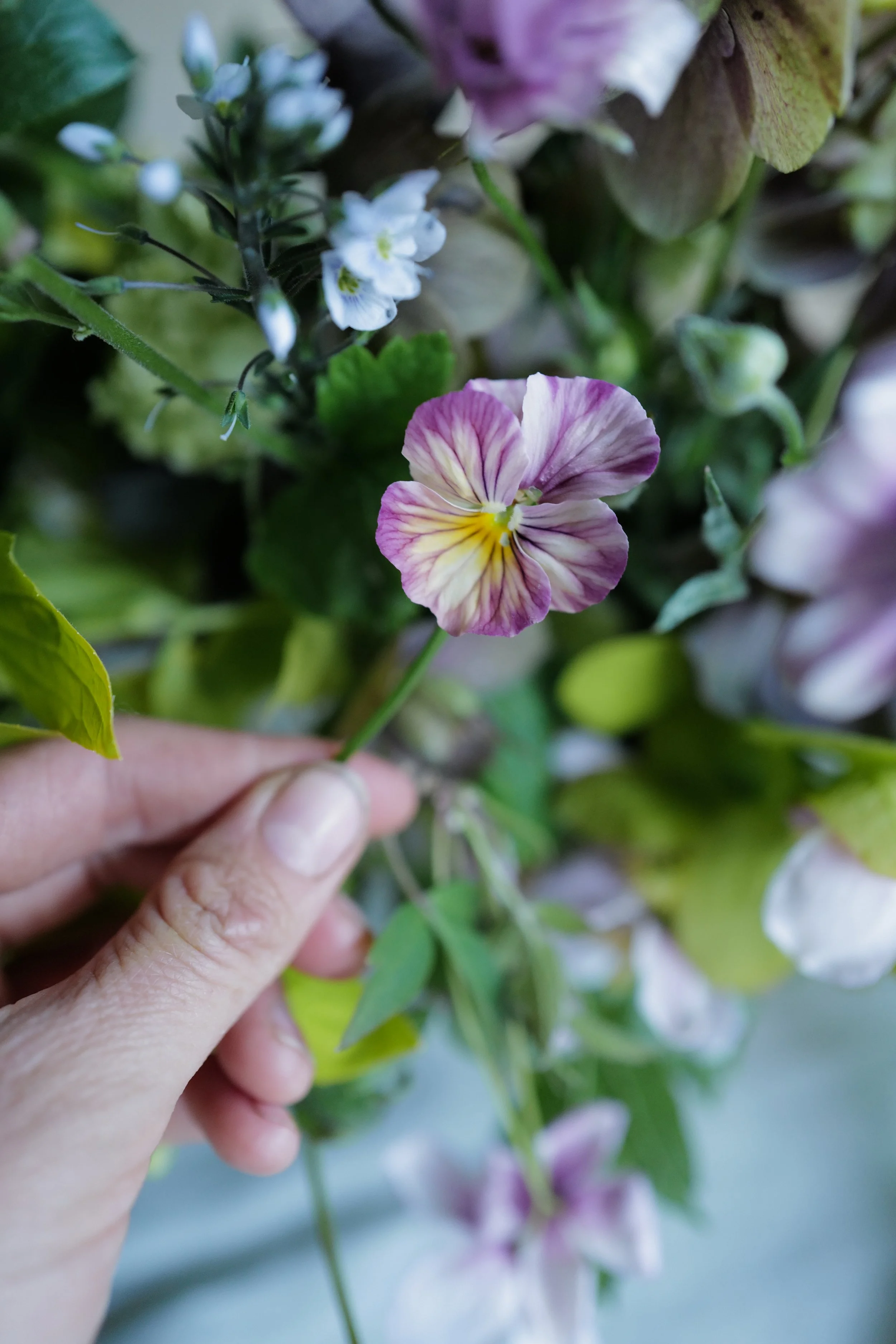
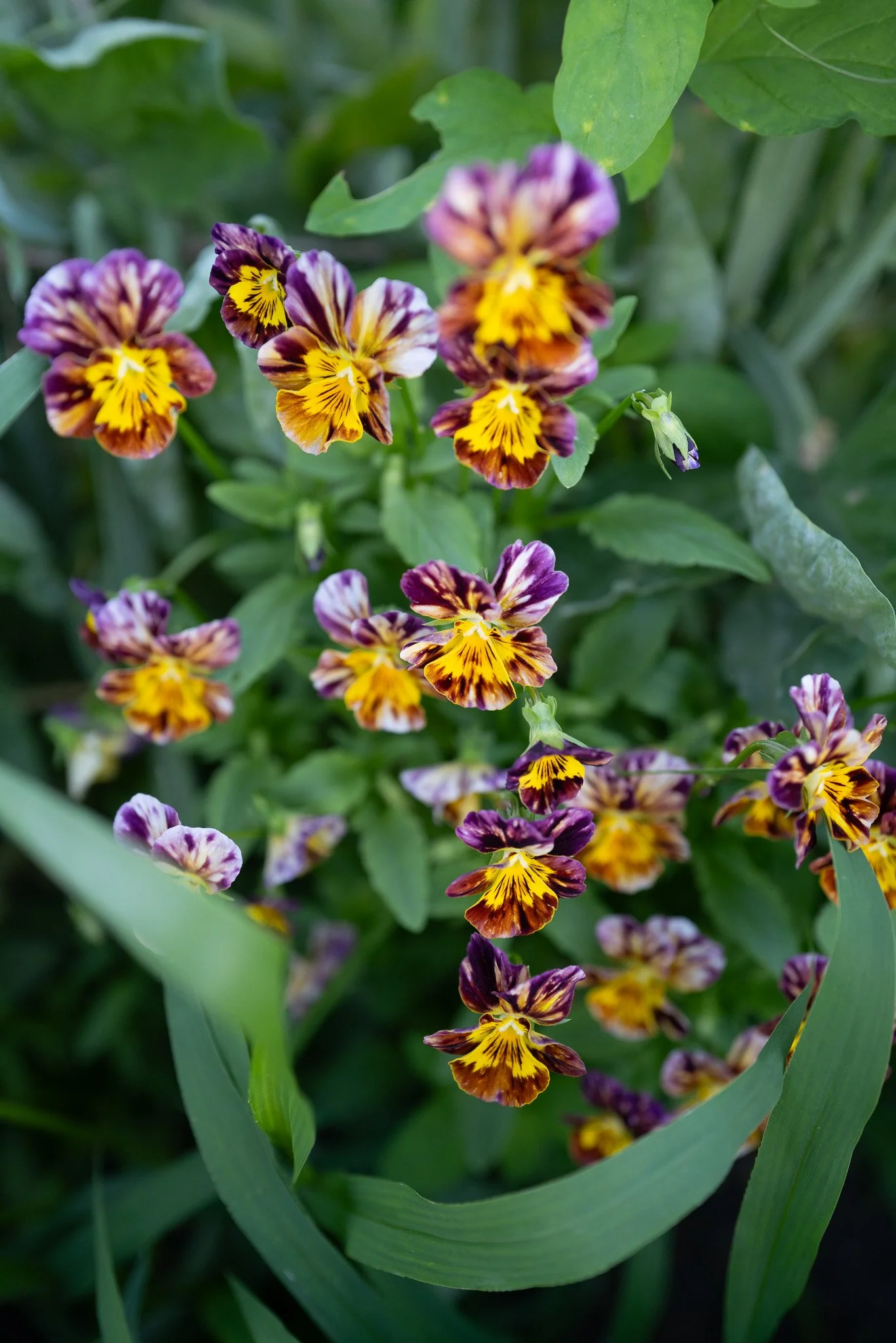
Our favourite viola full stop. Not just from the trials. We’ve grown it for years for us, our brides, our event work, and florists. We value it for its vigour and endlessly interesting variation. Each flower feels painterly, streaked with plums, yellows and oranges, never quite repeating itself.
Despite the colour variation, plants are consistent in habit and flower size, producing neat, petite blooms on surprisingly tall stems. Lightly scented, with a sweet fragrance carrying a hint of wintergreen. Grows shorter in pots, allowing its stature to be adjusted by placement. We have had consistently long, strong stems from it. We can never get enough.
Flower size: Approx. 3-4 cm
Scent: Lightly scented
Habit: Tall stemmed, upright, vigorous
Height: Around 40 to 50 cm in the ground, shorter in pots
Variation: Variable in colour, consistent in habit and flower size
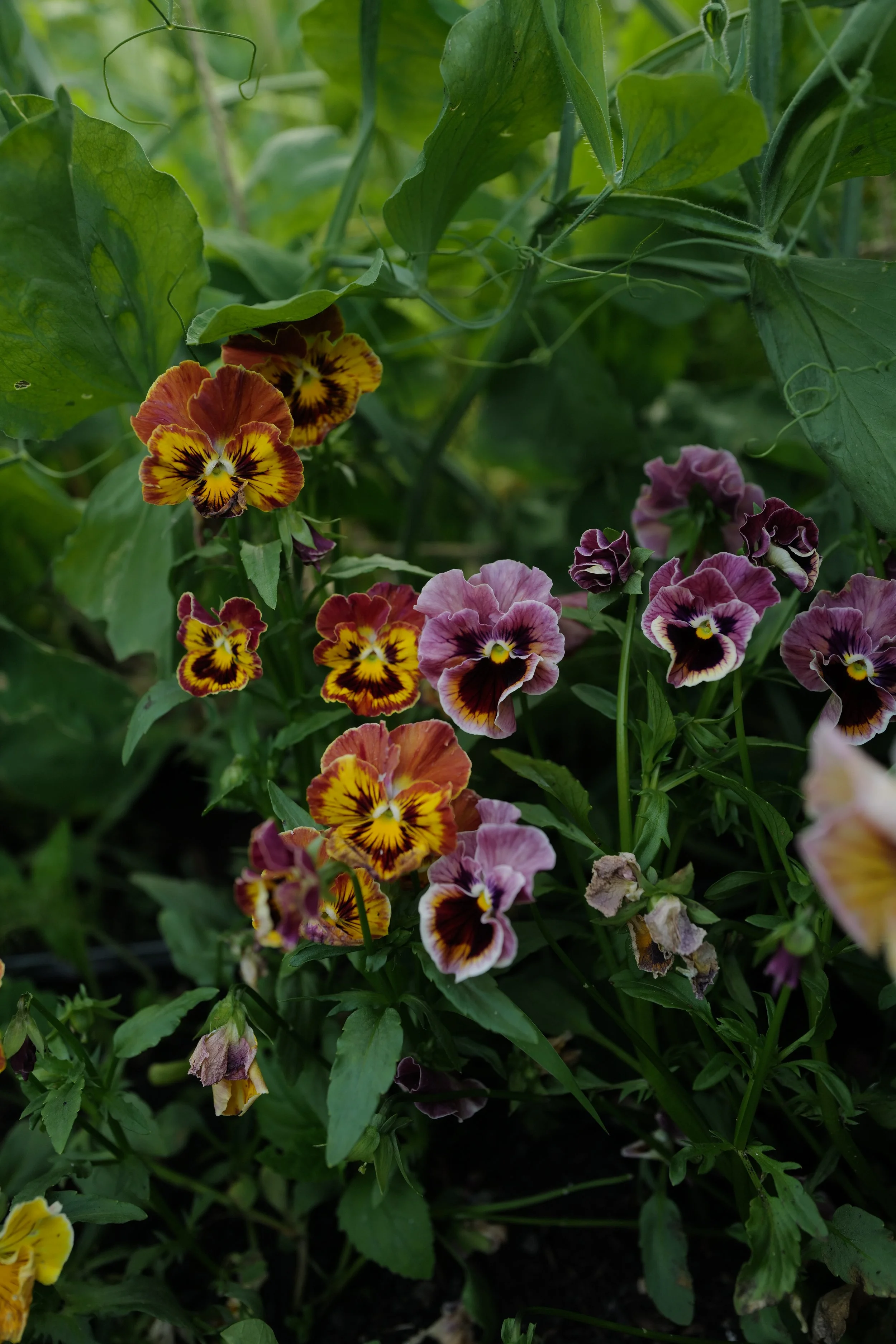
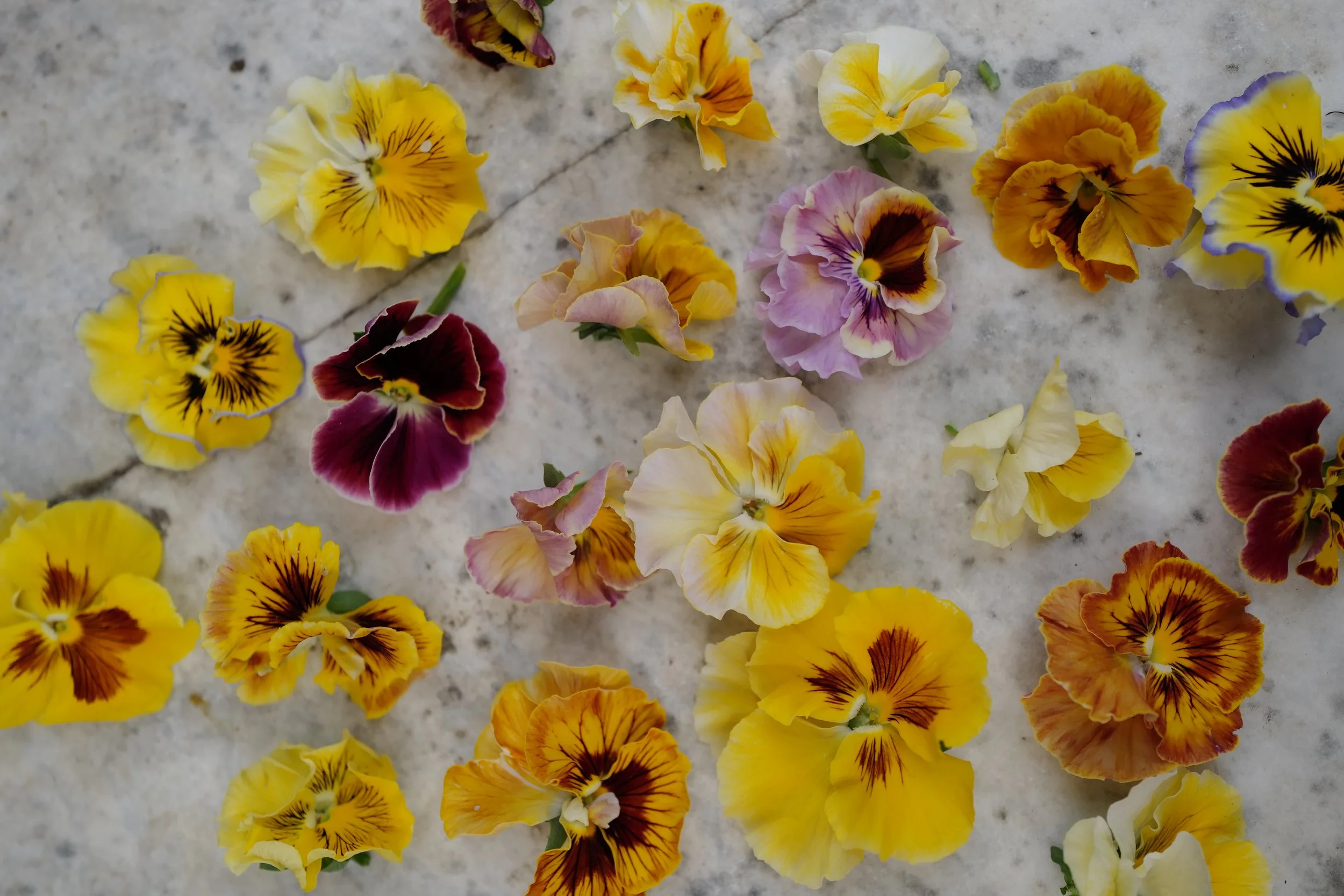
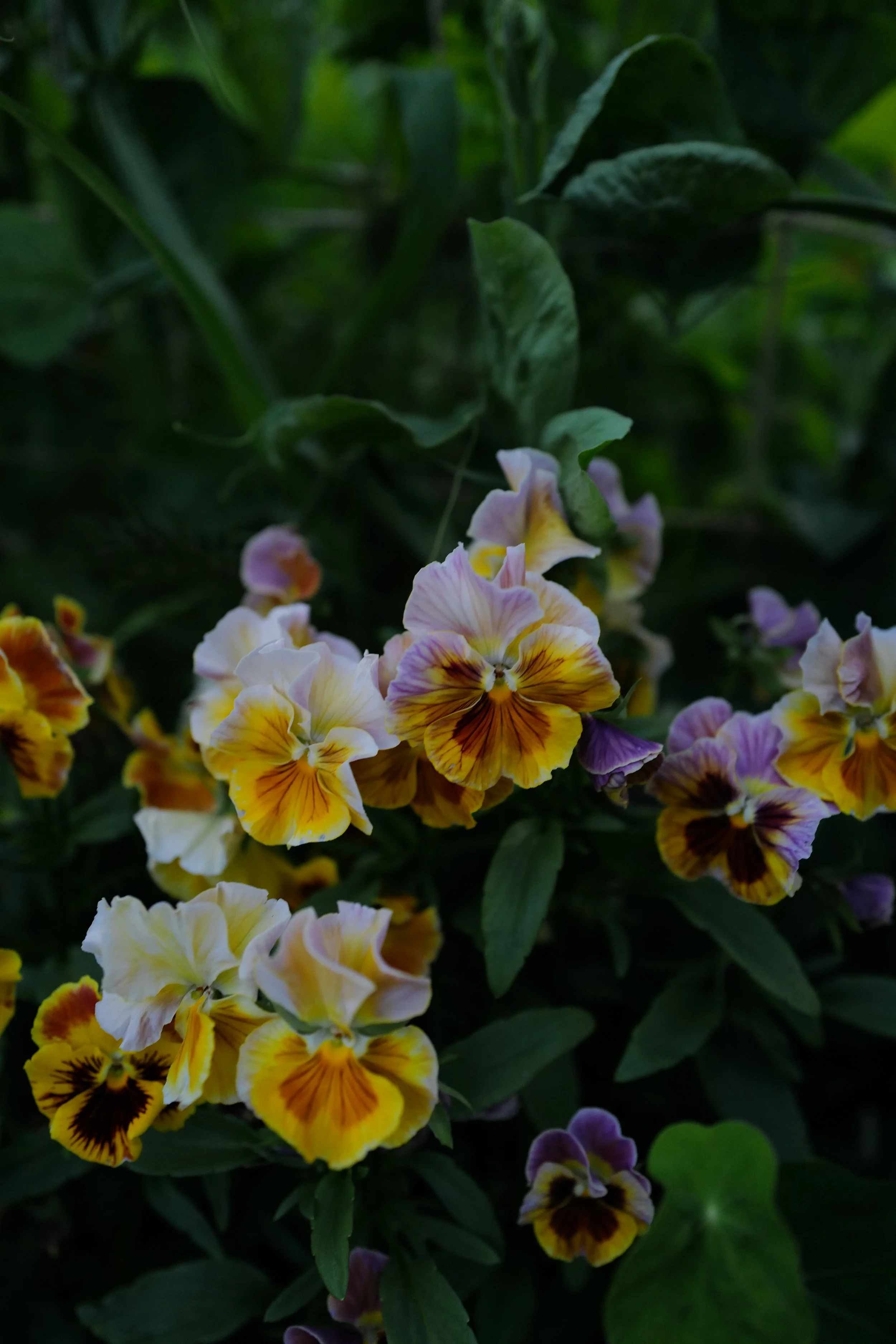
This was Paris’ favourite of the year. It was a stand-out for colour and form. A richly coloured viola in terracotta, rust, tangerine, lemon, rose, blue and lilac tones. Flowers are large, wide-petalled and ruffled, with intricate streaking and painterly markings.
Distinctly scented, combining notes of lily of the valley, rose and sweet pea, this is both a visually and aromatically striking mix. Plants are strong growers and flower freely. A stand-out of the season.
(Images above)
Flower size: 6-8 cm
Scent: Strong, floral
Habit: Vigorous
Variation: Subtle shade differences within a warm, complex palette
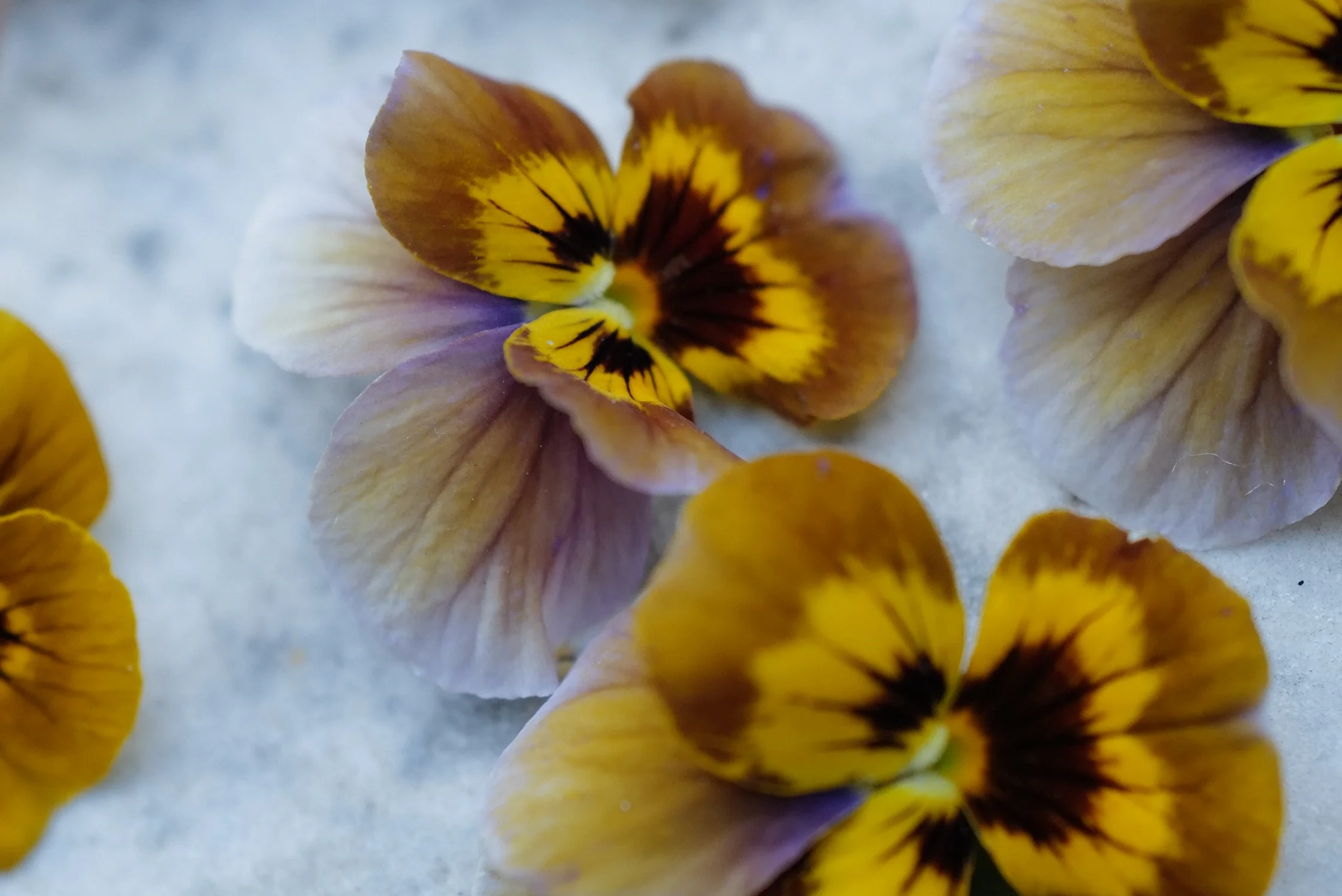
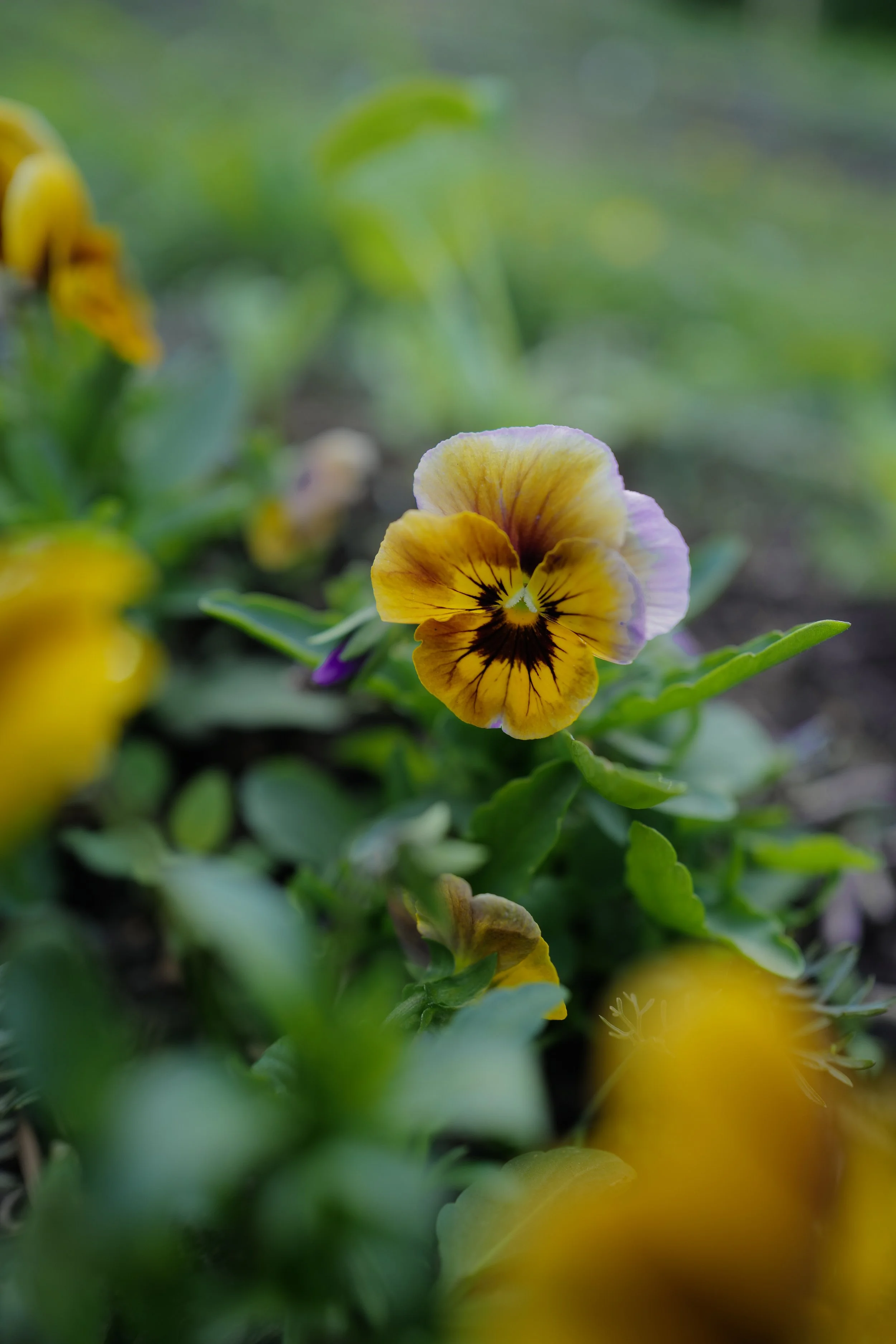
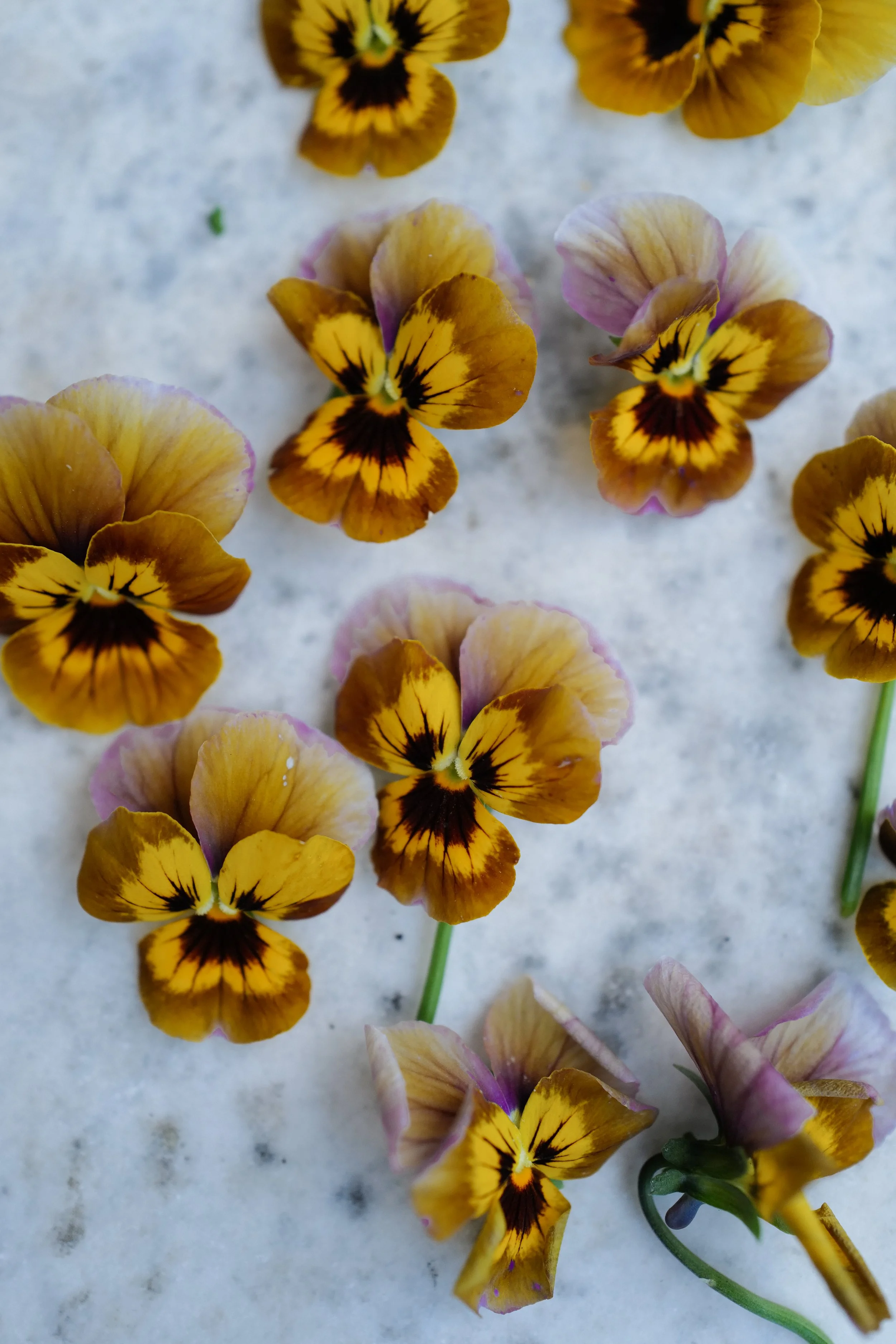
A magical, little viola with shifting, layered colour. Flowers open mustard yellow with dark central blotches and whiskers, passing through sepia tones before fading to a metallic lavender-blue shimmer. We found that the lavender blue shimmer was only prevalent in a few plants, and increased when grown with heat and stress.
Flowers are petite and produced on compact, well-shaped plants. Exceptionally scented, with a strong, sweet fragrance that belies its small size.
Flower size: 3-4 cm
Scent: Strongly scented
Habit: Compact, vigorous
Variation: Colour evolves as flowers age. we found the lilac got stronger when the plant was left in bright sunlight.
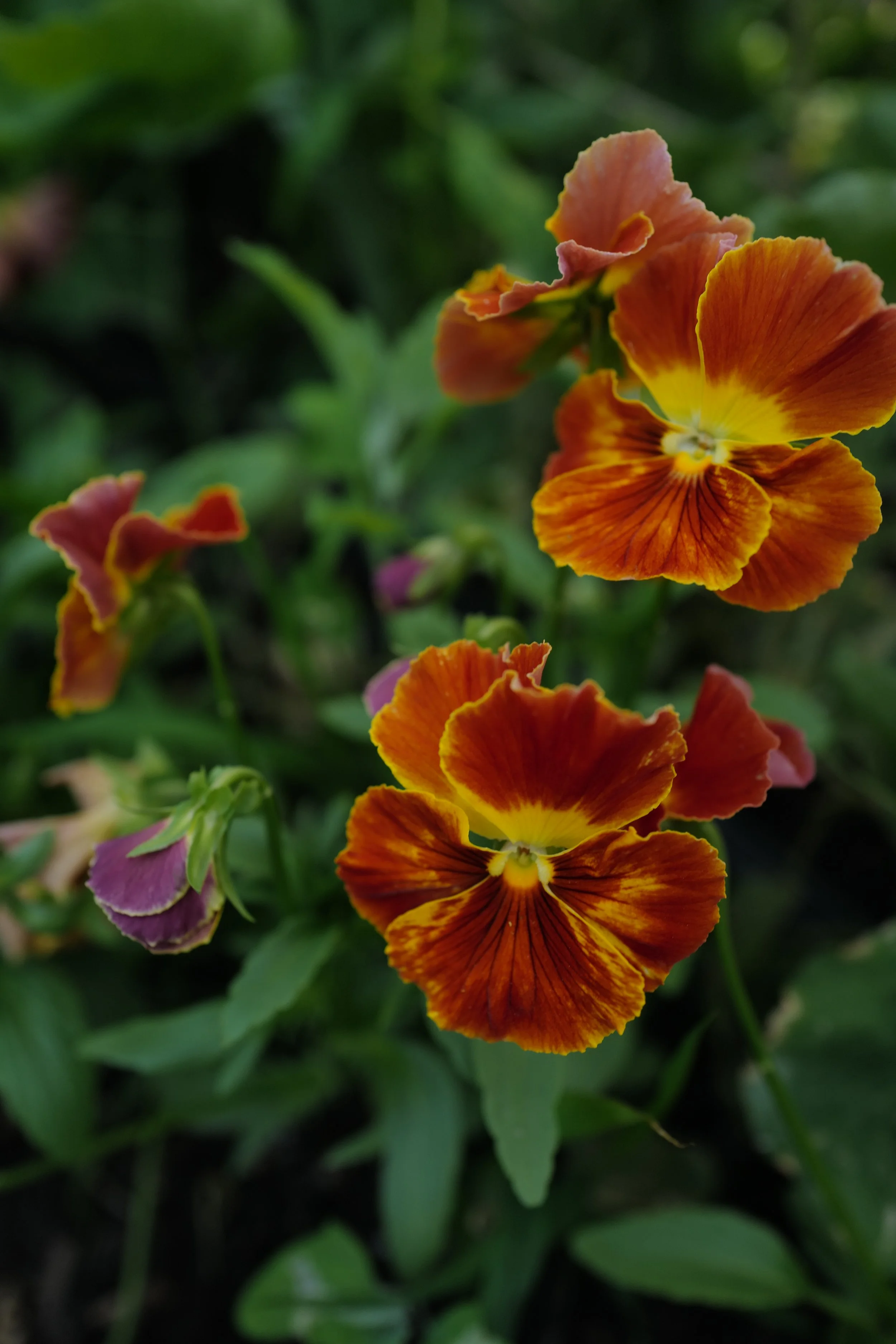
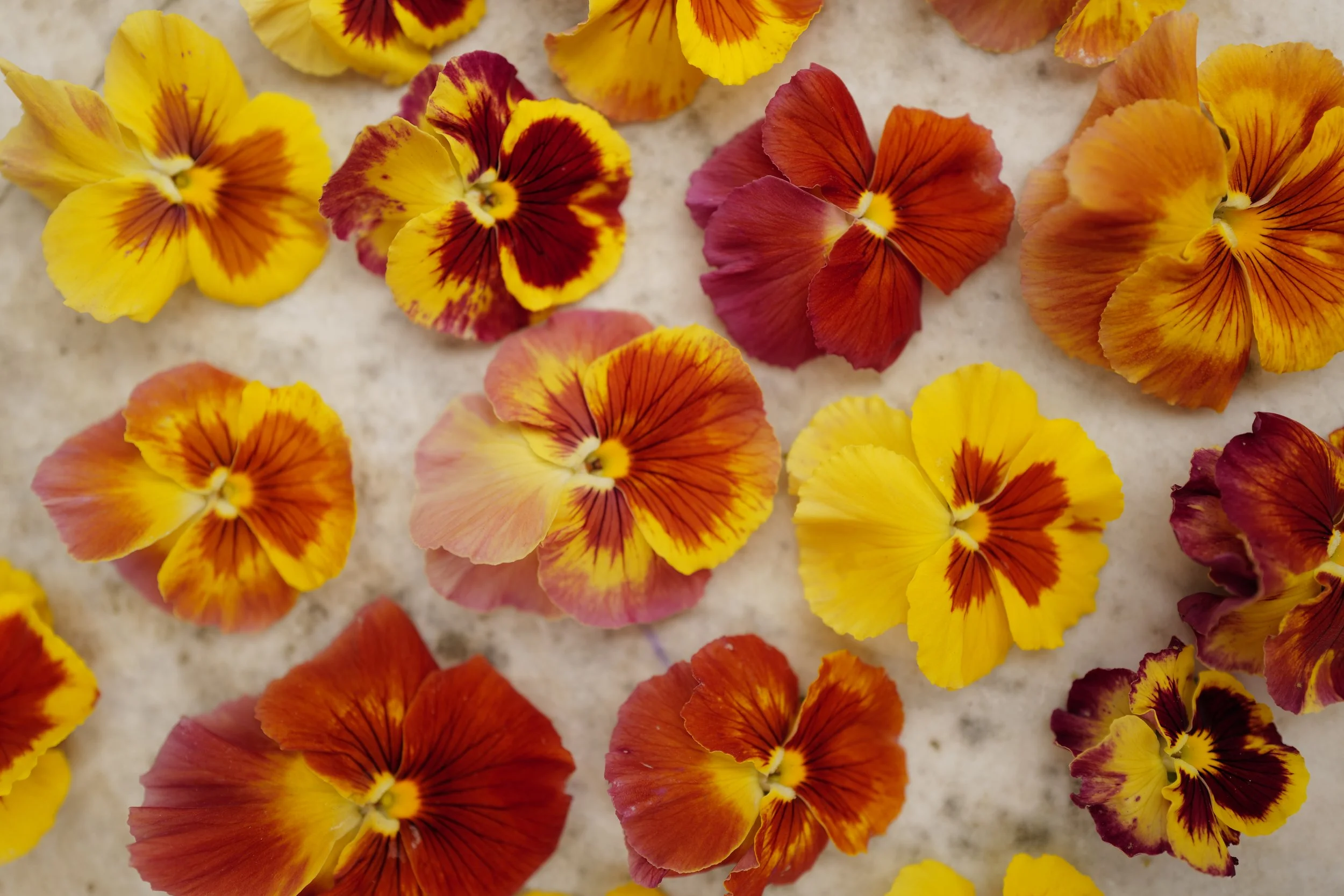
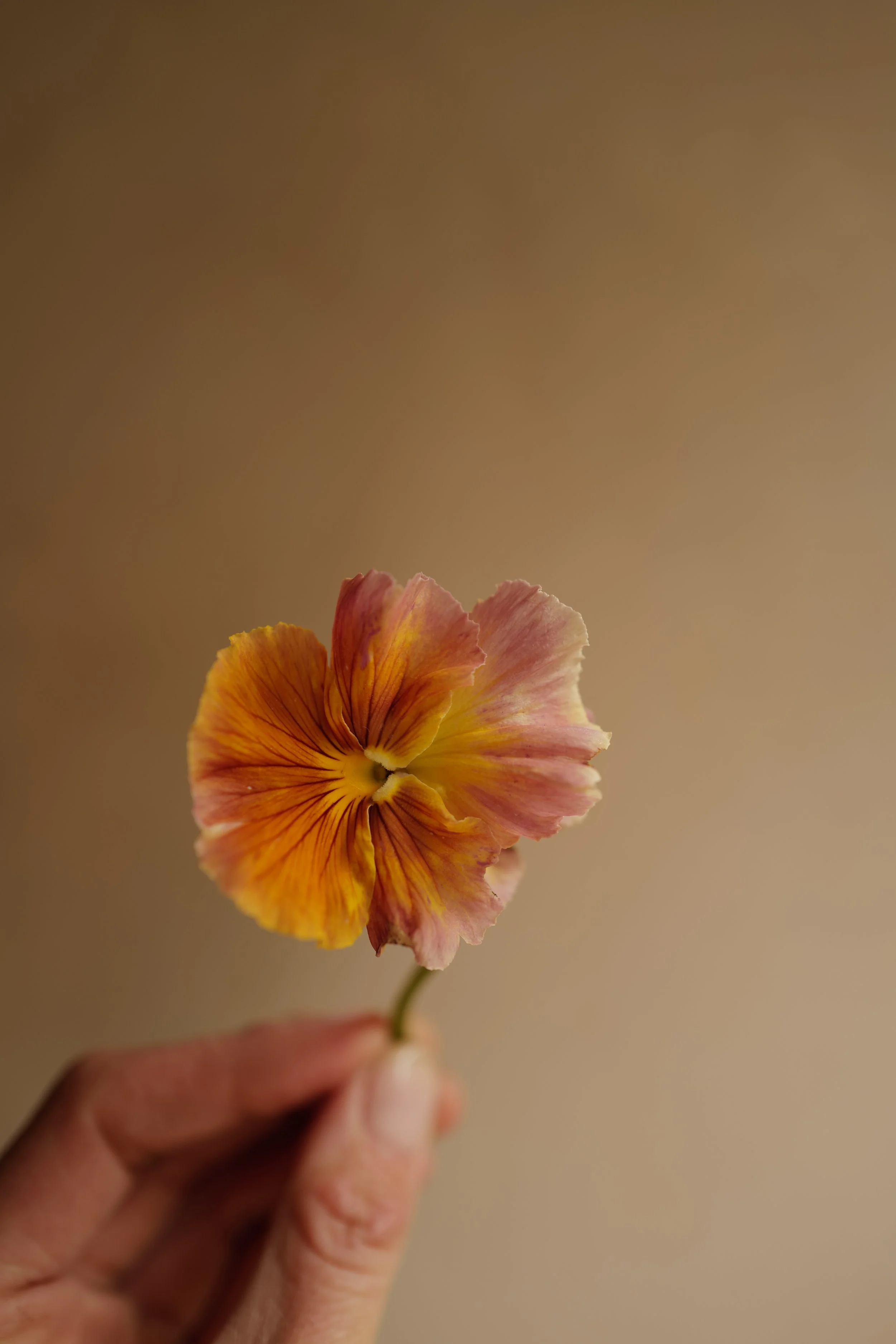
A bold, theatrical viola with large, ruffled flowers and classic nasturtium colouring. Front-facing petals glow in scarlet, orange and yellow, aging to soft tangerine, while the backs reveal unexpectedly beautiful soft plum tones.
Flowers are wide-petalled, streaked and dappled, and fairly uniform in form. A dramatic choice for borders and containers where the flowers can be seen from all angles.
Flower size: 6-8 cm
Scent: Unscented
Habit: Vigorous
Variation: Colour shifts with flower age
Nature Antique Shades
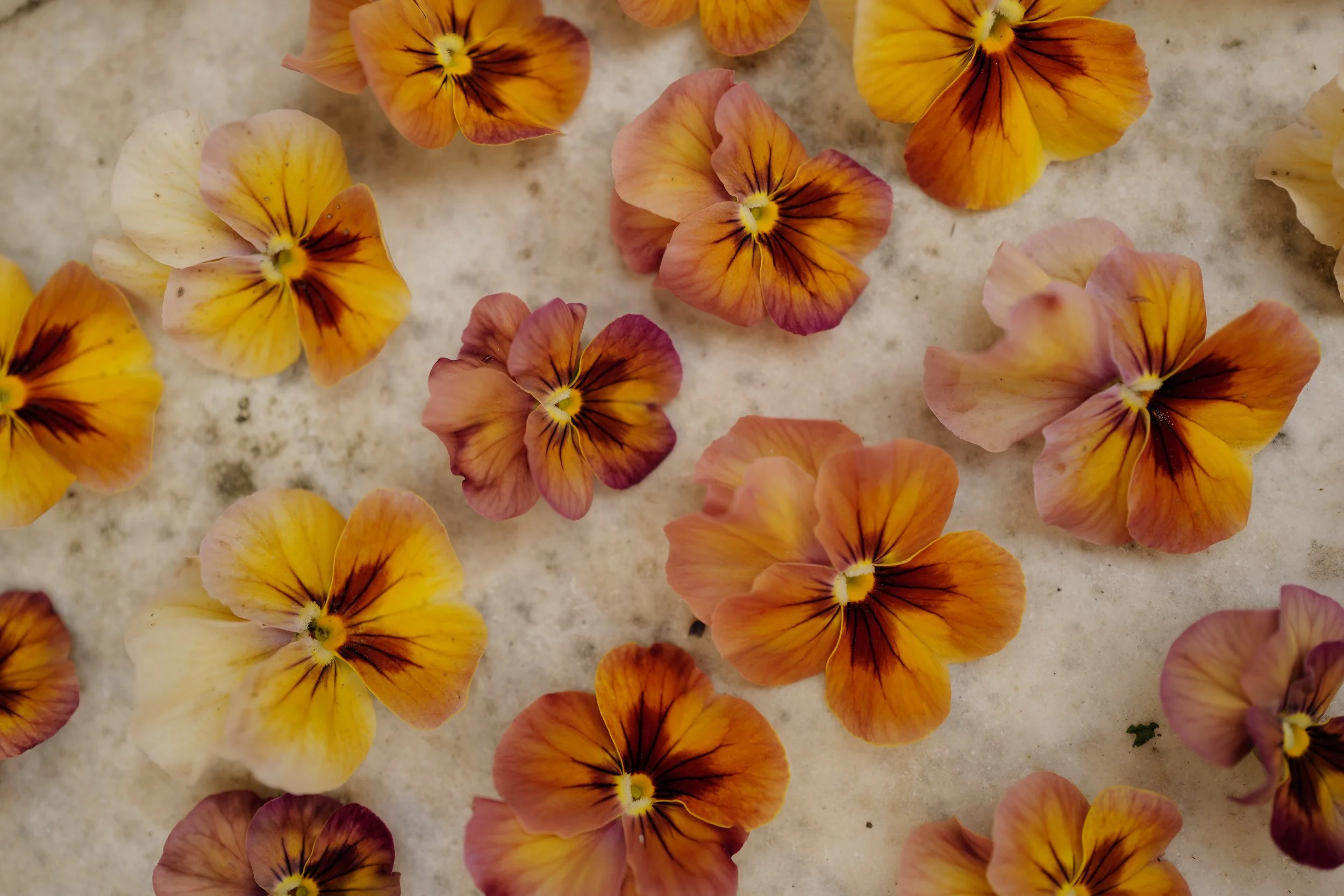
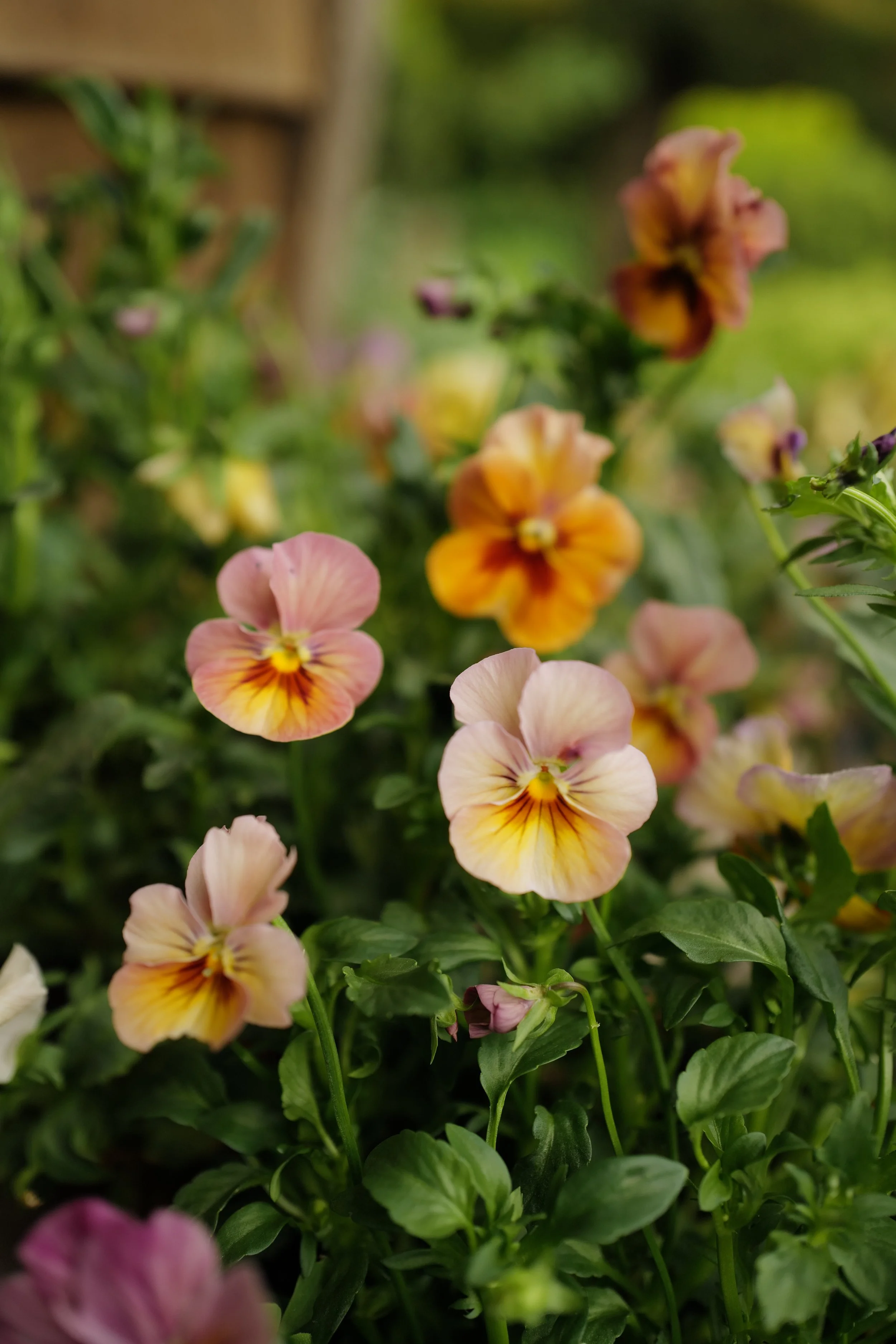
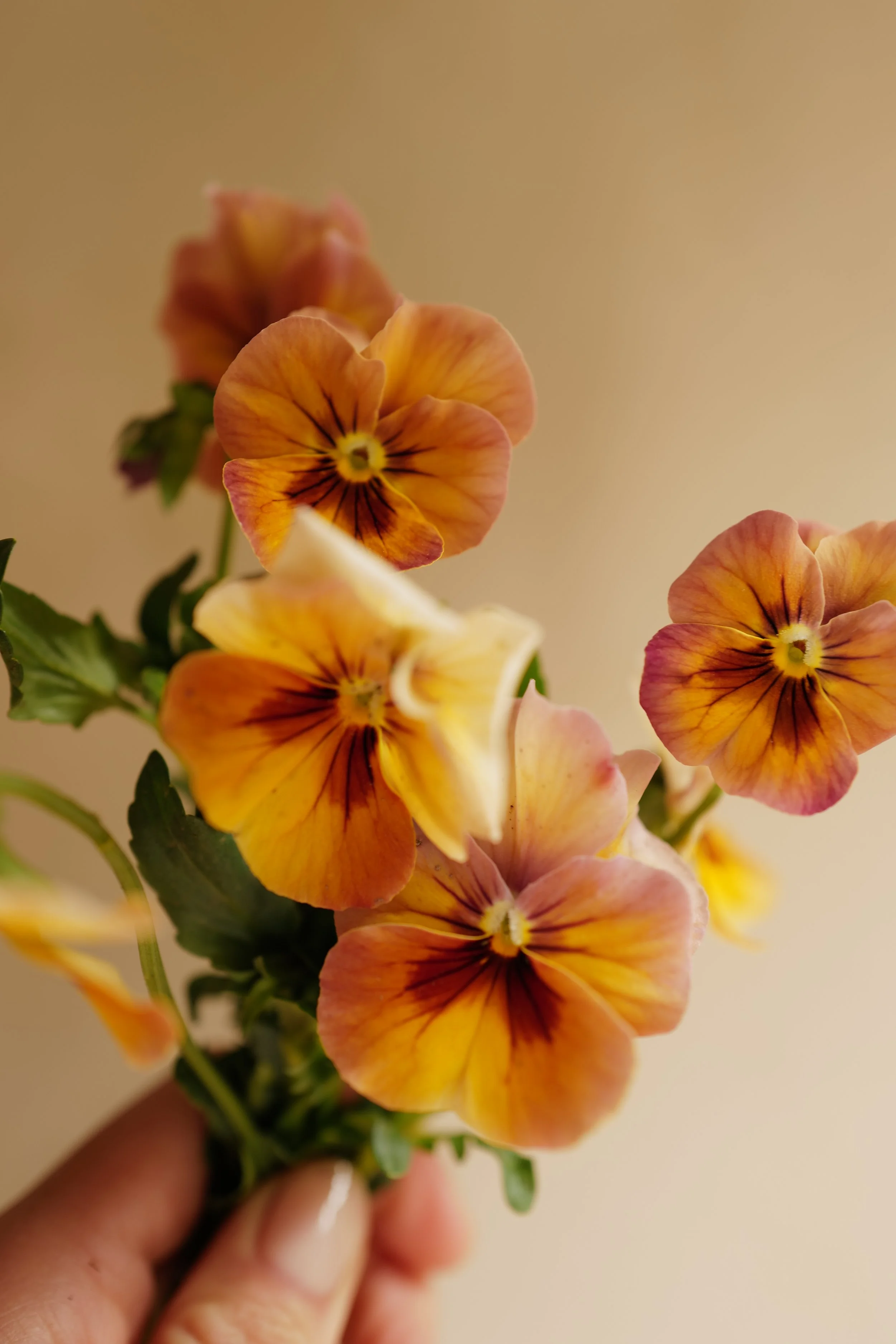
A softly antique viola in smoky pinks, terracotta and muted plum. Flowers are petite and elegant, often marked with fine whiskers or a gentle central blotch. The overall effect is subtle and painterly rather than bold.
Plants are neat and fairly uniform, producing long-petalled flowers with the occasional light frill on the upper petals. Compact but vigorous, this variety flowers generously on plants reaching around 20 cm tall. The seeds for this variety have sadly been discontinued, but we’ll be on the hunt for a suitable alternative.
Flower size: 3-5 cm
Scent: Unscented
Habit: Compact, vigorous
Variation: Natural tonal variation within a cohesive antique palette
Nature Mulberry Shades
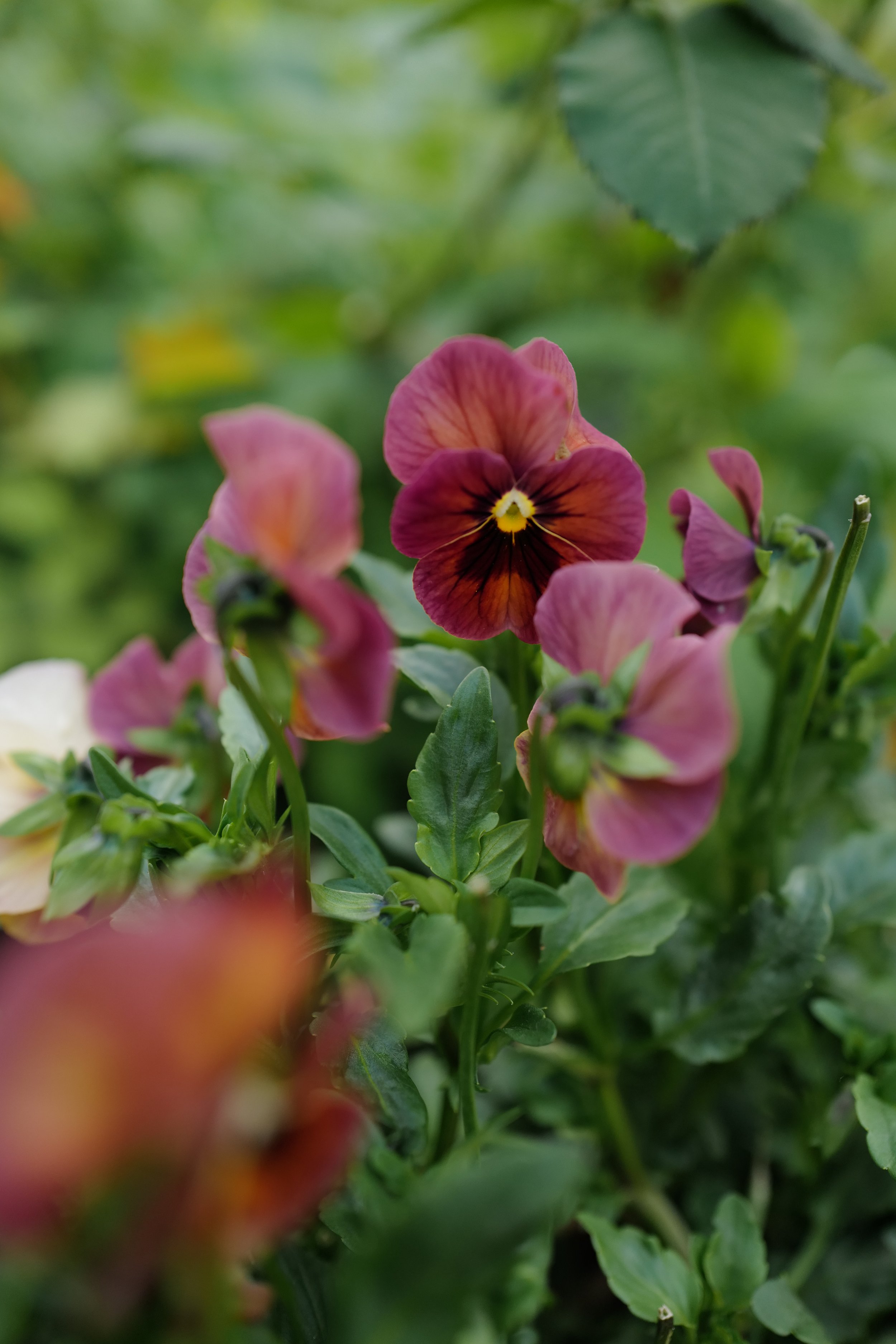
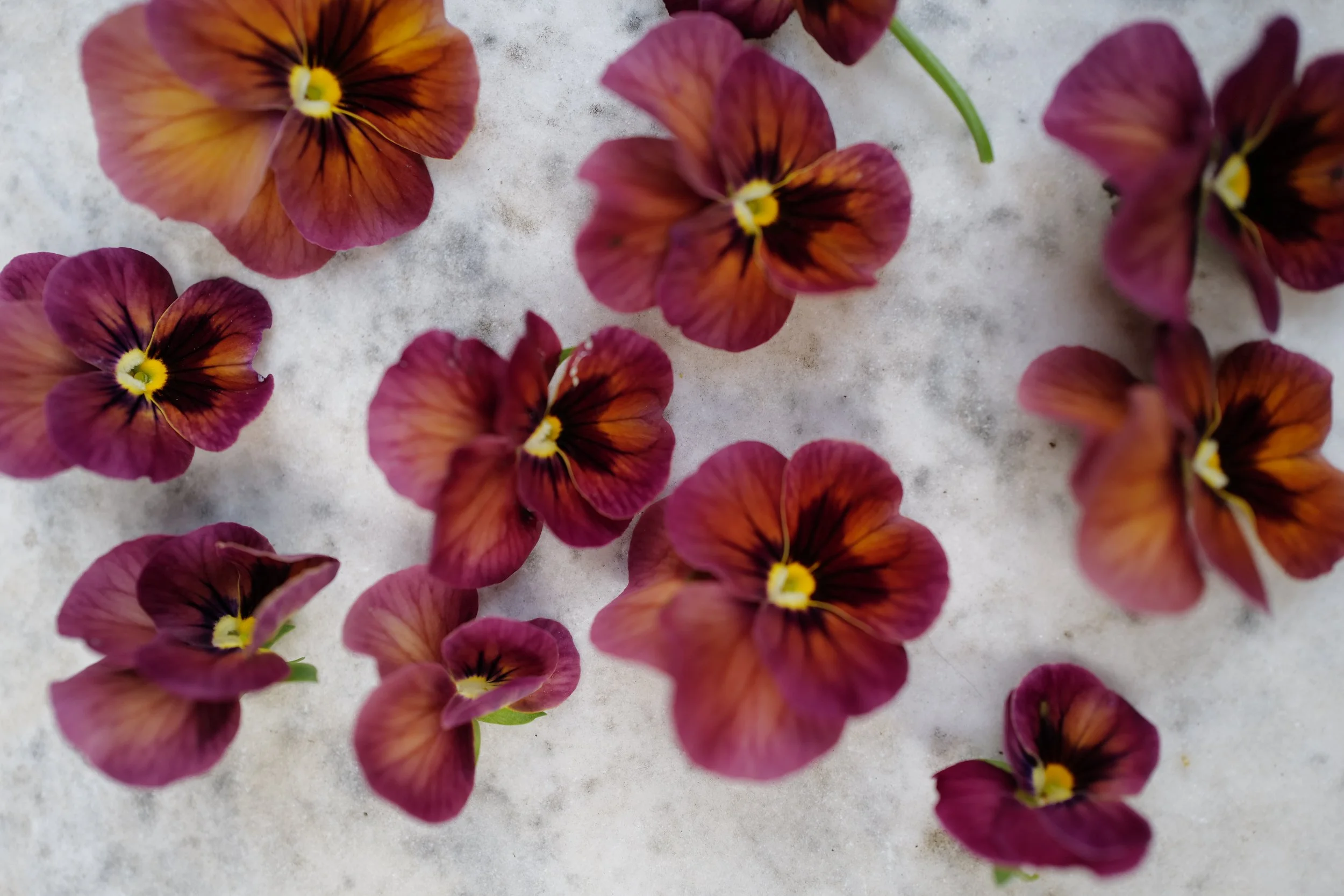
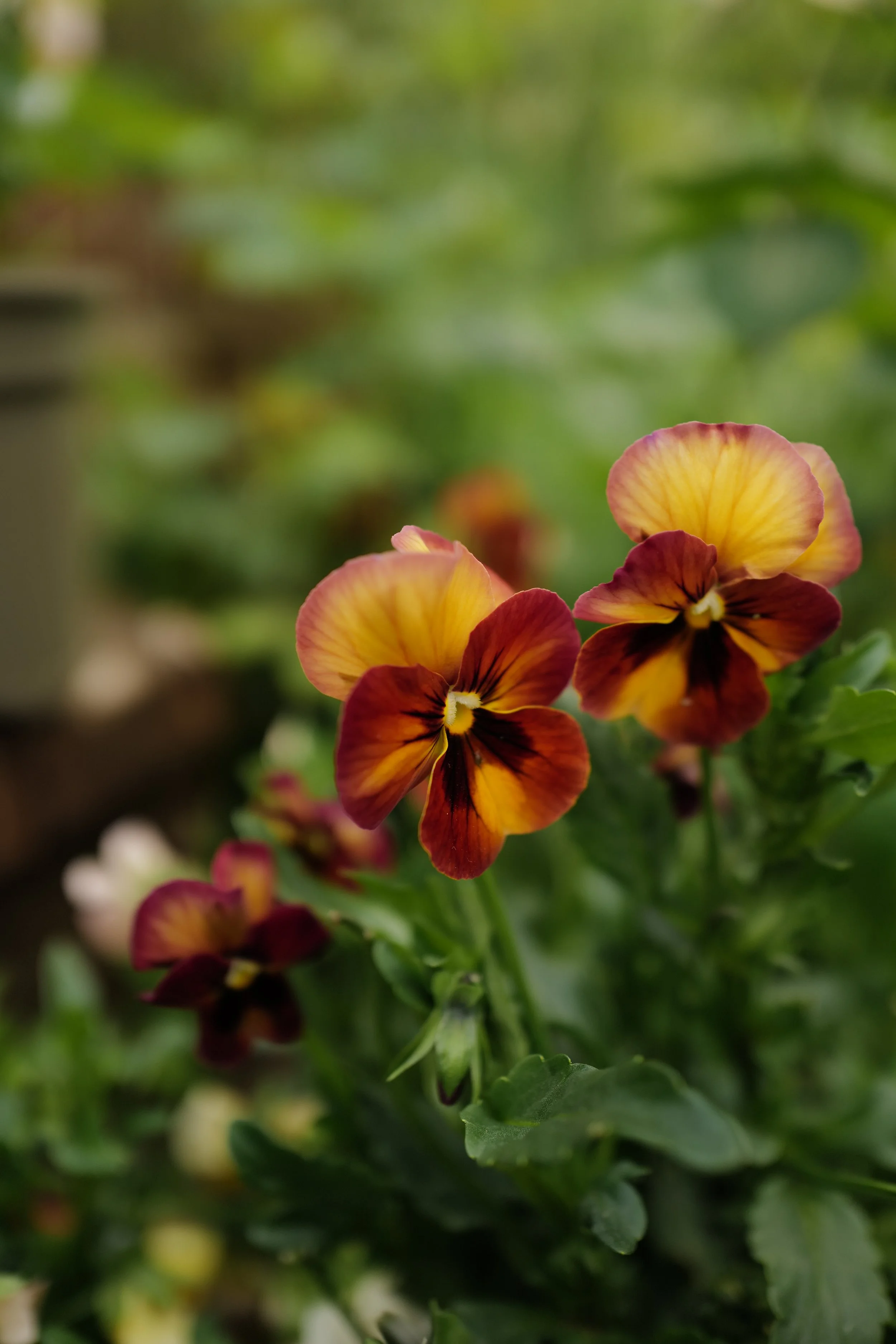
A rich, autumnal mix of smoky plum, terracotta, burnt orange and berry tones. Shades vary between plants but sit harmoniously together, creating depth rather than contrast.
Flowers are petite, neat and long-petalled, with some showing a soft frill to the upper petals. Plants are compact, robust and free-flowering, reaching approximately 20 cm in height. The seeds for this variety have sadly been discontinued, but we’ll be on the hunt for a suitable alternative.
Flower size: 3-5 cm
Scent: Unscented
Habit: Compact, vigorous
Variation: Subtle shade variation within a warm, mulberry-toned range
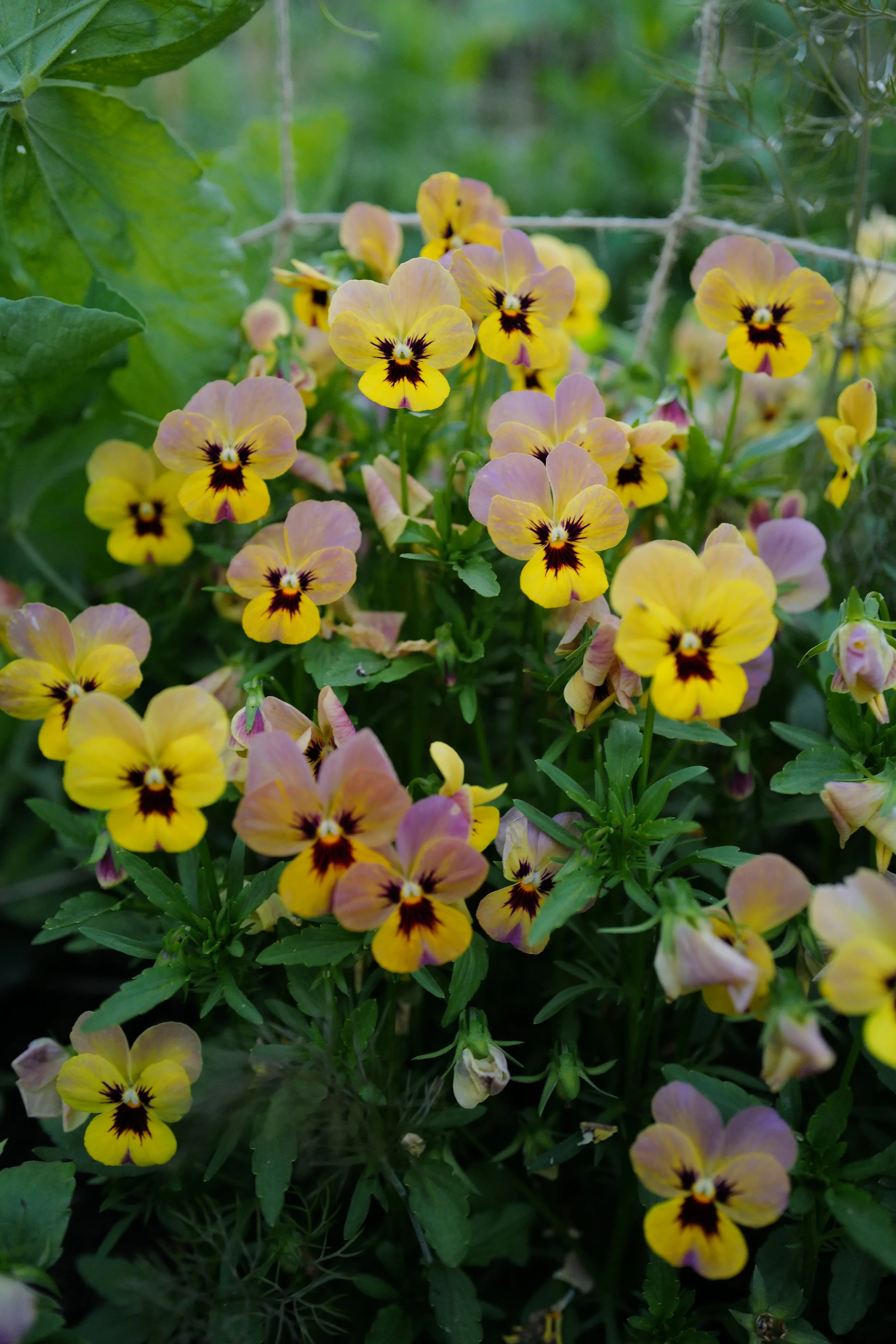
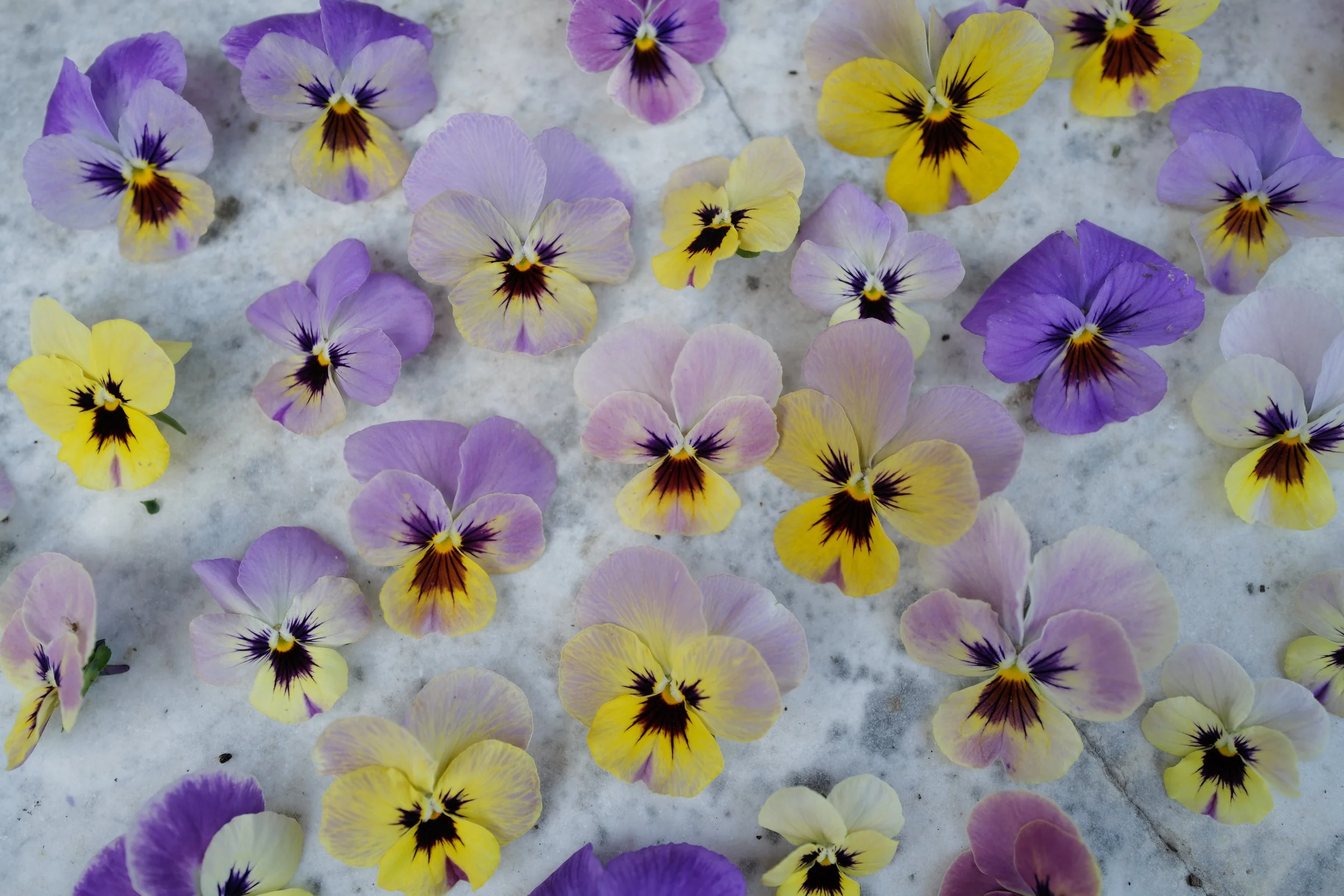
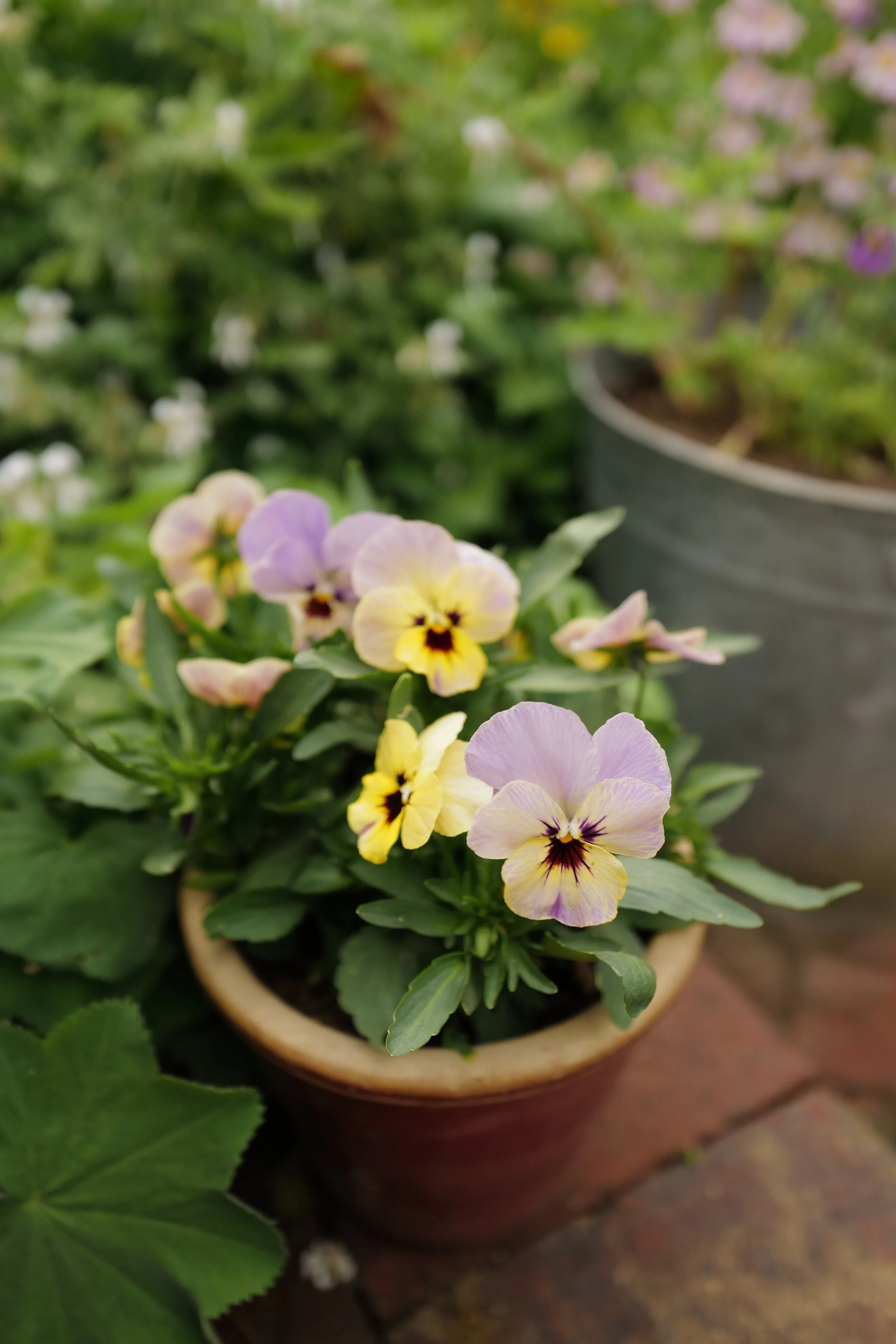
A responsive and expressive viola, we noticed it seemed to shift colour depending on how it’s grown. In pots, flowers lean towards lilac and pale lemon; planted in the ground, deeper tones emerge, purple, magenta, rose, yellow and rust.
Flowers are neat and uniform in form, with prominent upright upper petals and a long-petalled shape. Lightly scented, with a gentle narcissus-like fragrance. Plants are strong growers and flower freely.
Flower size: 3-4 cm
Scent: Light, narcissus-like
Habit: Vigorous
Variation: Significant colour change between pot-grown and ground-grown plants
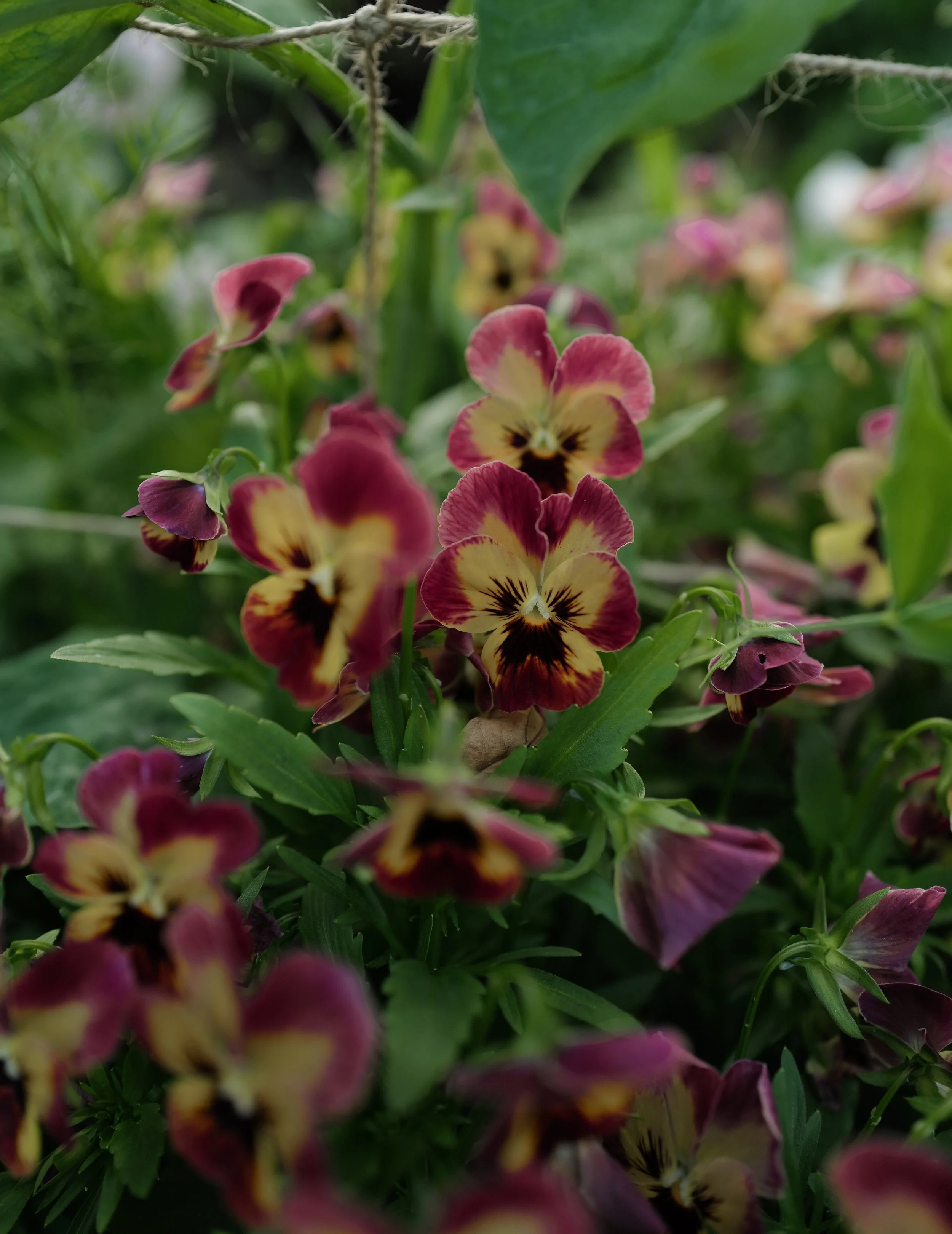
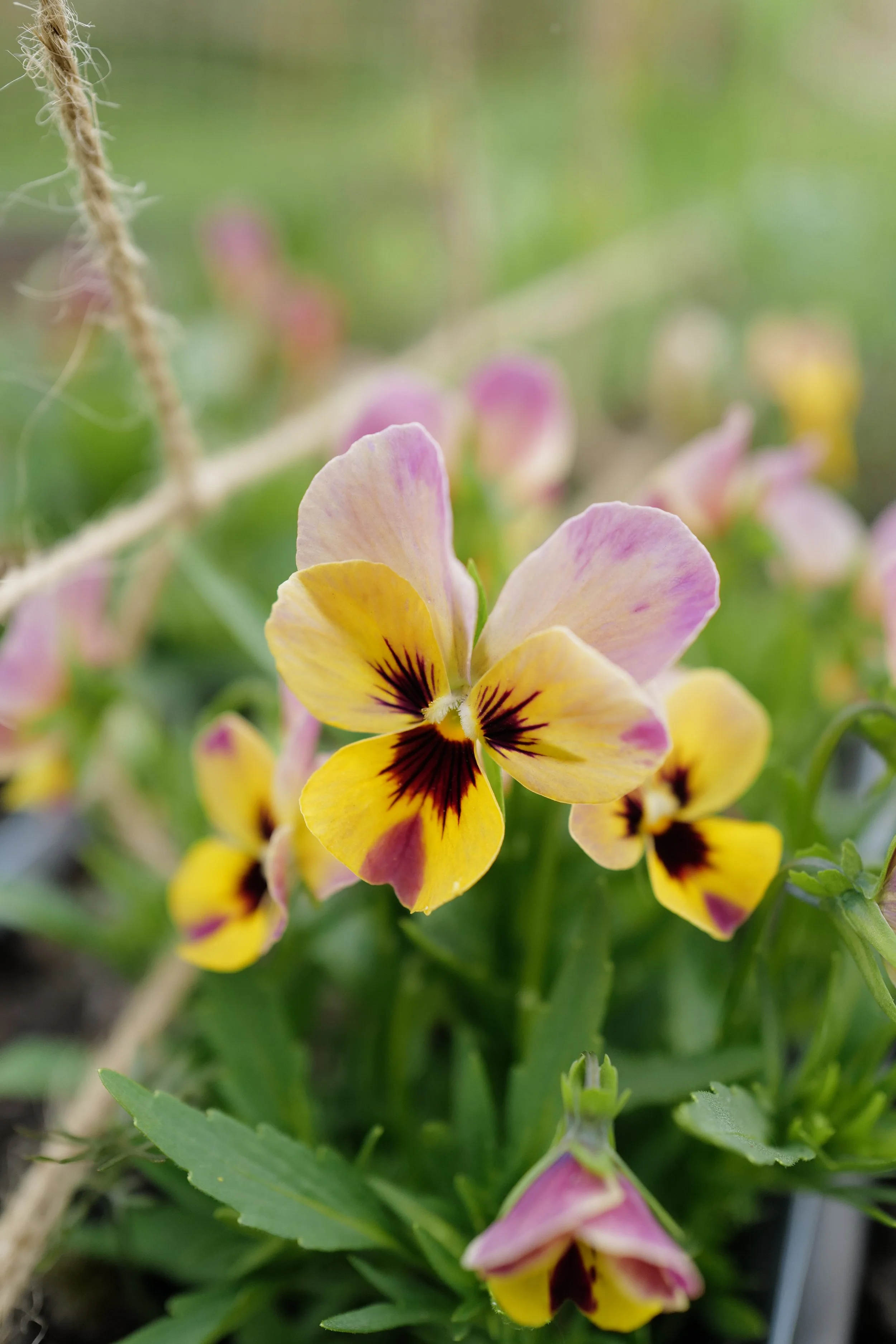
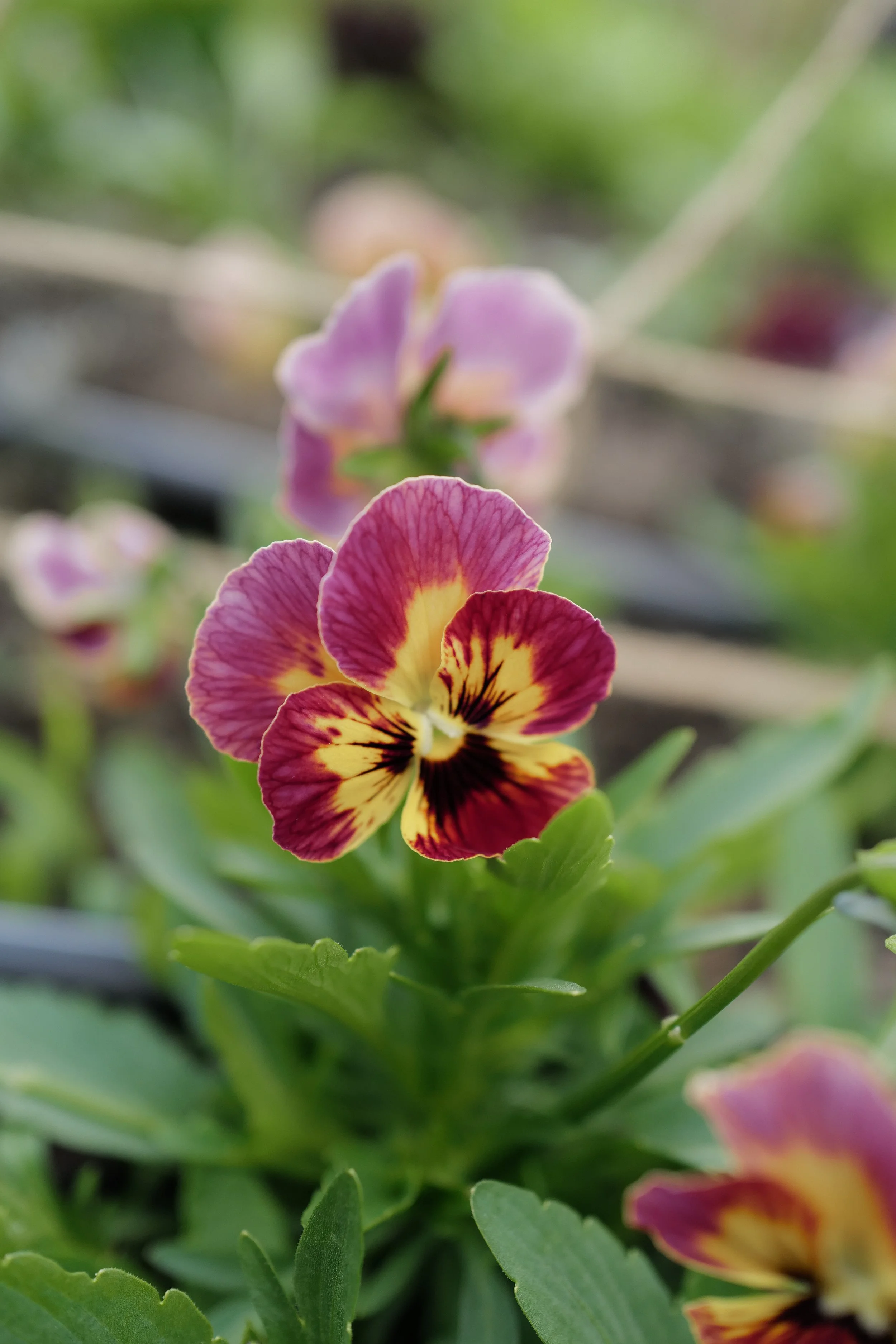
A generous, high-performing viola valued less for subtlety of colour and more for sheer abundance and stem length. While we had higher expectations for the colour palette, the plants more than made up for it in vigour and flower power.
Flowers are neat and uniform in form, with prominent upright upper petals and a long-petalled shape. Colour sits in bright magenta and yellow, with a slightly playful, ‘rhubarb and custard’ quality. What this variety does exceptionally well is produce masses of flowers on long, strong stems, flowering continuously over a long season.
Lightly scented, with a gentle narcissus-like fragrance, this is a very effective garden and vase viola. In the ground it creates an eye-catching, flower-smothered display, and when cut it holds well, making it a reliable choice where productivity and stem length are key.
Flower size: Approx. 3–4 cm
Scent: Light, narcissus-like
Habit: Vigorous, floriferous, long-stemmed
Variation: Uniform in form and colour
Matrix Sunrise Viola
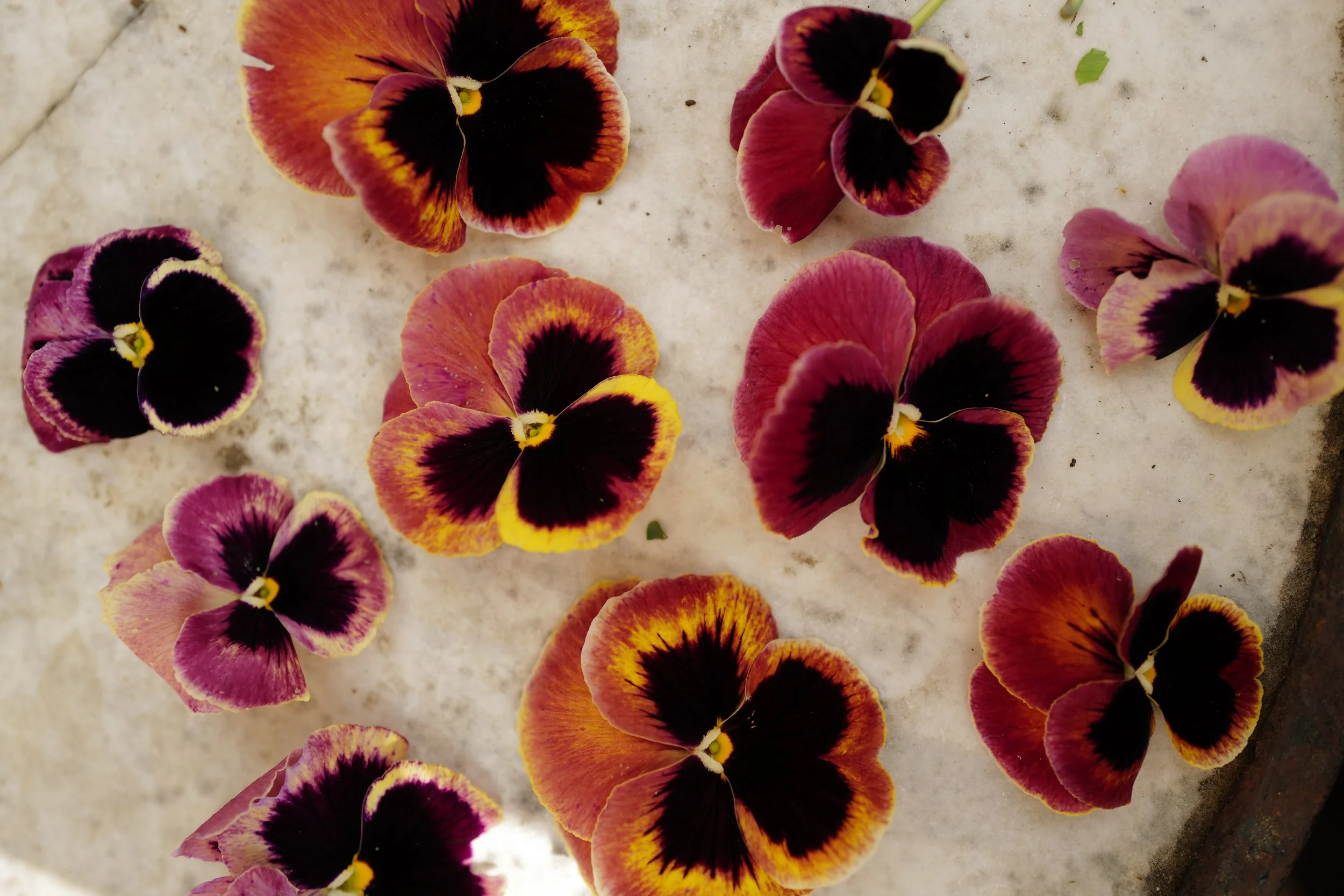
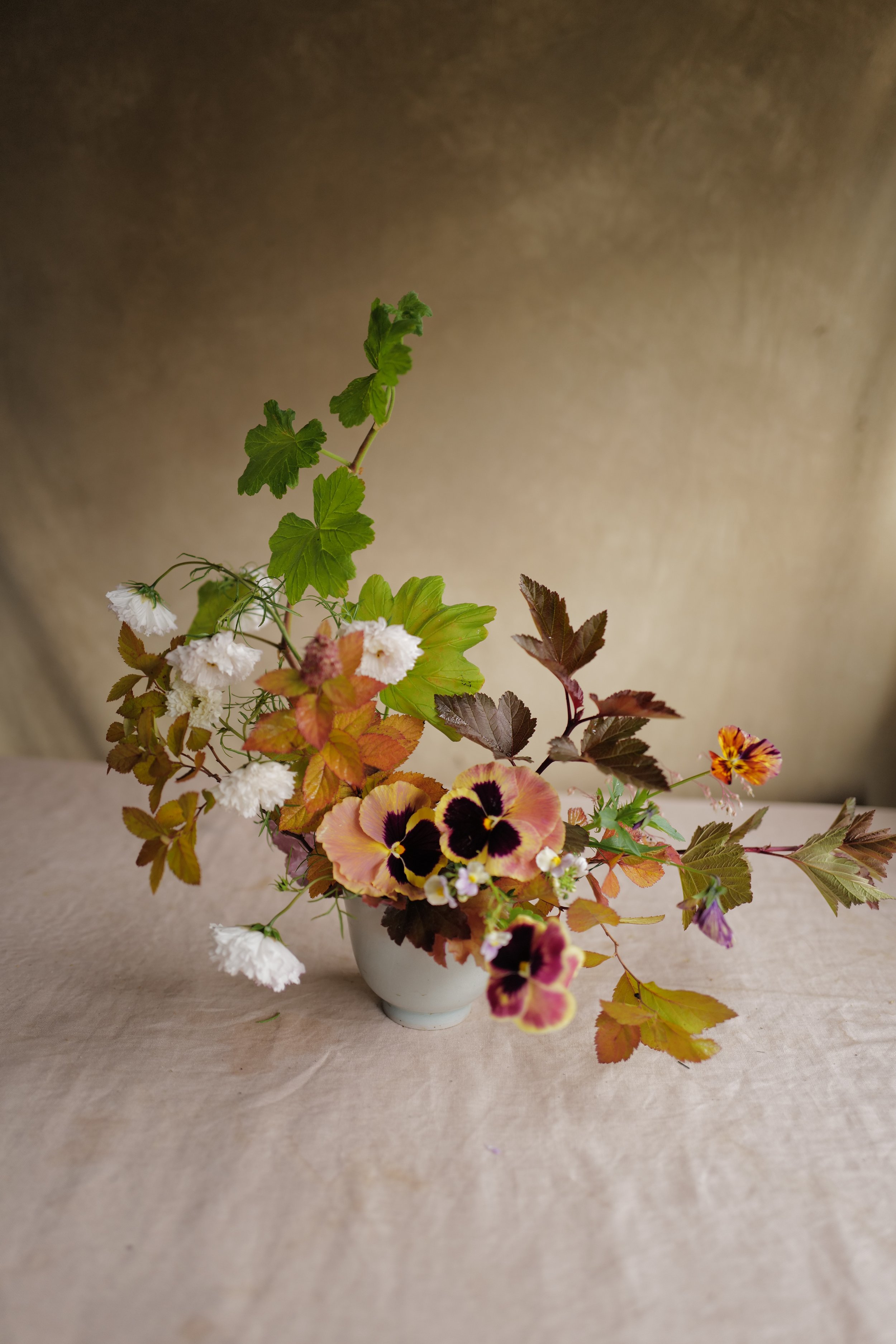
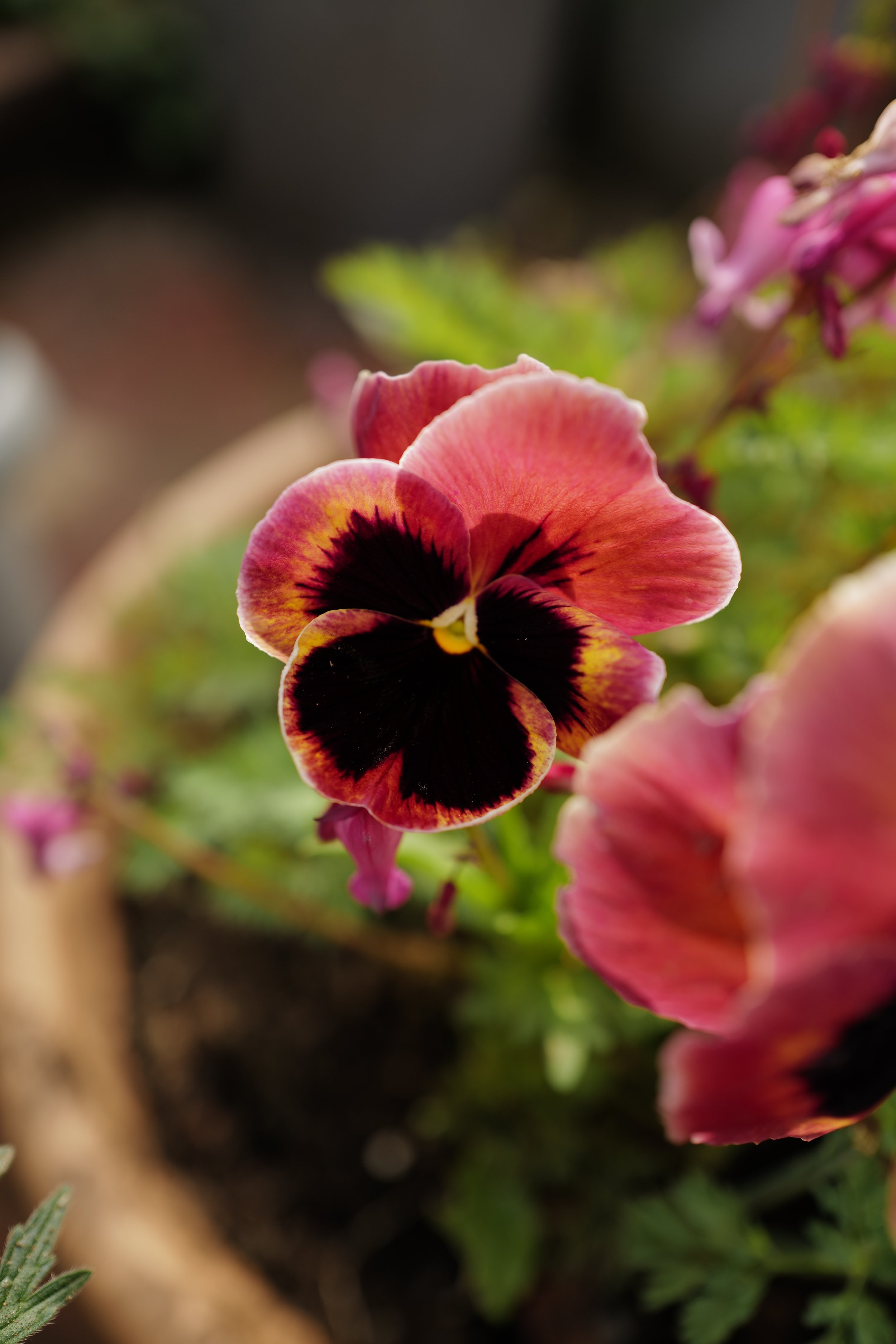
A warm, grounding viola that really comes into its own as the season tips toward autumn. The palette sits in dusky rose, soft terracotta and muted sunrise tones, rich without being loud, and especially beautiful at close range.
Flowers are large and confident, making this a surprisingly useful focal flower despite the plant’s compact size. It works beautifully for small-scale designs such as bud vases and intimate centrepieces, where the colour and face can really be appreciated. In the garden, it earns its keep simply by being passed often. We plant it beneath our crabapple tree in a large pot by the back door and never tire of meeting its face day after day. Milli particularly loves this one for design work.
Plants are compact and chunky, holding their flowers well without flopping, and the overall effect feels deliberate and well-shaped rather than sprawling.
Flower size: Approx. 5–7 cm
Scent: Unscented
Habit: Compact, chunky
Variation: Fairly uniform
Tiger Eye Red
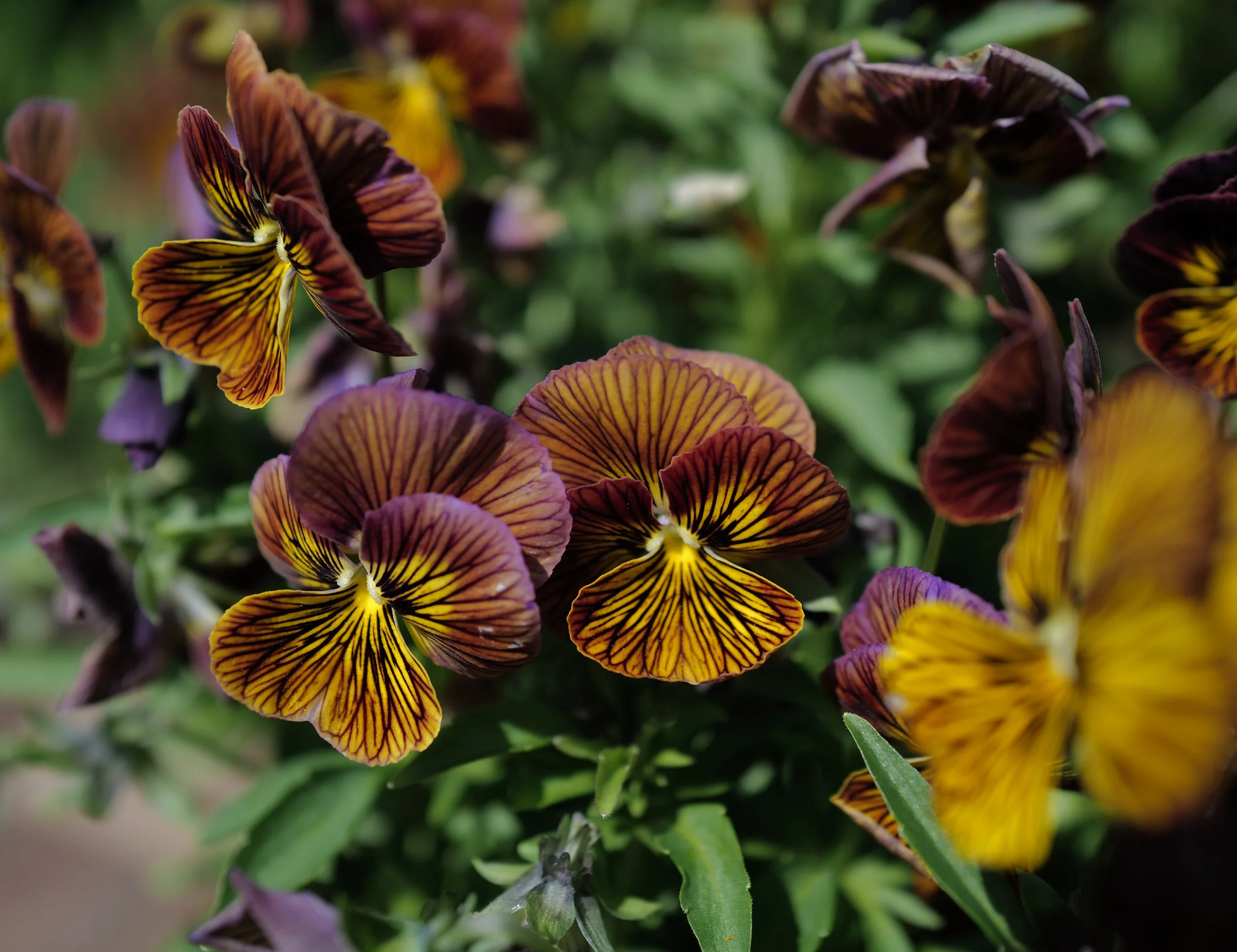
A richly coloured, long-flowering viola with real presence despite its modest flower size. The palette sits in burnt orange and deep burgundy, warm and earthy, and particularly striking when planted into terracotta pots, where the colours deepen and glow. It has beautifully striped black veining that gives this variety its unmistakable ‘tiger’ character.
Flowers are neat and uniform, carried in great abundance over a long season. Plants are vigorous and free-flowering, quickly forming well-balanced mounds that keep producing without tiring. Scent is a real pleasure here, noticeable and lovely, adding another layer to its appeal at close range.
Uniformity is one of this variety’s strengths. Both flower size and colour remain remarkably consistent across plants, making it a reliable choice for repeated planting and cohesive schemes.
Flower size: Approx. 3–4 cm
Scent: Lightly to moderately scented
Habit: Vigorous, floriferous, well-balanced
Variation: Very uniform in size and colour
Tiger Eye Yellow
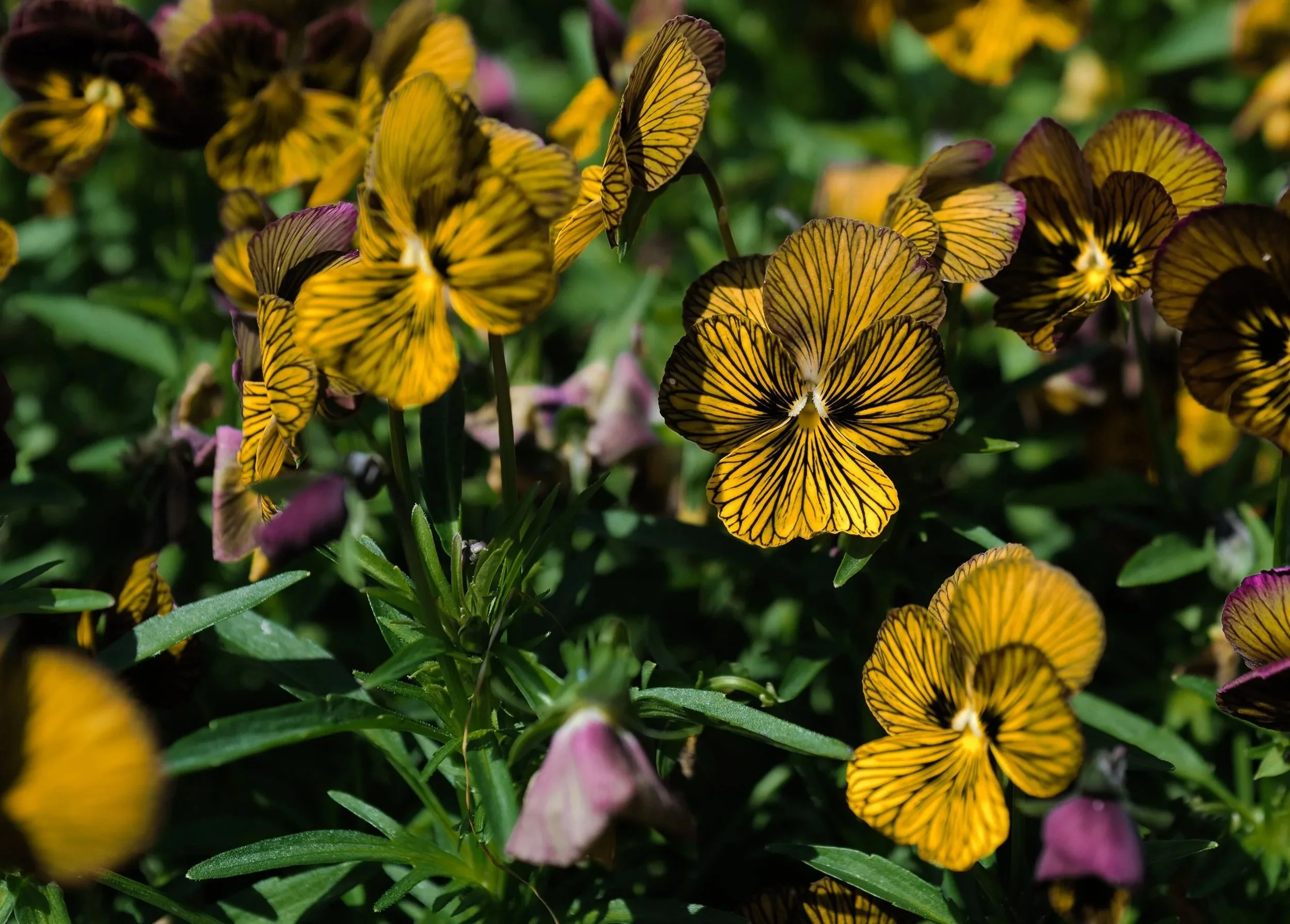
An ochre-yellow viola marked with beautifully striped black veining that gives this variety its unmistakable ‘tiger’ character. The contrast is bold but not brash, and the overall effect feels rich, warm and grounded, especially when paired with terracotta containers.
Like its red counterpart, this is a vigorous and generous plant, flowering freely over a long season and maintaining excellent uniformity. Flowers are consistent in size and colour, making it easy to use in repetition or formal groupings, while the scent adds a quietly charming surprise when encountered up close. I am particularly fond of this viola.
This is a variety that rewards both garden planting and container growing, holding its shape and performance without fuss.
Flower size: Approx. 3–4 cm
Scent: Lightly to moderately scented
Habit: Vigorous, floriferous, well-balanced
Variation: Very uniform in size and colour
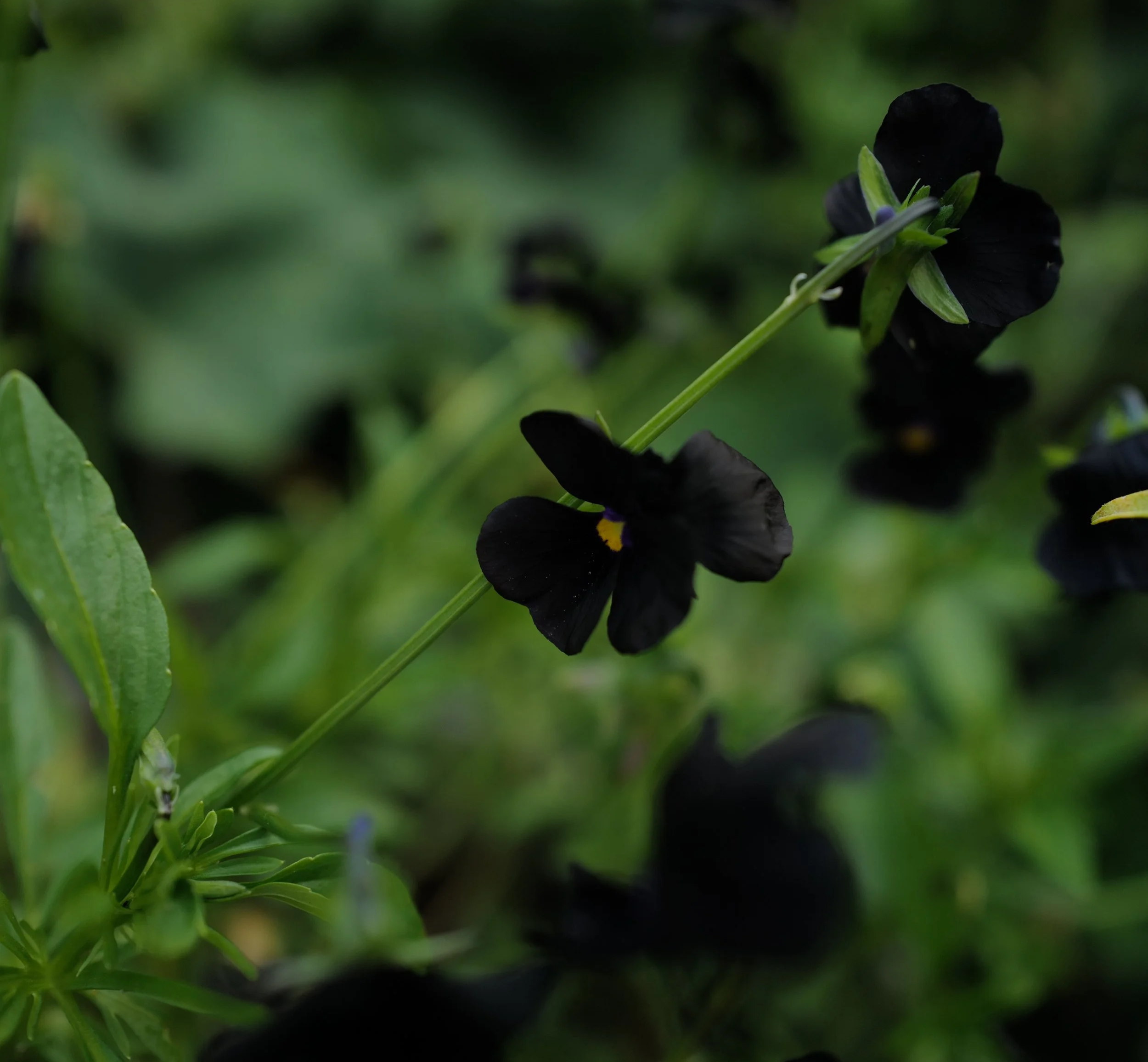
A dramatic, velvety viola in the deepest black-purple tones, with a moody presence that rewards close planting and container growing. The flowers have expressive, dark faces that feel theatrical, lending depth and contrast wherever they are placed. I love how unassuming it is, but it’s darkness gives it gravitas.
Despite its richness of colour, this is an easy and generous plant. It flowers freely over a long season, forming compact plants that send up blooms on long, wiry stems, giving it a slightly airy quality above the foliage. It performs particularly well in pots, where the dark flowers can be appreciated up close and don’t risk being lost among surrounding planting.
Uniform in both colour and form, this is a reliable variety for repeated use, especially where a restrained palette or strong contrast is desired.
Flower size: Approx. 2–4 cm
Scent: Delicate
Habit: Compact, with long, wiry flower stems
Height: Variable depending on conditions
Variation: Uniform
Useful Lists
Focal flowers (larger, commanding blooms)
(Useful as anchors in designs and containers)
Cutting & stem-length heroes
(Longest stems of the season, floriferous, generous)
High-variation, most expressive mixes
(For those who enjoy surprise and painterly outcomes)