RHS Chelsea 2026 - Thoughts from us at Alma|Proust
We arrived back in Sussex yesterday evening after a whistle-stop visit to this year’s Chelsea Flower Show. This year, the show felt softer somehow, there was still plenty of theatrical beauty, of course, but so many of the gardens felt rooted in care, for people, for wildlife, for future landscapes and communities. The planting throughout felt looser, more atmospheric and deeply connected to place, with texture and habitat sitting just as importantly as flower colour. We loved it.
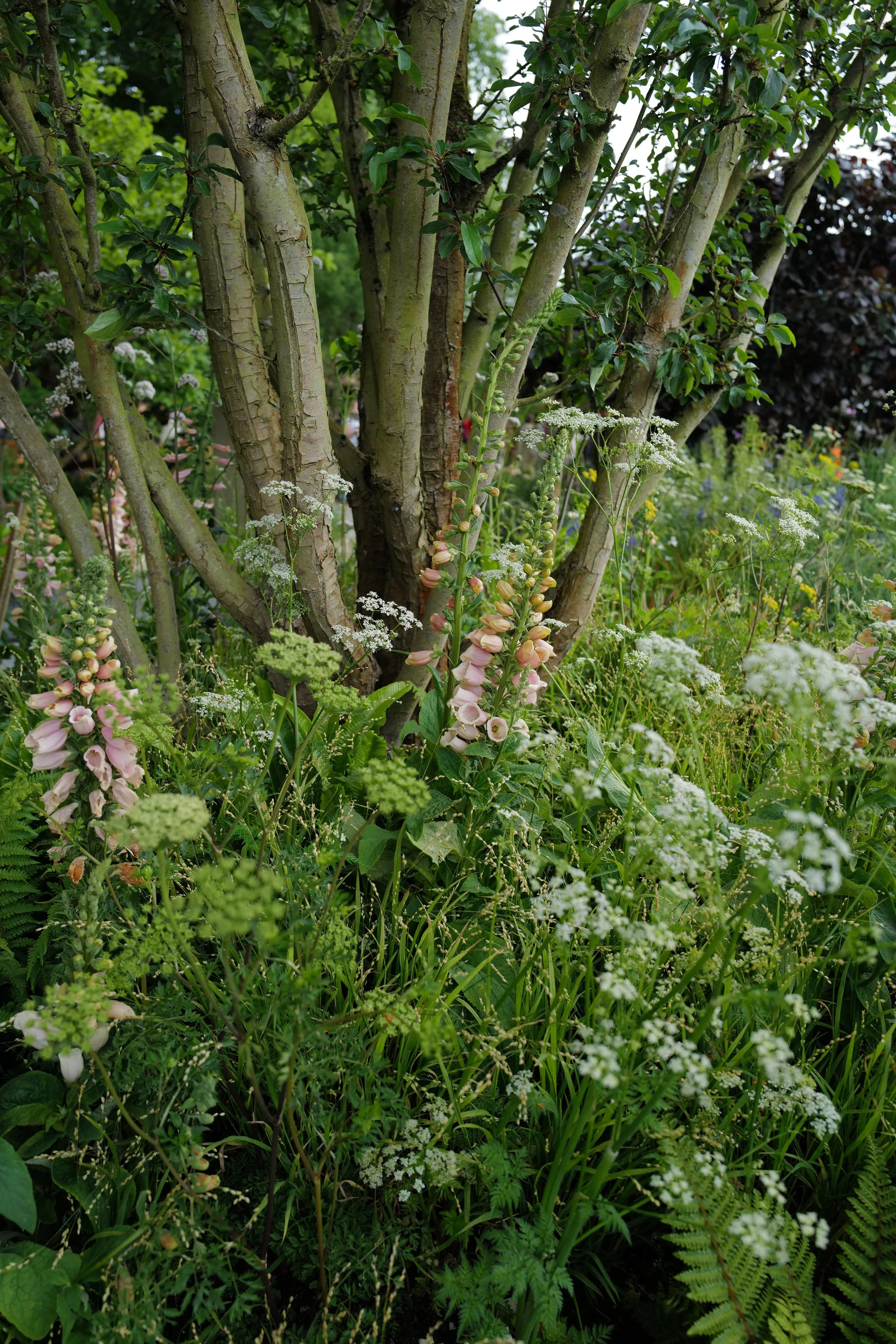
Multi-stem fruit tree, melica altissima 'Alba’, cow parsley, and apricot foxgloves in the ‘A Seed in Time’ Garden
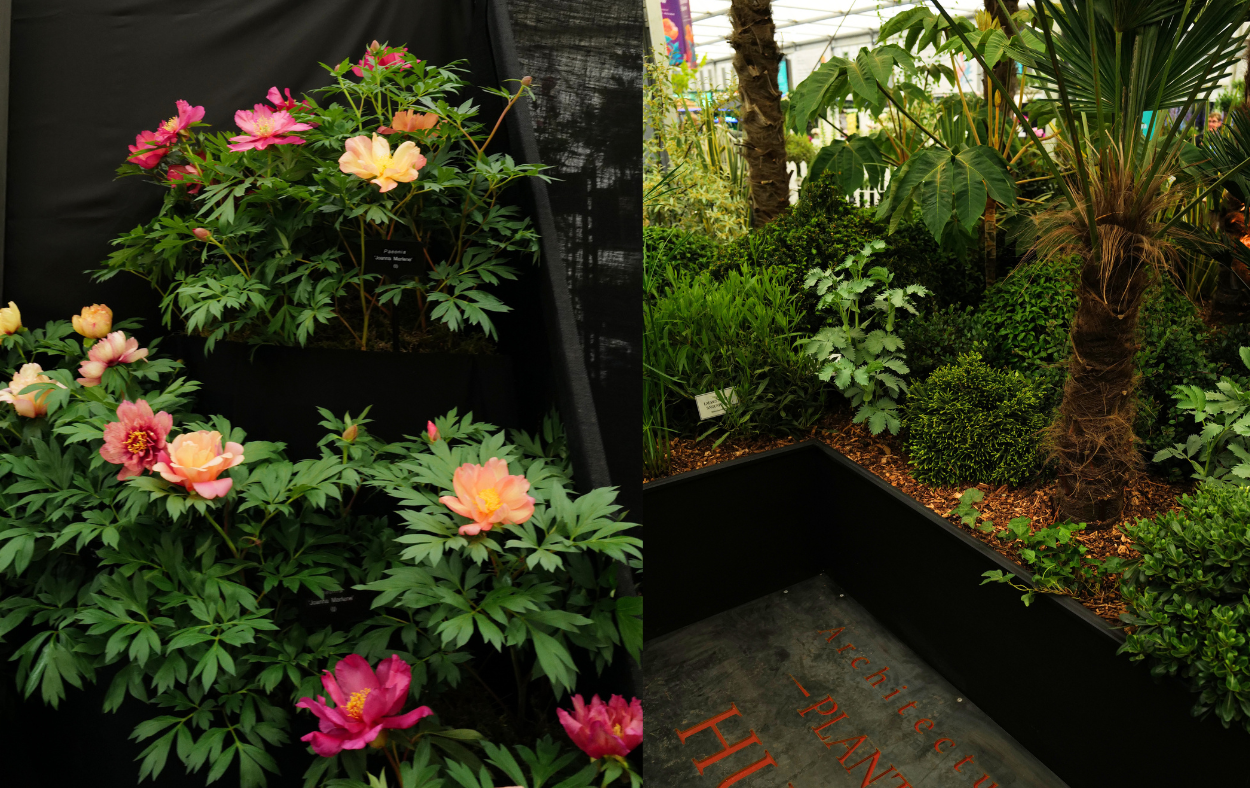
Amazing to see the intersectional (Itoh) peonies, and Architectural plants in the Pavilion
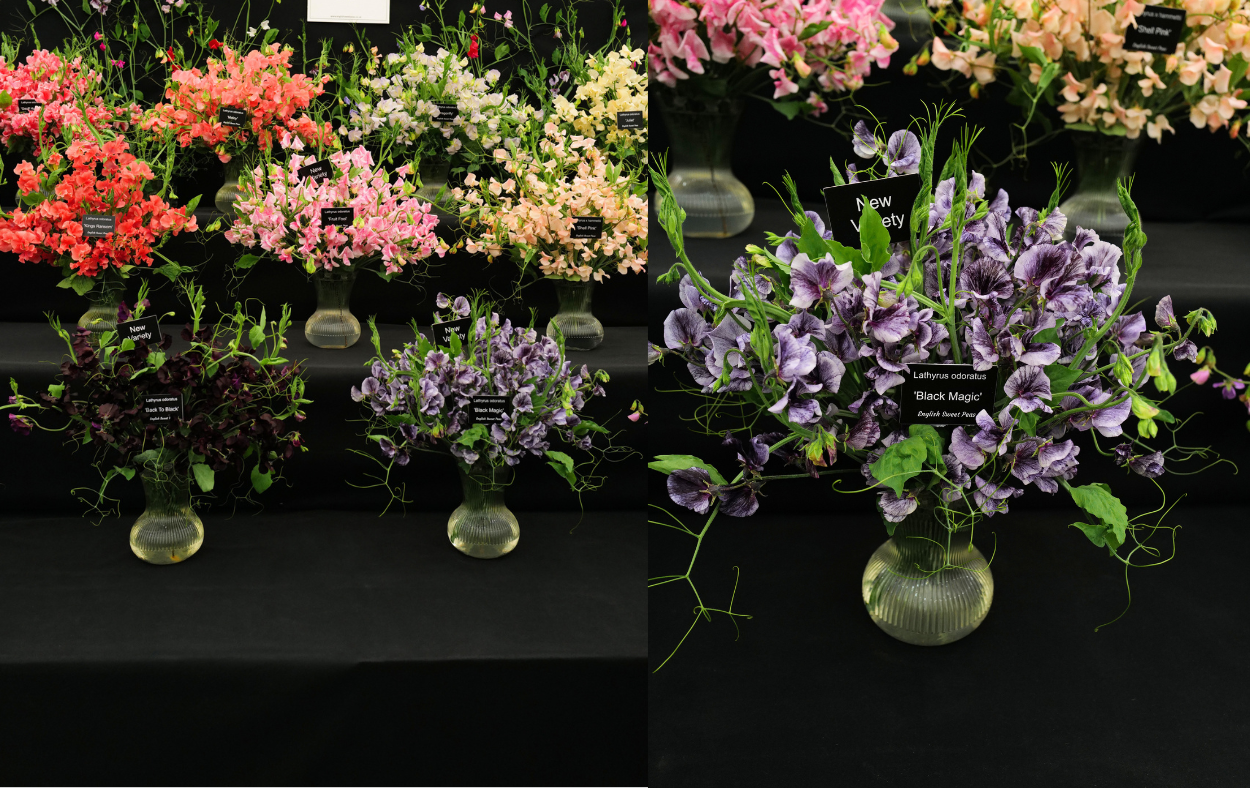
English Sweet peas stand. Winners of a Gold medal!
I always start in the Great Pavilion. It’s where you’ll find the expert growers with spades of knowledge. One of my absolute highlights was seeing the new ‘Black Magic’ sweet pea introduced this year by English Sweet Peas. Deep, velvety, large flowers, frilly and flaked, it stopped me in my tracks. Paris and I will be on the English Sweet Peas stand on Wednesday evening to answer all sweet pea related questions. See you there I hope!
It was also such a joy to see the sweet peas we grew in our tunnels this spring woven into a beautiful, giant arrangement by Frida Kim and Wagner Kreusch for Ffern and Horatio’s Garden. There is something very special about seeing flowers you have nurtured from seed take on a second life in the hands of brilliant florists. Our friend India at Vervain grew the most jaw-dropping bearded iris for the stand, and Wagner and Frida had turned them into a living Cedric Morris painting. It looked magnificent.
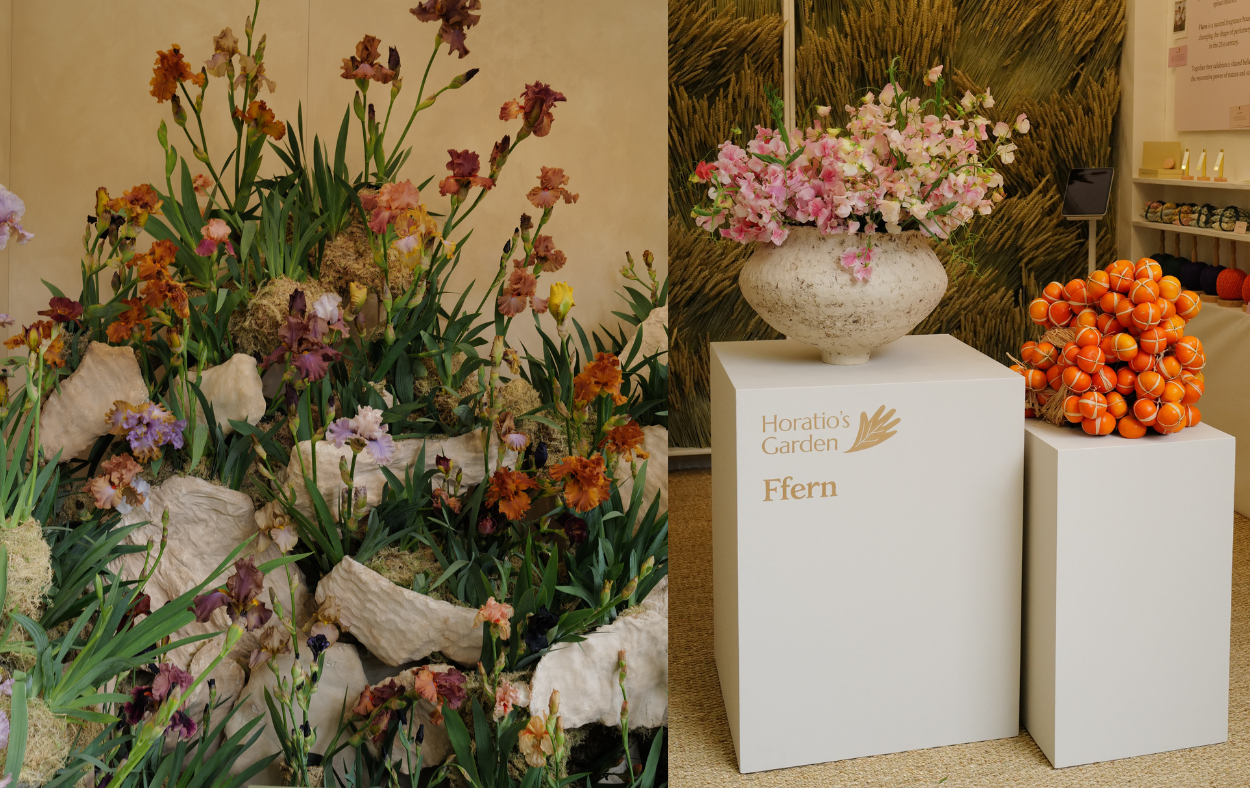
Very proud moment to see our very own-grown Sussex sweet peas on the Ffern/Horatio’s Garden stand
And then the roses. Paris’ favourites are sweet peas, but for me, Milli, it’s always the roses. Seeing the David Austin Roses varieties in full voice is one of the great joys of Chelsea. I can never quite get over the colouring of Emma Bridgewater and Princess Alexandra of Kent, both somehow impossibly romantic and vivid at once. The new David Beckham one looks good too, but I just love a pink!
We also swung by to see our fellow Flowers from the Farm growers and their cut flower garden, which felt celebratory and generous as ever. Kim from Marlston Farm Girl grew great big buckets of ranunculus and geums which were astonishingly vivid compared with the thunderous skies outside.
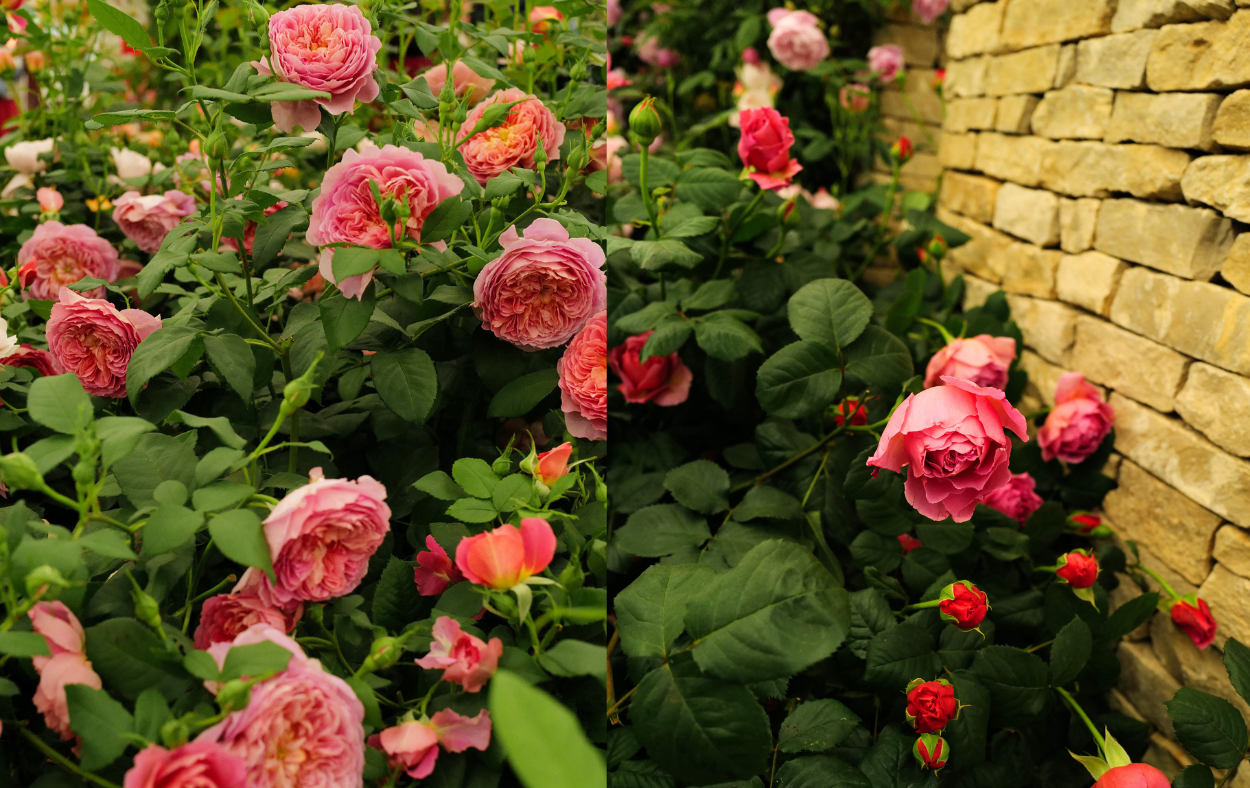
David Austin Roses ‘Emma Bridgewater’ and ‘Princess Alexandra of Kent’
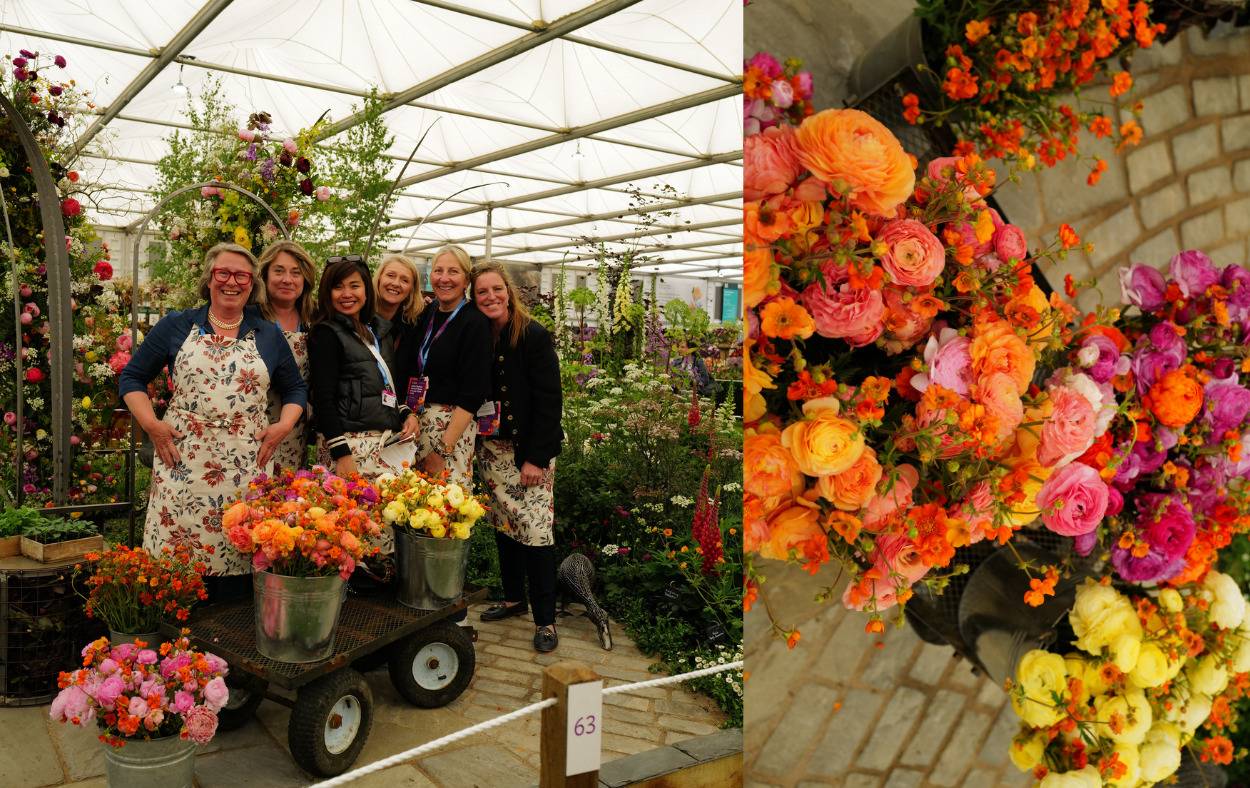
Flowers From The Farm and Kim’s buckets.
On to the show gardens. I began at Sarah Eberle’s garden for the Campaign to Protect Rural England, ‘On the Edge’. While the giant carved Mother Nature sculpture was extraordinary, I found myself even more drawn to the meadowy planting that surrounded it. My eyes kept returning to the pale lemon buttercups weaving through the garden amongst tellima grandiflora, cow parsley, grasses and all the beautifully ordinary native plants so often overlooked as weeds.
The whole space celebrated fragile edgelands between town and countryside, and there was something incredibly moving about its looseness and humility. It felt alive in a very real way, less arranged than gently gathered from the landscape itself. The dry stone walls, willow structures and damp planting around the old trough all added to that feeling of un-showy abundance and resilience.
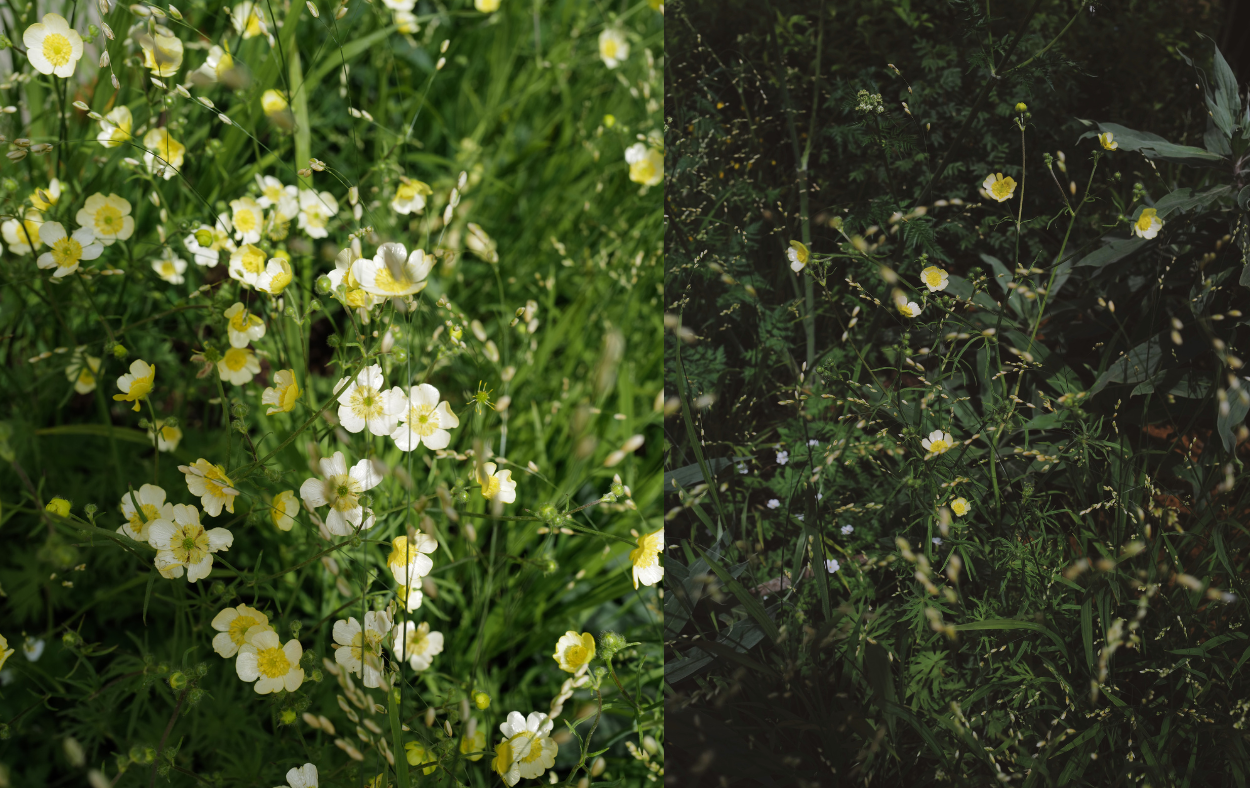
The pale buttercups in the ‘On the Edge’ garden
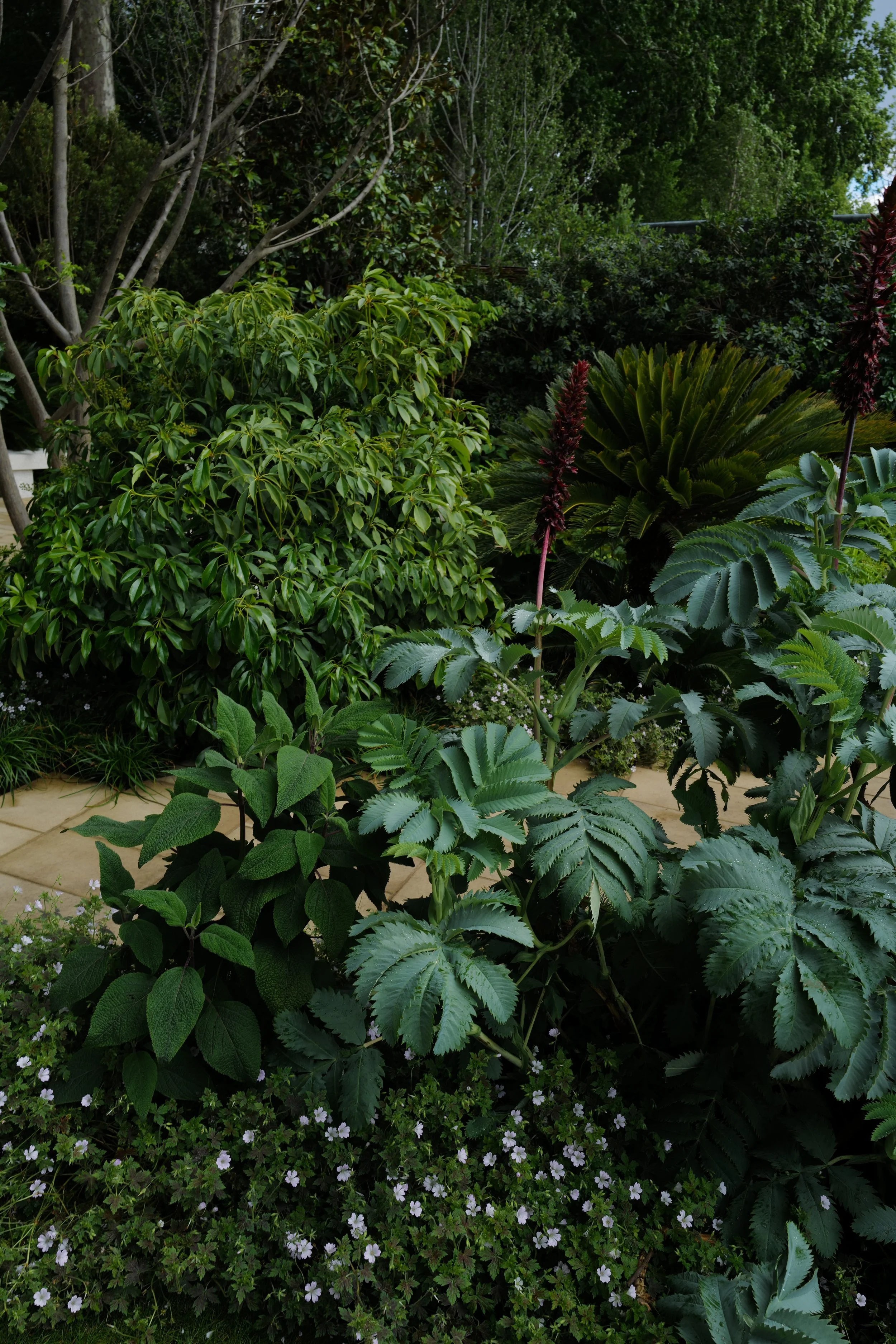
Tom Stuart Smith’s garden with the Tate
I loved the deep greens of Tom Stuart-Smith’s garden for Tate. It felt lush, grounding and calm amongst the intensity of the show. So much restraint!! And such beautiful use of foliage and woodland planting all of which is drought tolerant and long flowering- chosen primarily for climate resilience.
The Lady Garden Foundation ‘Silent No More’ Garden was probably my favourite overall. Designed by Darren Hawkes, it managed to feel both bold and deeply tender at the same time. I loved the painterly planting, all those soft apricots, dusty pinks, mauves and deep magentas layered together with incredible sensitivity. It had the overall effect of an impressionistic painting. A little pink here, a little apricot there.
The sculptural forms and winding paths were designed to encourage conversation around gynaecological cancers, but nothing about the space felt heavy-handed. Instead it felt intimate and very beautifully done. Water moved through the garden in gentle rills, while the planting softened and wrapped around the centrual structure (inspired by the work of sculptor Eduardo Chillida) in such a beautiful way. There was tenderness and boldness. It was one of those rare Chelsea gardens that felt not just visually impressive, but I would genuinely love to spend time in it.
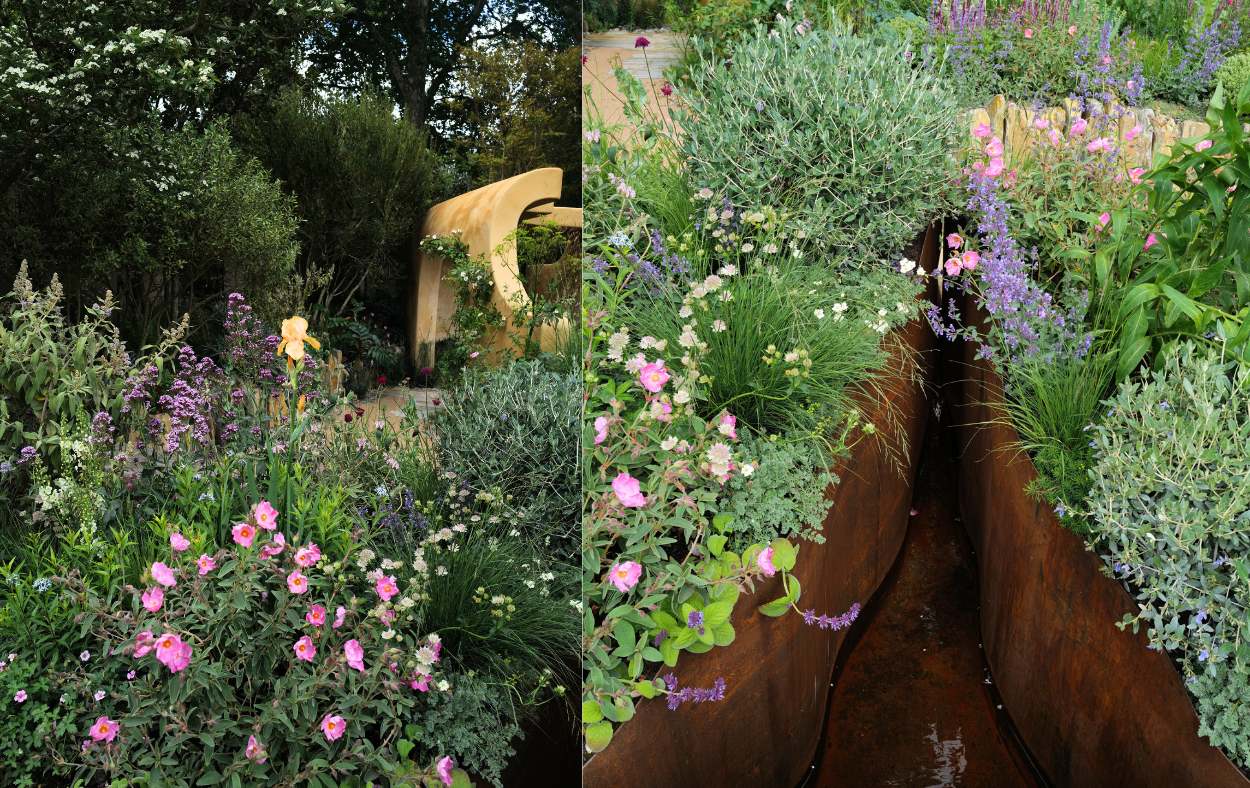
‘Silent No More’ Garden
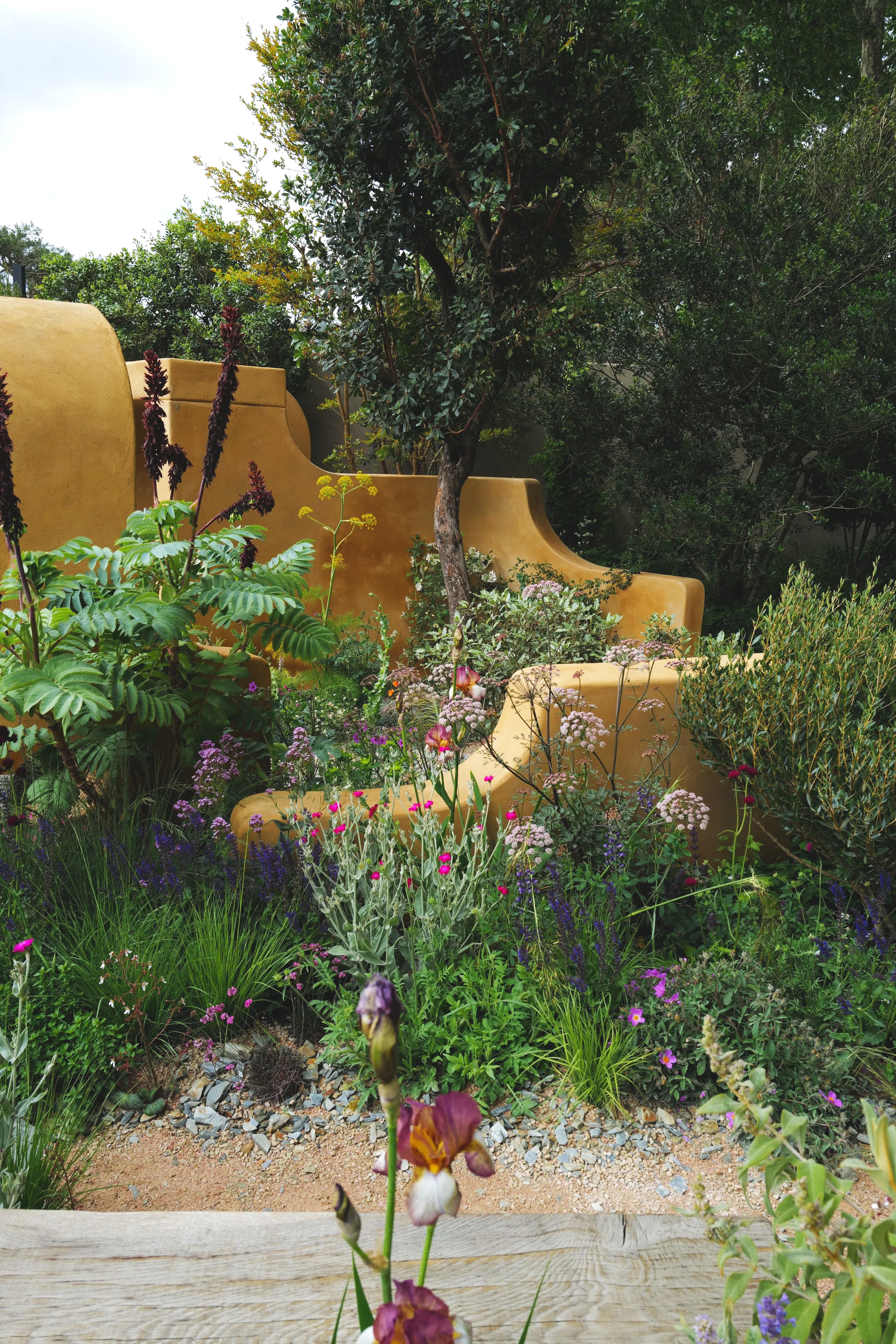
‘Silent No More’ Garden
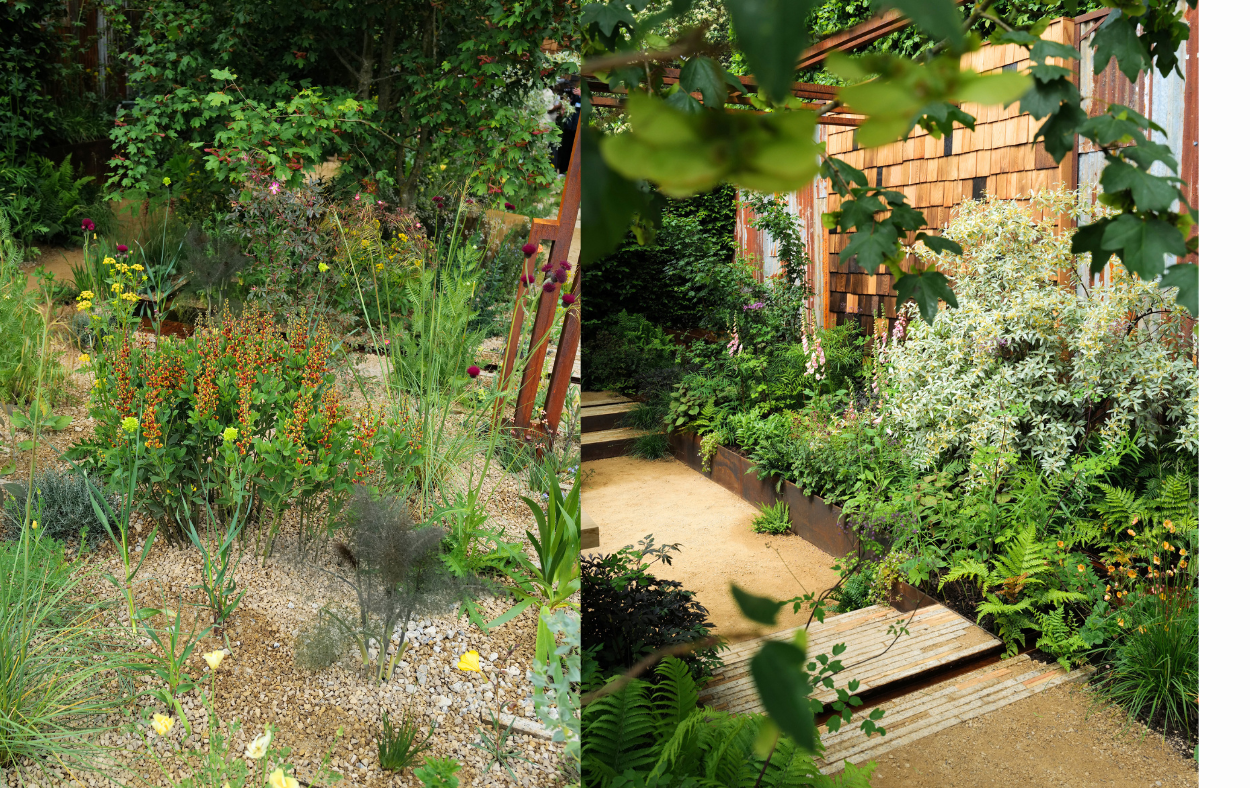
The Children’s Society Garden
I also returned to look at the The Children’s Society Garden by Patrick Clarke about 5 times. There was such a warmth and humanity to it. The planting leaned into soft, sun-baked, textural tones that allowed the space to carry depth. Designed as a sanctuary for teenagers, the garden was shaped in collaboration with young people themselves.
Reclaimed materials were used- weathered steel and handmade glass details and I particularly loved the planting against those harder materials. Suttons apricot foxgloves in particular caught my eye. It felt hopeful without pretending everything is easy.. One of those gardens that felt less like an exhibit and more like a place someone might truly need. Even more meaningful knowing the garden will live on after Chelsea as a permanent wellbeing space for young people.
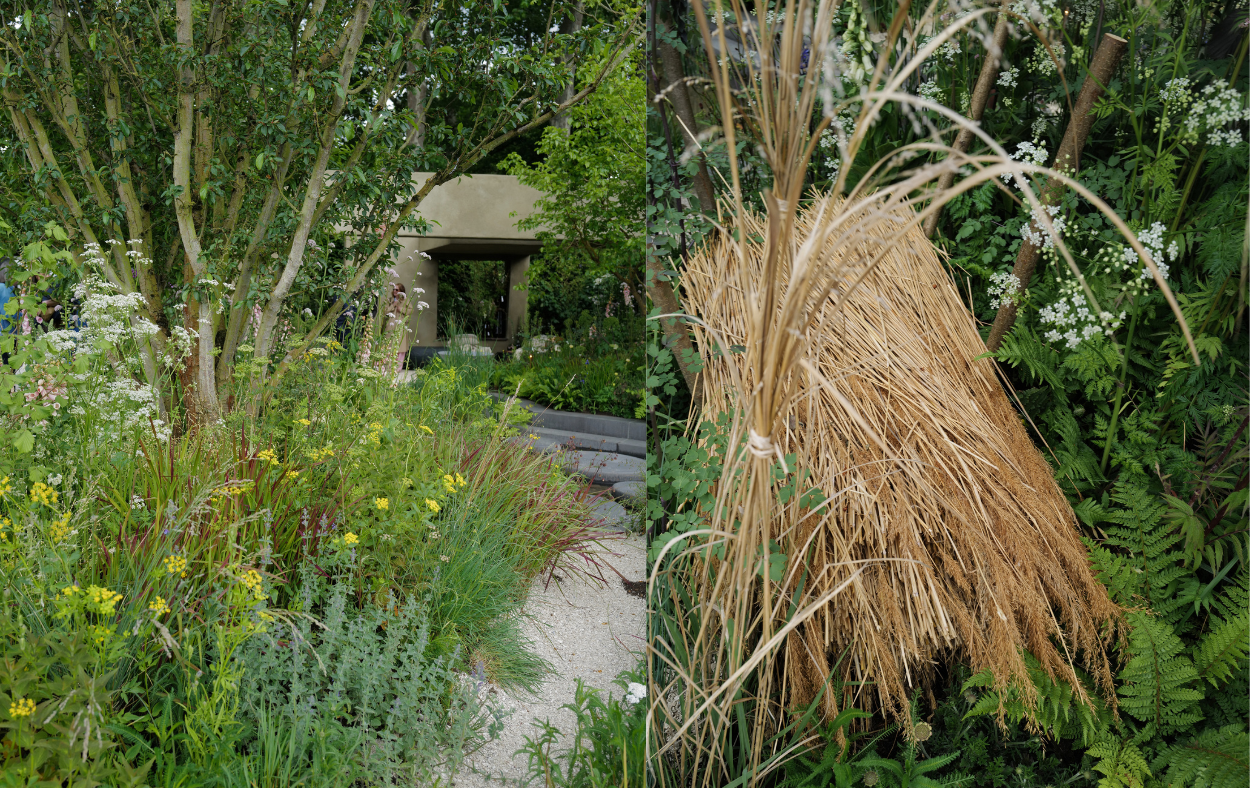
‘A Seed in Time’ Garden
The Killik & Co ‘A Seed in Time’ Garden completely captured me too. Inspired by the wetlands of East Anglia and the Norfolk Broads, it felt thoughtful, ecological and deeply atmospheric. I loved the crushed shell pathways, woodland-edge planting and straw laid down amongst the naturalistic scheme, which softened everything and gave the garden such a gentle, habitat-rich feeling. Lots about capturing rainwater and creating habitat. The use of reed and straw bale building techniques made the whole space feel rooted in craft, land and memory, while the planting itself felt abundant without excess.
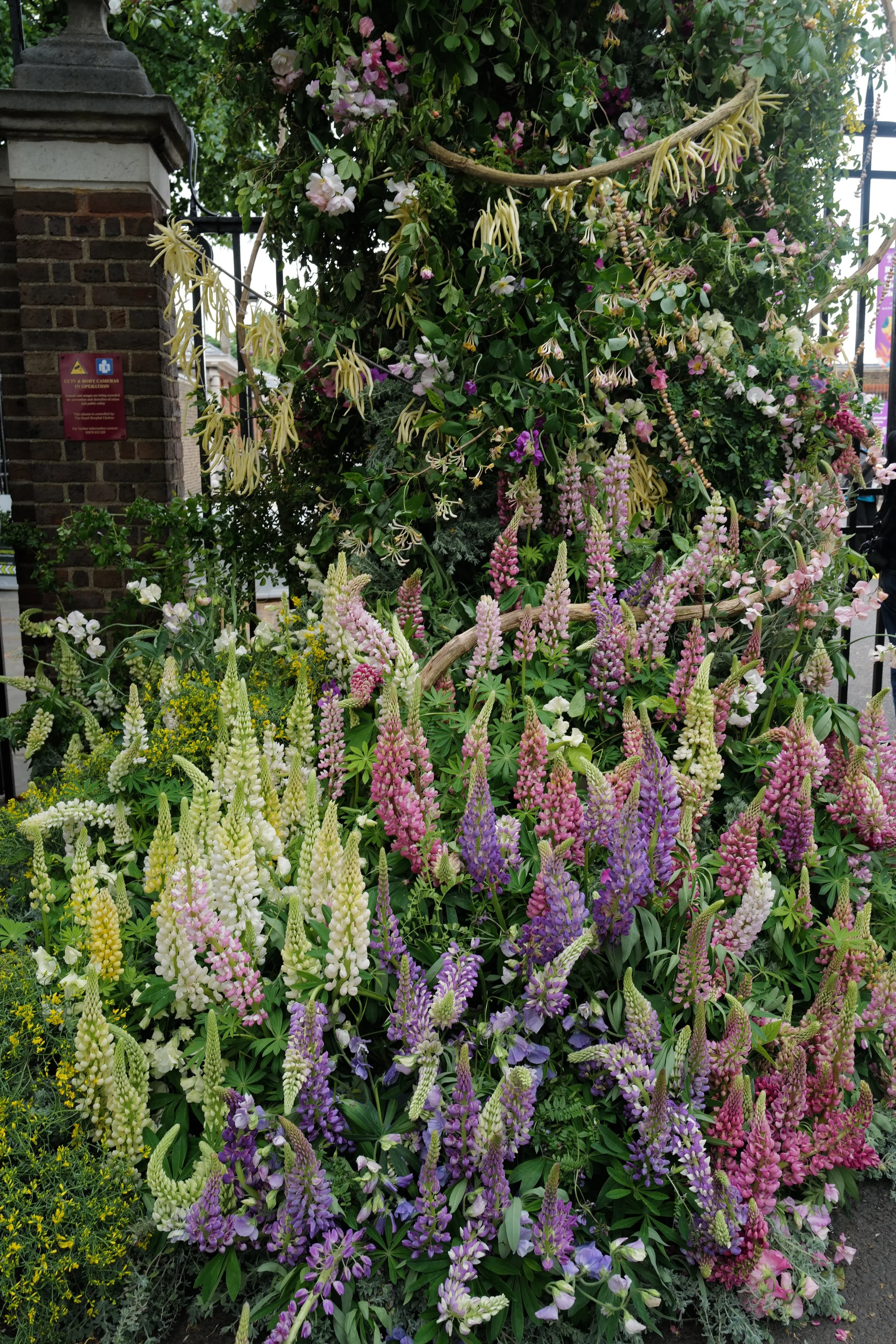
Jamjar Flowers Main Gate
And finally, the floristry this year was extraordinary. JamJar Flowers absolutely stole the show for me with their use of string beans in the floristry exhibit in the Pavilion, echoing their immensely brilliant main gate installation. Lupins and sweet peas massed together with cheerful yellow beans strung overhead like bunting. Playful, abundant and completely unforgettable.
Chelsea always leaves me feeling equal parts inspired and overwhelmed in the best possible way. So many ideas carried home in tired feet and camera rolls full of flowers.
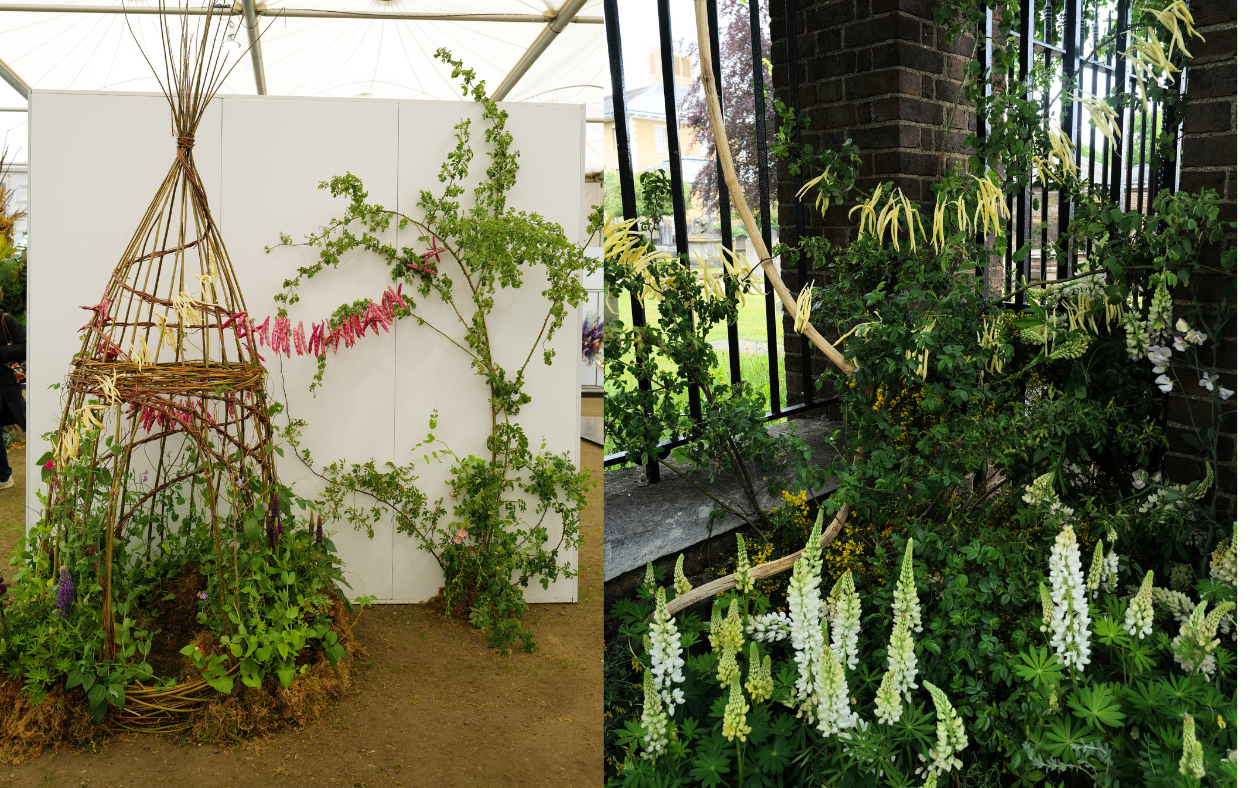
Jamjar Flowers in the Pavilion and Main Gate
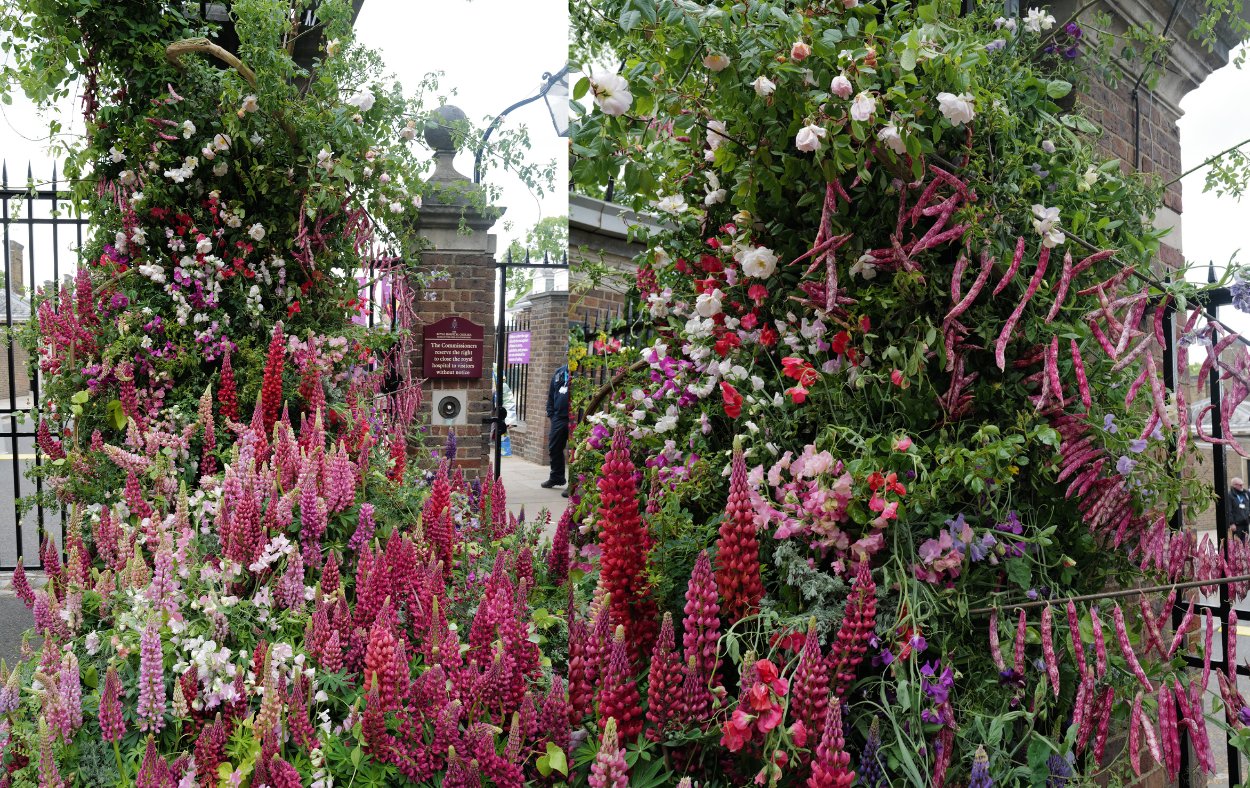
Jamjar Flowers Main Gate